24 Quiet Animals: Silent Species and Why They Stay Quiet
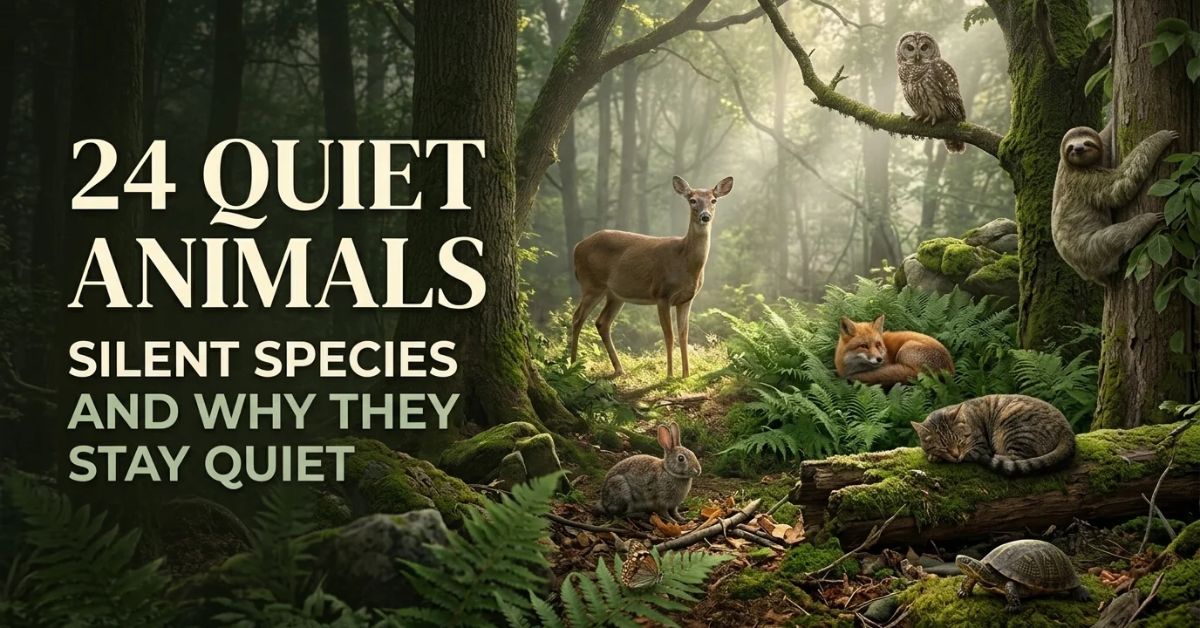
Quiet animals are species that make little or no sound, and jellyfish, snails, worms and sharks sit near the top of the list. They have no voice at all, so they rely on touch, scent, color or vibration instead. Others, like sloths and owls in flight, stay quiet on purpose to avoid predators or sneak up on prey.
In this guide you will meet 24 quiet animals from forests, oceans, gardens and soil. You will see how each one gets by without noise, where the quiet reputation has exceptions, and how quiet, shy and silent animals differ. Most lists treat those three words as the same thing.
What Makes an Animal Quiet?
A quiet animal makes little noise compared with other species, either because it lacks the equipment for loud sound or because staying still helps it survive. It skips the calls other animals use to claim territory, attract mates or warn of danger. Instead, it relies on silent communication through scent, color, posture or vibration.
Some species simply cannot make much sound. Others could, but choose stillness as a survival tool. Camouflage and silence work together for many of them, letting them slip past predators or sneak up on prey. A spider waiting on its web and an owl gliding without a whisper are both the result of thousands of years of evolution shaping bodies and behavior around one goal: staying alive without drawing attention.
One caution before the list. Very few animals are completely silent. A koala, an owl or a hedgehog can be loud at the right moment, so each entry below says when and why the quiet reputation has exceptions.
Quick Snapshot of All 24 Quiet Animals
This table shows all 24 quiet animals at a glance, with the trait that keeps each one low-noise.
| # | Animal | Animal Type | Habitat | Main Quiet Trait |
| 1 | Sloth | Mammal | Rainforest | Slow movement, low energy use |
| 2 | Octopus | Cephalopod | Ocean | Color and texture signals |
| 3 | Snow Leopard | Mammal | Mountains | Stealth hunting |
| 4 | Koala | Mammal | Eucalyptus forest | Silent most of the year |
| 5 | Manatee | Mammal | Coastal waters | Gentle, slow grazing |
| 6 | Llama | Mammal | Andes grasslands | Humming instead of loud calls |
| 7 | Giraffe | Mammal | Savanna | Low humming, few calls |
| 8 | Deer | Mammal | Forest and grassland | Scent and body language |
| 9 | Rabbit | Mammal | Meadows, burrows | Silent body cues |
| 10 | Owl | Bird | Forests worldwide | Silent flight feathers |
| 11 | Turtle | Reptile | Land and water | Slow, steady presence |
| 12 | Goldfish | Fish | Freshwater | Movement and chemical cues |
| 13 | Jellyfish | Cnidarian | Ocean | No brain or vocal system |
| 14 | Butterfly | Insect | Gardens, meadows | Silent flight and pollination |
| 15 | Bat | Mammal | Caves, trees | Ultrasonic echolocation |
| 16 | Shark | Fish | Ocean | Vibration sensing |
| 17 | Snake | Reptile | Varied habitats | Pheromone signals |
| 18 | Lizard | Reptile | Deserts, forests | Color-based signaling |
| 19 | Spider | Arachnid | Nearly everywhere | Web vibration signals |
| 20 | Crab | Crustacean | Coasts, ocean floor | Subtle movement cues |
| 21 | Snail | Mollusk | Gardens, forests | Chemical trails |
| 22 | Earthworm | Annelid | Soil | Silent underground work |
| 23 | Hedgehog | Mammal | Gardens, woodlands | Quiet nocturnal foraging |
| 24 | Eel | Fish | Rivers, oceans | Silent nighttime swimming |
List of Quiet Animals in the World
Below are 24 of the quietest animals on Earth, from oceans, forests, deserts and your own backyard. Each uses its own version of silence, whether that is camouflage, slow movement or a missing voice box. Some are quiet mammals, some are quiet reptiles, and several are quiet sea animals.
1. Sloth: The Slow-Motion Survivor
The sloth moves so slowly that algae grows on its fur, and adults rarely make a sound beyond a soft squeak. Babies do call out with high-pitched cries, but that is about it. The slow pace is not laziness. It is a way to save energy on a diet of leaves that offer very little nutrition.
Because it barely moves and barely calls, the sloth avoids the attention of predators like harpy eagles. Its whole lifestyle is quiet behavior used as a full-time survival strategy.
See Also: Top 22 Animals With Flippers (With Pictures & Fascinating Facts)
2. Octopus: Color Instead of Voice
An octopus cannot call out, so it built a different system. It shifts the color and texture of its skin in seconds, sending messages to other octopuses or scaring off threats. It is one of the clearest examples of an animal that communicates without sound.
Octopuses also solve puzzles, open jars and can learn to recognize individual people. Instead of shouting for attention, the octopus outsmarts rivals and predators with color, texture and a very sharp brain.
3. Snow Leopard: Ghost of the Mountains
In the mountains of Central and South Asia, the snow leopard earns its nickname, the “ghost of the mountains.” It hunts alone and moves almost silently across rocky ground. It can chuff, mew and growl, but unlike other big cats it cannot roar.
Its thick fur, long tail and padded paws help it stalk prey without noise. As a solitary predator, it leans on stealth rather than group communication. Habitat loss and poaching threaten its small population, and conservation groups track it closely.
4. Koala: Sleepy and Mostly Silent
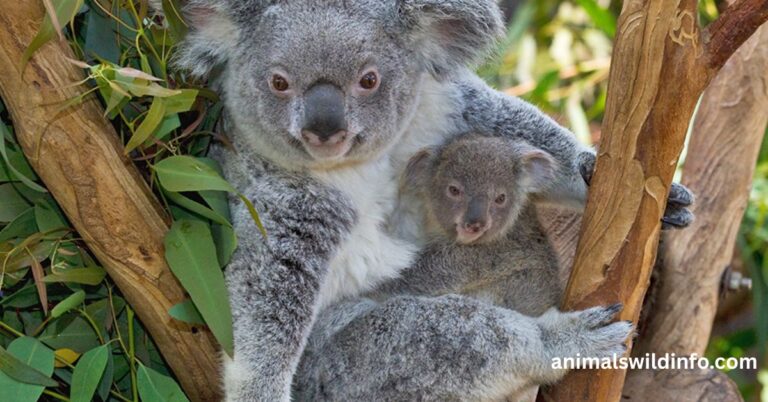
Koalas sleep up to 20 hours a day, and for most of the year they make very little noise. Breeding season is the exception. Males produce deep, loud bellows that carry a long way through the forest, so the koala is quiet for most of the year but not all of it.
Their diet of tough, low-nutrition eucalyptus leaves demands a slow, energy-saving lifestyle. Spending most of the day resting high in a tree keeps them out of sight and away from ground predators.
5. Manatee: The Gentle Grazer
Manatees drift through warm coastal waters and graze on seagrass at a relaxed pace. Adults can weigh up to about 1,200 pounds, yet they move gently. They are not silent, since they make chirps and squeaks, especially between mothers and calves, but they are among the calmer quiet ocean animals.
The name “sea cow” comes from their grazing habit, not from any sound. Their slow, calm nature makes them vulnerable to boat strikes, because they do not dart away quickly from danger.
See Also: Top 17 Thickest Skin Animals in the World (With Pictures & Amazing Facts)
6. Llama: The Humming Pack Animal
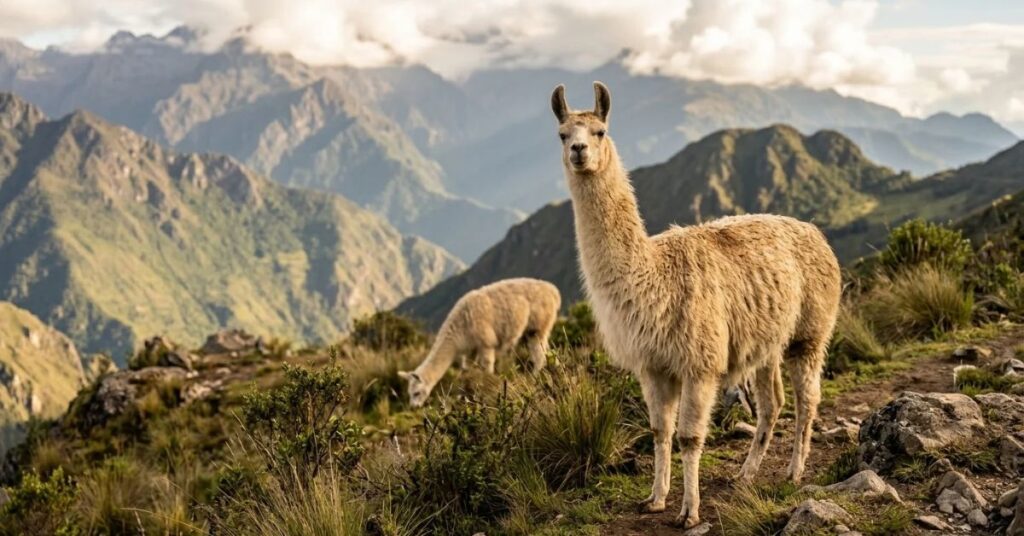
Llamas trade loud calls for a soft hum, which they use to show contentment, curiosity or mild worry. They do give a sharp alarm call when they sense danger, but they are calmer than most farm animals.
They also communicate through ear position and posture. Their steady temperament makes them reliable pack animals in the Andes and a common choice for therapy visits.
7. Giraffe: Quiet Giants
Giraffes look like they should be loud, but they are one of the quieter large mammals. For years they were called almost mute. A 2015 study then recorded giraffes humming at night, at a pitch humans can hear. They also snort, grunt and bleat on occasion, and calves call to their mothers.
You may still read that giraffes use infrasound to talk across long distances. That idea has not been firmly proven, so it is safer to say the humming may help herd members keep in touch in the dark. Giraffes also drink only occasionally, because acacia leaves provide moisture, which cuts down on risky trips to the water.
8. Deer: Silent Signals in the Woods
Deer rely mostly on scent marking, tail flicks and body posture to signal danger, readiness to mate or simple presence. They are not mute. They grunt, bleat and snort, and males can bellow loudly during the autumn rut.
This mostly silent system helps deer avoid predators like wolves and mountain lions. It also adapts easily to habitats ranging from dense woods to suburban backyards.
9. Rabbit: Speaking Through Movement
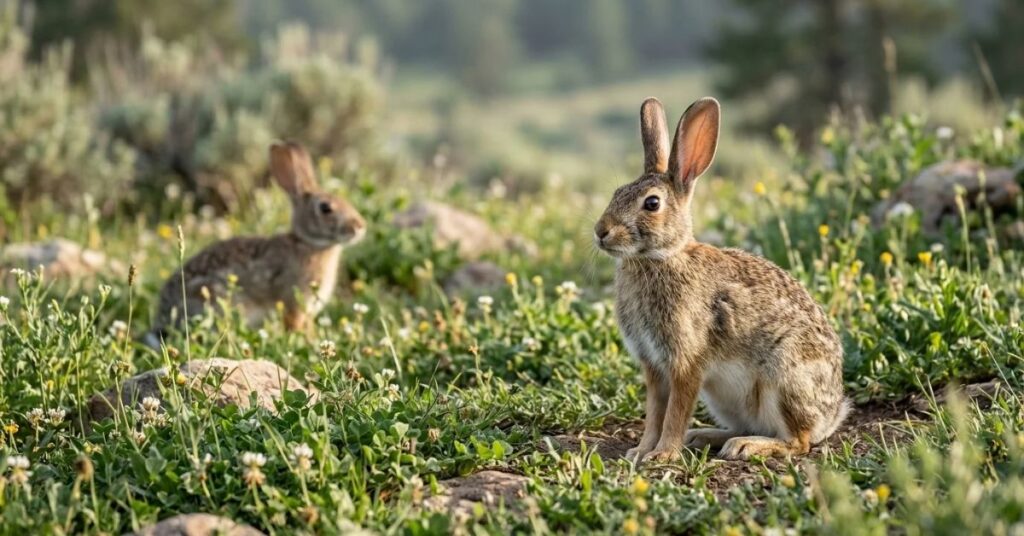
Rabbits speak mostly through movement. A twitching nose, flattened ears or a joyful hop called a “binky” all carry meaning without a sound. They also thump their back feet to warn others of danger, and they can scream when seized by a predator, which is rare.
Staying still and silent often protects them better than running. Even as pets, rabbits keep that instinct, which is why they are a popular quiet pet for low-noise homes.
See Also: Top 20 Dirtiest Animals in the World (With Pictures & Surprising Facts)
10. Owl: The Silent Flyer
Owls fly in near-total silence thanks to the serrated leading edge, soft surface and fringed trailing edge of their feathers, which break up air turbulence. This makes them some of the most effective silent predators, able to swoop on prey before it senses danger.
The silence applies to their wings, not their voices. Many owls hoot, screech and call often, especially at night. Their silent flight also helps control rodent populations in farmland and forests.
11. Turtle: Slow and Steady
Turtles carry a calm presence on land and in water. Most make little sound and move at their own pace, and their shells offer protection, so they do not need loud warnings. Researchers have found that some species do make quiet calls, but they remain among the more silent reptiles.
Sea turtles show sharp instincts too. Many return to the beach where they hatched, after traveling thousands of miles. That combination of patience and precision makes turtles underrated silent species.
12. Goldfish: Quiet Freshwater Fish
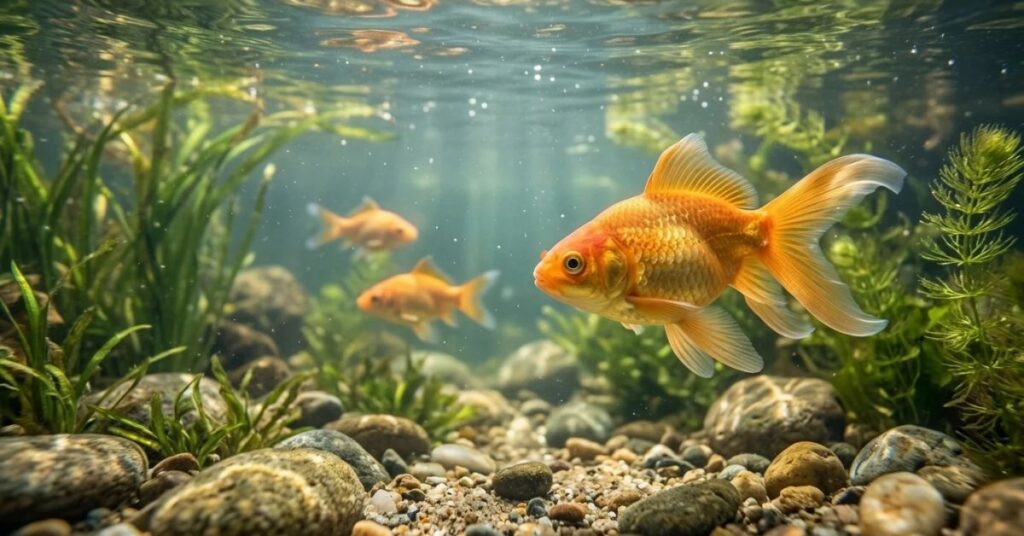
Goldfish are freshwater fish that live quiet lives underwater. They communicate through movement, schooling and chemical cues rather than sound. Long dismissed as simple pets, they can remember tasks for months and respond to training.
Goldfish also form loose social bonds with tank mates. Their silence is not a lack of personality. It is just a different, water-based way of passing along a message.
13. Jellyfish: Drifting Without a Brain
Jellyfish have drifted through the oceans for more than 500 million years without a brain, a heart or a vocal system. They move in near-total silence, making them one of the purest examples of noiseless animals.
Some species glow through bioluminescence, using light instead of sound to ward off threats. Their long survival with such a simple body plan shows that complexity is not required.
14. Butterfly: Silent Pollinator
Butterflies flutter through gardens without a sound, pollinating flowers as they go. Most people barely notice this work, but it supports plant life across whole ecosystems.
They communicate through color and scent rather than sound, another case of silent communication. A butterfly landing softly on a flower is a reminder that quiet creatures often do very large jobs.
15. Bat: Quiet to Human Ears
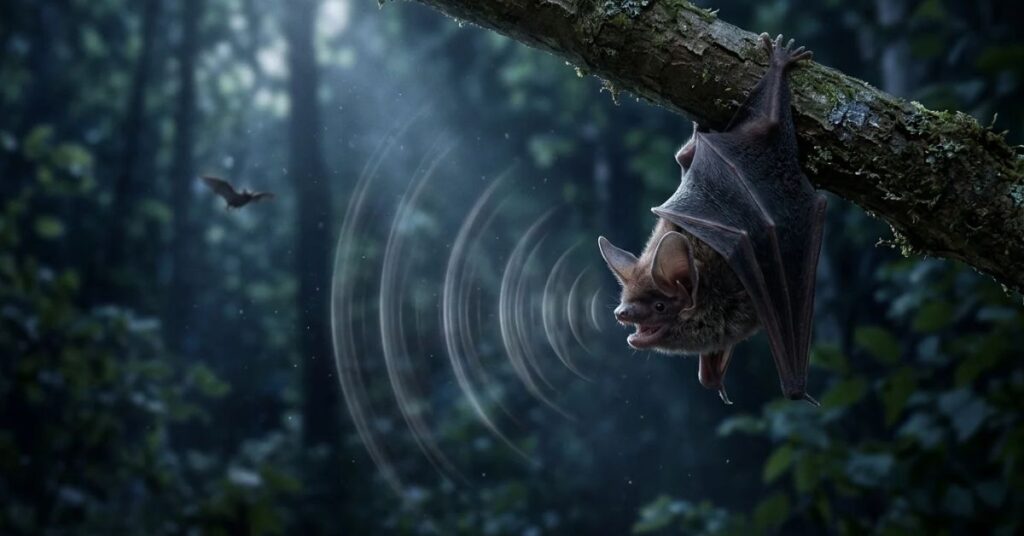
Bats use echolocation to navigate and hunt in the dark. These calls are real vocalizations, but most are ultrasonic, so humans cannot hear them. That is why bats seem silent to us even when they are “shouting.” Bats also make social calls that people can hear, and they are not blind. Most species see quite well.
Bat colonies groom each other and share food, showing social bonds that do not depend on audible noise. By eating huge numbers of insects, bats also help farmers and reduce the need for pesticides.
See Also: 30 Energy Animals in the World (With Pictures & Interesting Facts)
16. Shark: Hunting by Vibration
Sharks hunt using the lateral line, a set of sensors that picks up vibrations in the water. They also use smell and electrical sensing. This stealthy approach makes them some of the more surprising silent predators in the ocean.
Despite their fierce reputation, sharks move with quiet precision rather than loud aggression. Their sensitivity to water movement lets them track prey from a distance.
17. Snake: Pheromones and Body Language
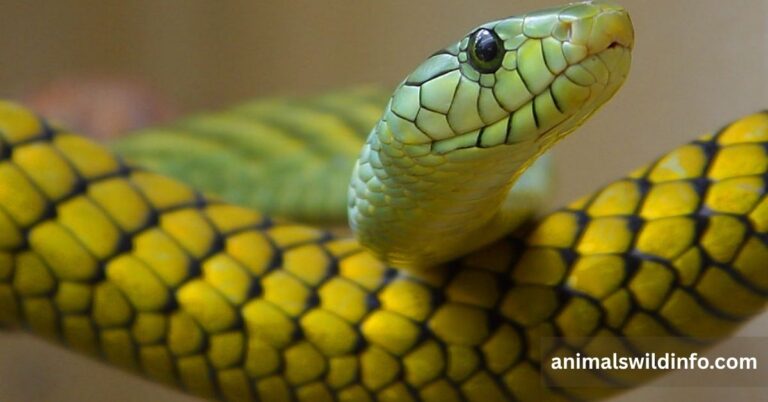
Most snakes skip vocal calls and rely on body language and pheromones. Many cannot make any sound beyond a hiss, with the rattlesnake’s rattle as the famous exception, and that sound is a warning made by the tail, not a voice.
Camouflage plays a huge role too, letting snakes blend into leaves, sand or bark. Some species gather in communal dens during cold months, proving that quiet predators can still have social lives.
18. Lizard: Color-Coded Communication
Many lizards use color and posture instead of calls. A male anole’s bright throat flash during mating season is a silent signal that needs no sound. Geckos are an exception, since many species chirp and the tokay gecko is surprisingly loud.
This visual system supports camouflage, letting lizards blend into rocks, bark or sand while still sending clear messages to other lizards.
19. Spider: Reading Web Vibrations
Spiders build silk webs that serve as both home and hunting tool, and they read vibrations instead of listening for sound. Web vibration is among the most important forms of silent communication among arachnids.
Jumping spiders skip webs and rely on sharp eyesight to pounce. Others sit and wait for a tremor that signals a trapped meal. Either way, spiders quietly keep insect populations in check in gardens and forests.
20. Crab: Small Movements, Big Messages
Crabs communicate through subtle body movements, claw waving and chemical signals, so busy coastlines stay quiet. With nearly 7,000 species, they vary hugely in color and behavior, while sharing this low-noise style. Some, like ghost crabs, do make faint rasping sounds.
As scavengers, crabs help break down organic material along coastlines. Molting, in which they shed and regrow their exoskeleton, is another quiet kind of resilience.
21. Snail: The Chemical Communicator
Snails glide on a layer of mucus that helps with both movement and hydration. They communicate through chemical signals left in their slime trails, which makes them animals with silent behavior by design.
Snails also break down organic matter, which supports soil health. From slow movement to chemical messages, they show how quiet garden and forest dwellers still play a big role in biodiversity.
22. Earthworm: The Silent Soil Engineer
Earthworms live almost entirely underground, breaking down organic matter and improving soil health. Their burrows aerate the soil and help water drain, making them essential to wildlife habitats even though most people never see them.
They also host countless microorganisms, creating a hidden ecosystem beneath our feet. Some of nature’s most valuable work happens without any sound at all.
23. Hedgehog: Shy Rather Than Silent
Hedgehogs forage at night and rely more on smell than on sound to find food. When threatened, they curl into a tight ball of spines instead of confronting the threat. They are not truly quiet, though. They snuffle, snort and hiss, and a foraging hedgehog can be surprisingly noisy in dry leaves.
That makes the hedgehog a good example of a shy animal, one that avoids contact rather than one that makes no sound. It is a common backyard visitor in many parts of the world.
24. Eel: Silent Night Swimmer
Many eels swim through rivers and oceans mostly at night, moving with a smooth, snake-like motion that draws little attention. Their nocturnal habits and low visibility make them some of the more mysterious quiet sea animals. The electric eel does produce electric pulses, but not sound.
Some species, such as the European and American eels, travel thousands of miles to breed, navigating by instinct rather than by any loud signal. Staying quiet often means staying alive.
Why Are Some Animals Naturally Quiet?
Most quiet animals are quiet because survival pressure has rewarded silence over many generations. Prey animals stay quiet to avoid alerting predators, while predators stay quiet so their next meal does not hear them coming. Natural selection favors the quieter individuals in both groups, since noise tends to get animals noticed at the wrong moment.
Habitat shapes this behavior too. Dense forests, ocean depths and underground burrows reward stealth, while open plains sometimes favor louder calls that carry over long distances. That split explains why quiet forest animals differ so much from loud savanna dwellers.
Body structure matters as well. Jellyfish, snails and worms have no voice box and no need for one, so their silence is built in. For them, quiet is a body plan, not a strategy.
Benefits of Being Quiet in the Wild
Being quiet gives animals four practical advantages:
- Predator avoidance. Silent movement and camouflage help prey slip past danger unnoticed.
- Stealth hunting. Predators like owls and snow leopards use the same silence to sneak up on prey, which turns quiet into an offensive tool.
- Energy conservation. Loud calls and constant movement burn calories that quiet animals save for foraging or raising young.
- Less conflict. Silent body language often settles disputes without the risk of a loud, dangerous confrontation.
An owl’s wings make almost no sound, and that silence is a large part of how it stays fed.
Difference Between Quiet, Shy, and Silent Animals
Quiet, shy and silent describe three different things, and most articles use them as if they were the same. A quiet animal makes little noise by nature. A shy animal avoids contact with humans or other animals, even if it can make sound. A silent animal produces little or no sound because it lacks the body parts for it.
| Trait | Meaning | Examples |
| Quiet | Low vocal activity by nature | Giraffe, sloth |
| Shy | Avoids exposure or interaction | Hedgehog, deer |
| Silent | Cannot or almost never makes sound | Jellyfish, earthworm |
A giraffe is quiet but not shy, since it moves openly across the plains. A hedgehog is shy, and while it is fairly quiet, it still snuffles and hisses. A jellyfish is silent, because it has no vocal system at all.
More Surprising Facts About Quiet Animals
These facts are new to this guide and not repeated from the entries above:
- Barn owls can find prey in complete darkness using hearing alone.
- Sloths climb down from the trees only about once a week, usually to go to the toilet.
- Octopuses have three hearts and blue blood.
- Sharks have been around for roughly 450 million years, longer than trees have.
- The manatee’s closest living relatives are elephants and hyraxes.
- Earthworms have five pairs of heart-like vessels that pump blood through their bodies.
- Jellyfish are about 95 percent water.
- Some snails seal themselves inside their shells and rest through dry spells that can last months.
FAQ’s
What animals are very quiet?
Giraffes, snails, sloths, and owls are among the quietest animals. Giraffes rarely make sounds, and owls fly almost silently thanks to their soft feathers.
Which animal is the most silent?
The giraffe is often called the most silent animal, since it hums only at night and makes few sounds. Snails and jellyfish are also nearly silent.
Which animal represents quiet?
The owl often symbolizes quiet and wisdom because of its silent flight. The mouse and the snail are also seen as symbols of quietness.
What are the top 10 shy animals?
Common shy animals include the okapi, pangolin, red panda, fennec fox, sloth, deer, rabbit, chinchilla, aye-aye, and mouse deer. They hide, avoid humans, or stay active mostly at night.
Conclusion
Quiet animals show that survival does not require noise. A giraffe humming in the dark, an owl gliding on silent wings and a jellyfish drifting for millions of years all stay safe, fed and balanced in their ecosystems through stillness. Some are truly silent, some are only shy, and many are quiet with a few loud exceptions.