12 Fascinating Animals With Shells Found Around the World
Nature builds some pretty clever armor. Shell-bearing animals carry their protection right on their backs, and that simple trick has kept them alive for millions of years. From ocean floors to backyard gardens, animals with shells show up in more places than you’d think.
This guide walks you through the toughest, weirdest, and most fascinating shelled animals on the planet. You’ll learn why they grow shells, which ones are the toughest, and what makes each species so unique.
What Are Animals With Shells?
Animals with hard shells are creatures that carry a rigid, protective covering on the outside of their bodies. This covering acts like a personal fortress. It shields soft tissue from predators, weather, and physical damage. Turtles, snails, crabs, and clams all fall into this group, even though they come from completely different branches of the animal kingdom. Some shells grow with the animal for life. Others get replaced as the creature grows too big for its old armor.
It helps to know what separates a true hard outer shell from other kinds of body armor. A shell is usually made of calcium carbonate or bone, and it’s fused to or grown from the animal’s body. An exoskeleton, on the other hand, is a hard outer casing that covers the whole body of an arthropod, like a beetle or a crab. Scales are smaller, overlapping plates found on reptiles and fish. All three do similar jobs, but their structure and origin differ quite a bit, and we’ll dig deeper into that comparison later in this article.
Why Do Animals Have Shells?
Shells didn’t appear by accident. Every shell-covered animal on this list developed its armor through millions of years of evolution, shaped by real survival pressure. A shell offers predator protection, and that’s reason enough for it to stick around in the gene pool. Soft-bodied creatures like snails and clams would get picked off in seconds without one. Beyond defense, shells help many species avoid drying out. Land snails, for example, seal themselves inside their shells during dry spells to lock in moisture.
Shells also give many animals structural support, almost like an internal skeleton turned inside out. Think of the chambered nautilus, whose shell holds its entire soft body together while also controlling buoyancy underwater. Then there’s camouflage. A mottled, textured shell can blend right into rocks, sand, or coral, making an animal nearly invisible to hungry eyes. Together, these functions explain why shell adaptations show up again and again across such different species. It’s one of nature’s most reliable survival tools.
List of Animals With Shells
Here’s a quick look at the 12 hard shell animals covered in this guide.
| Number | Animal | Habitat Type |
| 1 | Common Snapping Turtle | Freshwater |
| 2 | Gopher Tortoise | Land |
| 3 | Garden Snail | Land |
| 4 | Conch | Marine |
| 5 | Chambered Nautilus | Marine |
| 6 | Giant Clam | Marine |
| 7 | Oyster | Marine |
| 8 | King Crab | Marine |
| 9 | Horseshoe Crab | Marine |
| 10 | Nine-Banded Armadillo | Land |
| 11 | Texas Ironclad Beetle | Land |
| 12 | Pond Slider | Freshwater |
Top 12 Animals With Shells
These twelve shell animals prove just how creative nature gets when it comes to armor. Some live in oceans, some in ponds, and a few walk on dry land. Let’s meet each one.
Common Snapping Turtle
Scientific Name: Chelydra serpentina Class: Reptilia Diet: Omnivore
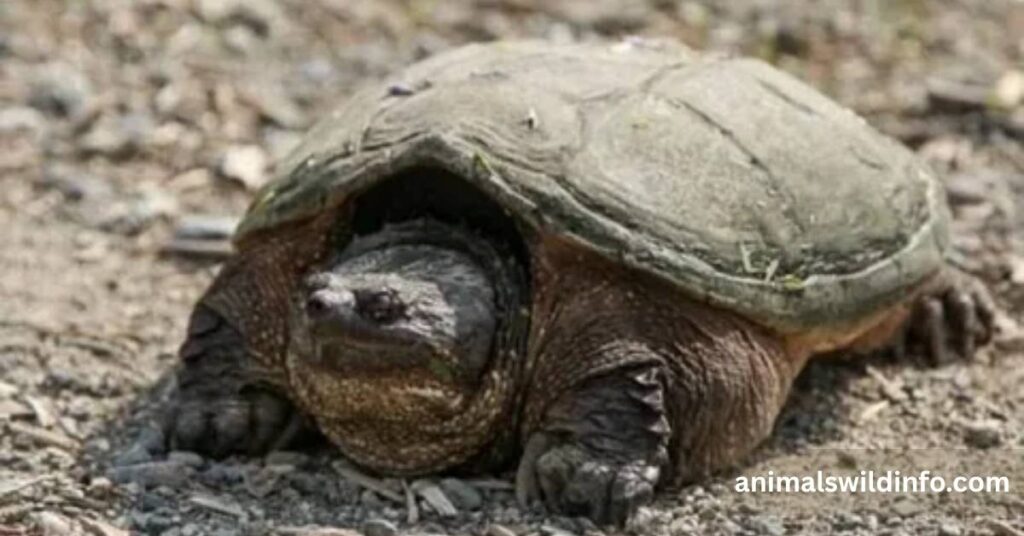
The Common Snapping Turtle rules its freshwater territory with a powerful bite and a rugged shell. This freshwater turtle spends most of its life buried in mud, waiting patiently for a meal to swim past. Its carapace isn’t just armor.
It also acts as camouflage, letting the turtle blend into murky riverbeds while it ambushes fish, frogs, and even small birds. Snapping turtles rank among the most recognizable reptiles with shells in North America, and their tough build has barely changed in millions of years.
Read More: Top 25 Fascinating Animals That Eat a Lot You Should Know
Gopher Tortoise
Scientific Name: Gopherus polyphemus Class: Reptilia Diet: Herbivore
The Gopher Tortoise digs burrows that stretch up to 40 feet long, and those tunnels do more than shelter the tortoise itself. Dozens of other species, including snakes and rabbits, move in and use the same burrow for safety.
This makes the tortoise a keystone species in its habitat, since so much local wildlife depends on its digging. Its domed shell protects it from Florida’s blazing heat and the occasional predator, proving that a good shell does more than just block teeth and claws.
Garden Snail
Scientific Name: Cornu aspersum Class: Gastropoda Diet: Herbivore
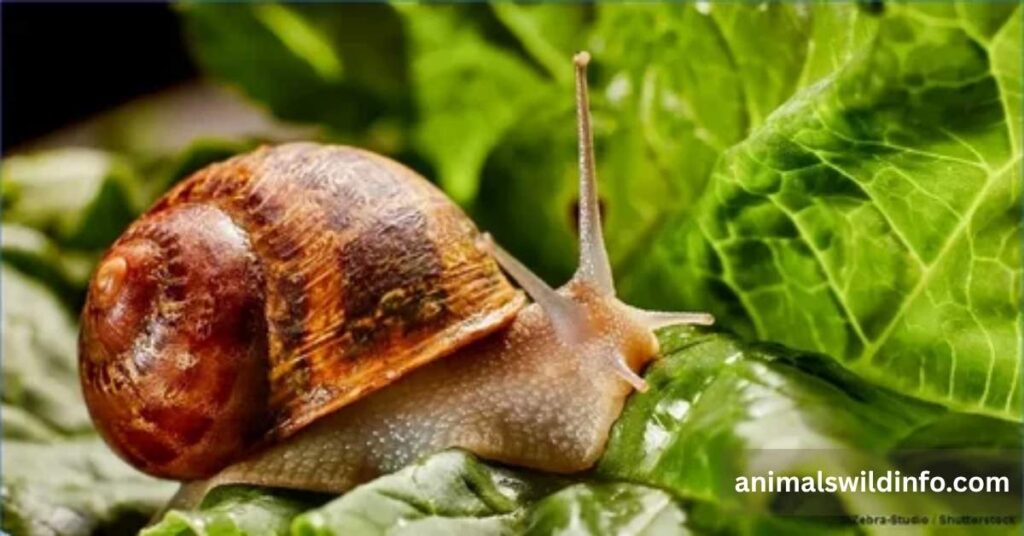
You’ve probably seen a Garden Snail after a rainy night, trail glistening behind it. This slow-moving gastropod builds its coiled shell out of calcium carbonate, layering it bit by bit as it grows. The shell isn’t just protection from birds and beetles.
It also traps moisture, which matters a lot for a soft-bodied creature that can dry out fast in the sun. When conditions turn harsh, the snail seals itself inside with a thin layer of mucus and waits things out, an impressive little survival trick for such a tiny animal.
Conch
Scientific Name: Strombus gigas Class: Gastropoda Diet: Herbivore
Conchs are some of the most recognizable marine animals with shells, thanks to their large, spiral-shaped shells with a glossy pink interior. Found across warm Caribbean waters, these mollusks graze on algae growing over seagrass beds, which keeps those ecosystems healthy and balanced.
A young conch starts life as a tiny larva drifting through open water before settling down and building its shell from scratch. Over time, that shell grows thick enough to survive strong currents, hungry predators, and the occasional beachcomber.
Chambered Nautilus
Scientific Name: Nautilus pompilius Class: Cephalopoda Diet: Carnivore/Scavenger
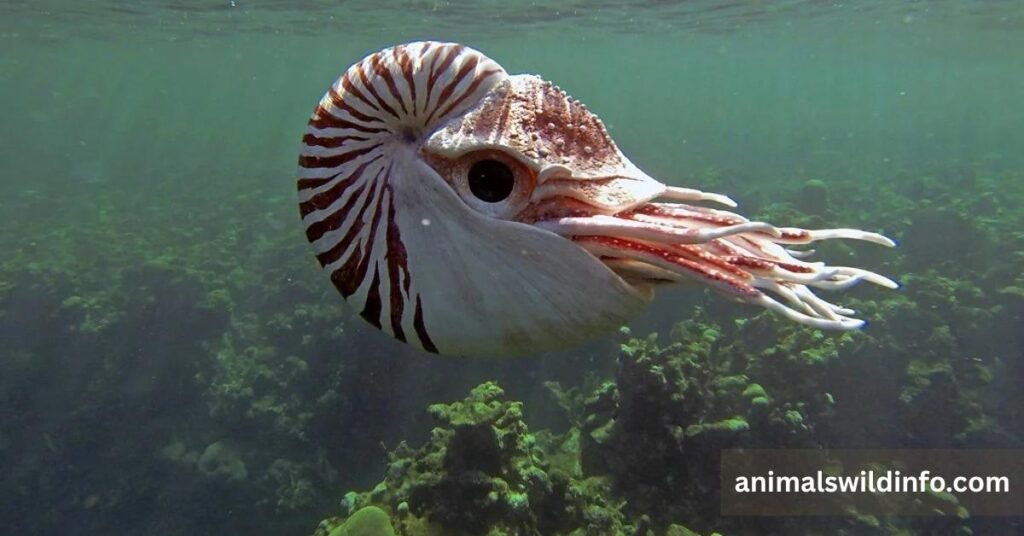
Few creatures earn the nickname “living fossil” quite like the Chambered Nautilus. This cephalopod has barely changed in over 400 million years, and its spiral shell explains why the design still works so well. Inside, the shell splits into gas-filled chambers that control
buoyancy, letting the nautilus rise and sink through deep ocean water without much effort. Unlike its speedy cousins the octopus and squid, the nautilus drifts slowly through the dark, relying on patience rather than speed to survive.
Giant Clam
Scientific Name: Tridacna gigas Class: Bivalvia Diet: Omnivore
The Giant Clam is a genuine ocean heavyweight, sometimes topping 500 pounds and stretching four feet across. This massive bivalve hosts colonies of algae right inside its tissue, and that partnership fuels much of its growth.
Sunlight powers the algae, and the algae feed the clam in return, a textbook example of teamwork in nature. Its thick, ridged shell isn’t just for looks either. It filters huge volumes of ocean water daily, which helps keep coral reef ecosystems clean and balanced.
Read More: Top 25 Animals With Long Legs (With Pictures & Fascinating Facts)
Oyster
Scientific Name: Crassostrea virginica Class: Bivalvia Diet: Filter feeder
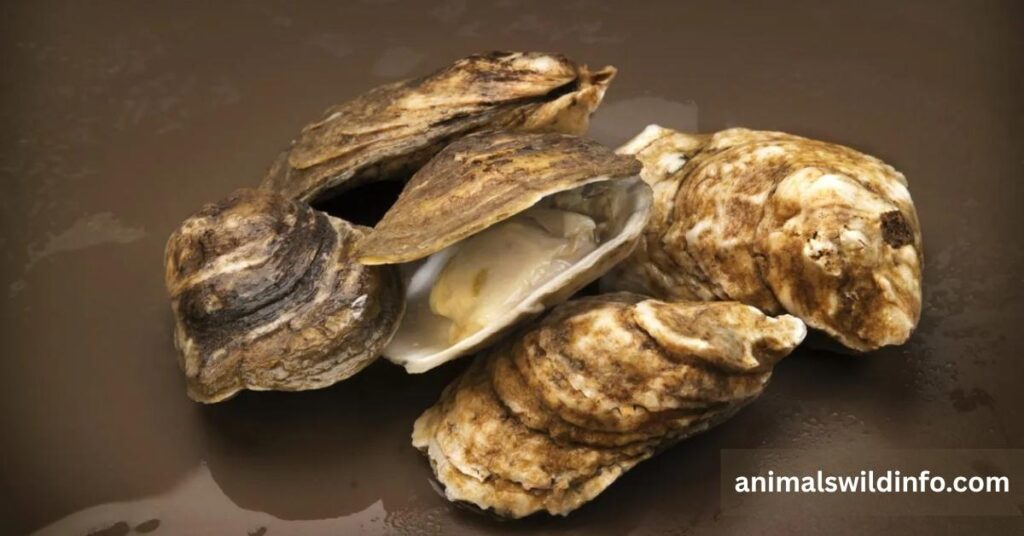
Oysters might be famous on dinner plates, but their real value runs much deeper. As a filter feeder, a single oyster can clean up to 50 gallons of water every single day, pulling out sediment and pollutants as it feeds. That makes oysters one of the hardest-working ocean animals with shells in coastal ecosystems.
Oyster reefs also provide shelter for fish, crabs, and countless smaller creatures. Interestingly, many oysters can even switch their reproductive sex depending on environmental conditions, giving them an edge when population numbers shift.
King Crab
Scientific Name: Paralithodes camtschaticus Class: Malacostraca Diet: Omnivore
The King Crab is one of the most well-known crustaceans with shells, prized for its size and its meat. Living in the icy waters of the Bering Sea, this crab wears a spiky, reddish-orange shell that doubles as both armor and camouflage against the rocky seafloor.
Male King Crabs put on elaborate displays during mating season, flexing their strength to attract partners and fend off rivals. As scavengers, they also clean up the ocean floor, helping keep their marine ecosystem in balance.
Horseshoe Crab
Scientific Name: Limulus polyphemus Class: Merostomata Diet: Carnivore
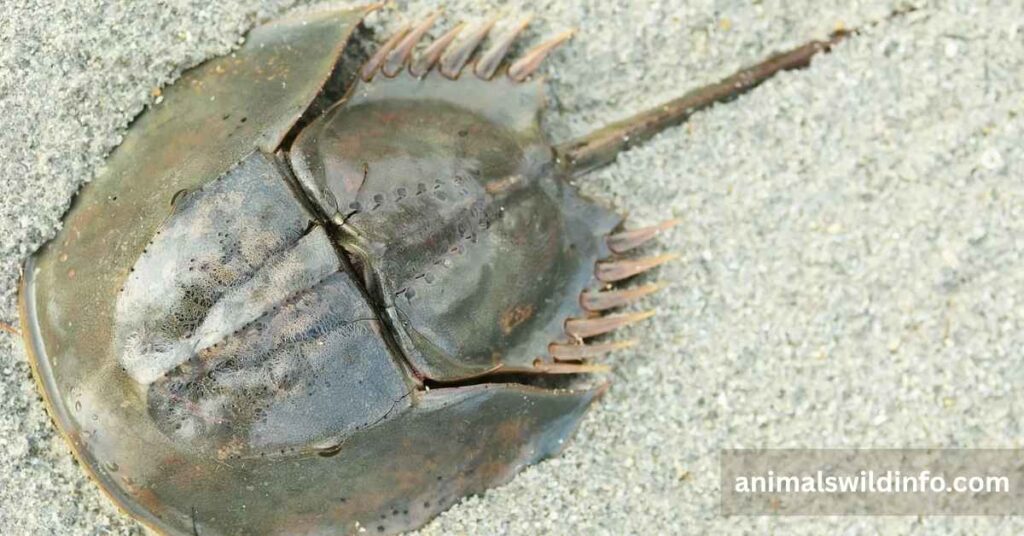
Despite the name, the Horseshoe Crab isn’t a true crab at all. It’s actually more closely related to spiders and scorpions. This ancient arthropod has survived for over 450 million years, protected by a smooth, horseshoe-shaped shell.
Its blue blood contains a rare compound that detects bacteria instantly, which is why the medical industry relies on it to test the safety of vaccines and equipment. Every spring, thousands of horseshoe crabs crawl onto sandy beaches to lay eggs, feeding migrating shorebirds along the way.
Nine-Banded Armadillo
Scientific Name: Dasypus novemcinctus Class: Mammalia Diet: Omnivore
The Nine-Banded Armadillo stands out as one of the only mammals wearing real body armor. Its bony plates, covered in tough skin, work like flexible tiles rather than one solid shell.
When threatened, it can curl up tightly or bolt underground in seconds, digging with surprising speed for such a small animal. This armadillo also has an odd reproductive quirk. It almost always gives birth to four identical babies from a single egg, which is rare anywhere in the animal kingdom.
Texas Ironclad Beetle
Scientific Name: Zopherus nodulosus haldemani Class: Insecta Diet: Herbivore/Detritivore
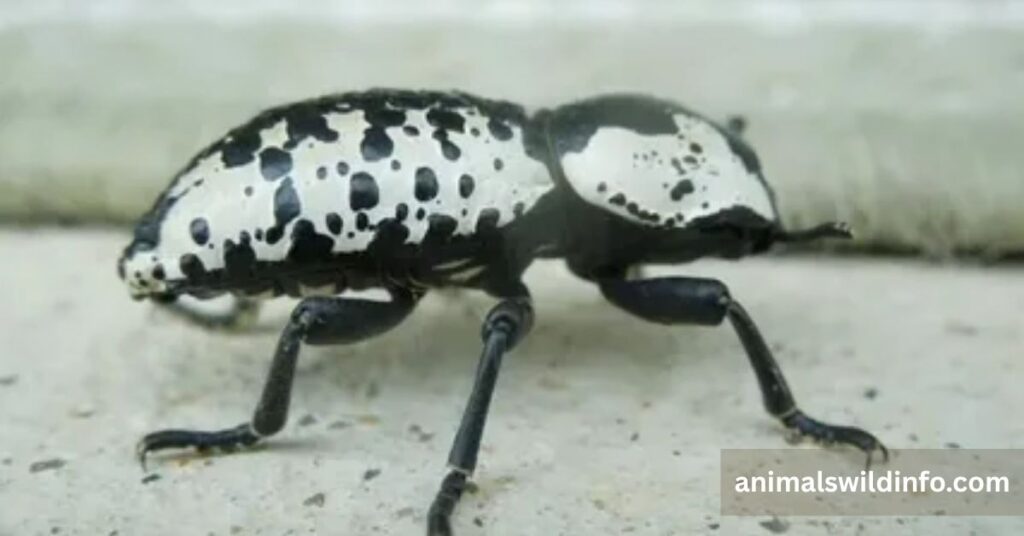
Don’t let its small size fool you. The Texas Ironclad Beetle can survive being crushed under nearly 39 times its own body weight, making it one of the toughest insects on Earth. Instead of running from danger, this beetle just plants its feet and relies on its protective armor to do the work.
Its matte black exoskeleton looks unremarkable at first glance, but that plain exterior hides one of the strongest natural structures found in any small creature.
Pond Slider
Scientific Name: Trachemys scripta Class: Reptilia Diet: Omnivore
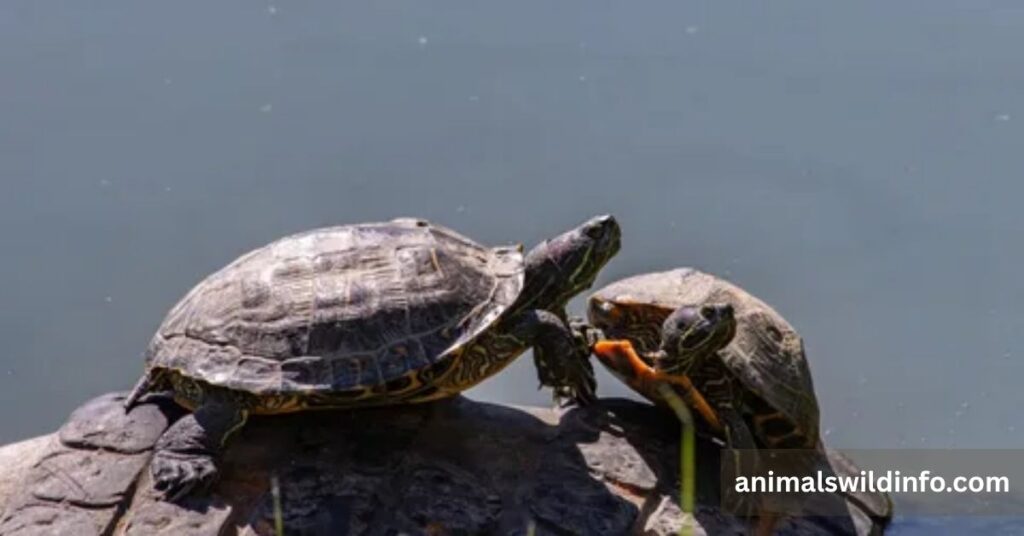
The Pond Slider is a familiar sight across ponds, lakes, and slow rivers in the United States, often spotted basking in a neat row on a floating log. Its shell carries bold yellow and green markings that make it easy to identify from a distance.
Sliders adapt well to almost any freshwater environment, which sometimes lets them outcompete native species for food and space. Beyond their looks, these turtles use subtle body movements to communicate, showing more social behavior than most people expect from a reptile.
Read More: Top 15 Amazing Animals With Thick Fur (With Pictures & Fascinating Facts)
Animals With the Hardest Shells
Not every shell offers the same level of protection, and a few species really stand out for raw toughness. The Texas Ironclad Beetle takes the crown pound-for-pound, surviving crushing force that would flatten most insects instantly. The Giant Clam follows close behind, its thick shell built to withstand decades of ocean pressure and predator attacks. Turtles and tortoises rely on fused bone structure, which makes their shells almost impossible to crack once fully grown.
The Horseshoe Crab rounds out the list of animals with strong shells, and its survival record speaks for itself. This creature has outlasted multiple mass extinction events, dinosaurs included, without needing a major redesign. That kind of staying power is rare in the animal kingdom, and it says a lot about how well its shell design solves the problem of predator protection. When you look at these four species side by side, a clear pattern shows up: durability wins over speed every single time.
| Animal | Shell Hardness Feature |
| Texas Ironclad Beetle | Withstands 39x body weight in crushing force |
| Giant Clam | Thick, ridged shell resistant to reef predators |
| Turtles and Tortoises | Fused bone carapace, nearly impossible to crack |
| Horseshoe Crab | Smooth shell that’s survived 450+ million years |
Which Mammals Have Shells?
Mammals rarely carry shells, which makes the Nine-Banded Armadillo such an oddball in the group. Its body armor consists of overlapping bony plates rather than one continuous shell, giving it more flexibility than a turtle enjoys. This design lets the armadillo curl into a ball or stay mobile, depending on the threat it’s facing. It’s honestly one of the more surprising examples of natural body armor found anywhere in nature.
So why doesn’t the armadillo have a true shell like a turtle? The answer comes down to biology. True shells, like a tortoise’s, fuse directly to the skeleton and don’t separate from the spine or ribs. An armadillo’s plates sit over the skin instead, more like a suit of tiles than a single fused structure. That difference matters for scientists studying shell formation, since it shows two completely different evolutionary paths arriving at a similar solution.
Shells vs. Exoskeletons vs. Scales
People often lump shells, exoskeletons, and scales together, but each one forms differently and serves a slightly different purpose. A true shell, like you’d find on a mollusk or turtle, grows from living tissue and often contains calcium carbonate. It usually grows continuously with the animal, layer by layer, rather than being shed. This is what separates true shell structure from other types of armor found in the wild.
An exoskeleton covers the entire body of an animal, especially arthropods like beetles, crabs, and horseshoe crabs. Unlike a shell, an exoskeleton doesn’t grow. Instead, the animal molts and grows a new, larger one underneath. Scales, meanwhile, are small, individual plates that overlap like roof tiles, commonly found on fish and reptiles such as snakes. Armadillos sit in an interesting gray zone, since their bony plates resemble both a shell and overlapping scale armor at once.
Interesting Facts About Animals With Shells
Some facts about wildlife with shells are almost hard to believe. The horseshoe crab has survived five mass extinction events, making it older than most dinosaurs by a wide margin. A single oyster filters roughly 50 gallons of water a day, cleaning entire bays over its lifetime. The Texas Ironclad Beetle can be run over by a car and often walk away completely unharmed, thanks to its shock-absorbing exoskeleton.
Record holders show up throughout this group too. The Giant Clam is the largest living bivalve on Earth, sometimes weighing more than a grown adult. The Chambered Nautilus has barely changed in over 400 million years, earning its reputation as a true living fossil. Meanwhile, the Gopher Tortoise’s burrows can stretch the length of a school bus, supporting an entire underground community of other species. These small details show just how much biodiversity hides inside something as simple as a shell.
Final Thoughts
Animals with protective covering remind us how creative evolution can get when survival is on the line. From tiny garden snails to massive ocean-dwelling clams, every shell tells a story of adaptation built over millions of years. These creatures aren’t just tough. They’re essential parts of their ecosystems, filtering water, supporting other species, and keeping food chains balanced.
As habitats shrink and oceans face growing pressure, protecting these hard-bodied animals matters more than ever. Whether it’s an armored beetle in Texas or a coral reef clam in the Pacific, every shelled species plays a role worth preserving. Understanding them is the first step toward appreciating just how much of our planet’s ocean biodiversity and land wildlife depends on a little bit of natural armor.
FAQ’s
An animal with a shell is any creature that carries a hard, protective covering on its body, usually made from calcium carbonate or bone. Turtles, snails, crabs, and clams are common examples found in the wild.
Many species carry shells, including turtles, tortoises, snails, oysters, clams, and horseshoe crabs. Even one mammal, the Nine-Banded Armadillo, wears bony plates that function like a shell.
An animal with a shell is often called a shelled animal or shell-bearing creature. Depending on the species, it may also be classified as a mollusk, reptile, or crustacean.
Several animal groups include shelled species, such as mollusks, reptiles, and crustaceans. Mollusks like snails and clams, reptiles like turtles, and crustaceans like crabs all carry some form of protective shell.