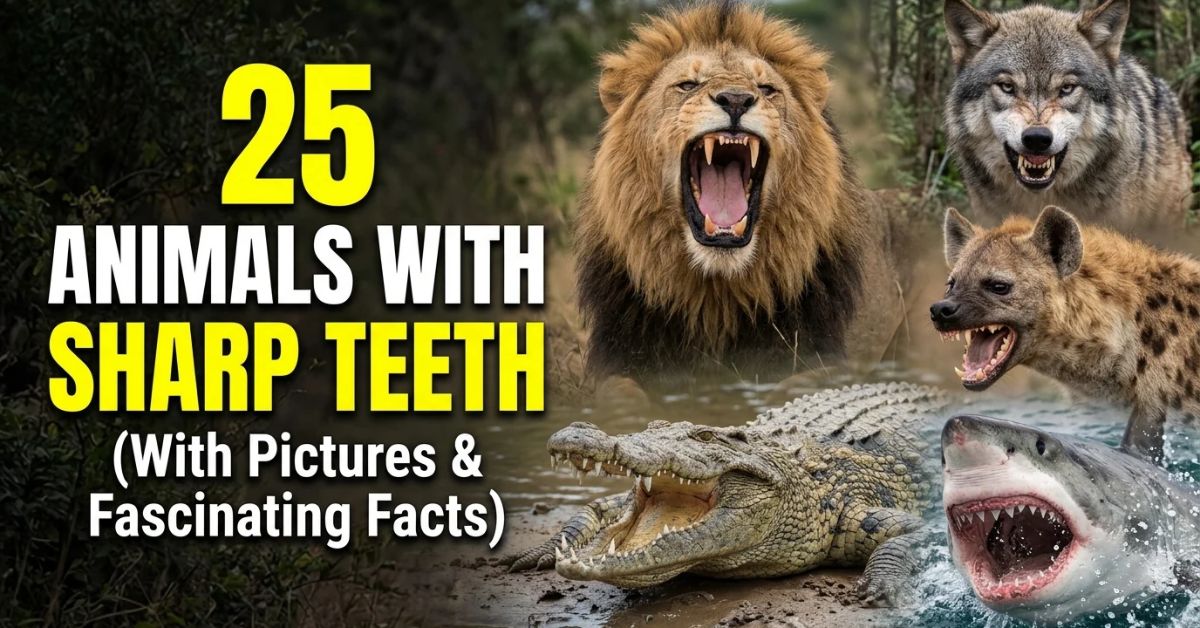
25 Animals With Sharp Teeth (With Pictures & Fascinating Facts)
A great white shark loses teeth all the time, and a fresh one rotates forward to fill the gap. That’s just one wild trick from the world of animals with sharp teeth. From African savannas to coral reefs, animal predators use their teeth to grab, slice and survive. Some of these animals with pointed teeth hunt in packs. Others strike alone from the shadows. You’ll meet 25 of them below, with names, facts and a few surprises.
Each creature here lives in a different corner of the planet. You’ll find mammals with sharp teeth, fish with sharp teeth and reptiles with sharp teeth. A few don’t fit the usual mold. The hippo mostly eats grass. Baboons eat almost anything. Vampire bats sip blood. Still, all of them carry serious dental weapons, and every one of them earns a spot among animals with dangerous teeth.
Quick Glance: Animals With Sharp Teeth
| No. | Animal | Scientific Name | Class | Diet | Tooth Highlight |
| 1 | Lion | Panthera leo | Mammalia | Carnivore | Canines near 3 inches |
| 2 | Great White Shark | Carcharodon carcharias | Chondrichthyes | Carnivore | Serrated, constantly replaced |
| 3 | Hippopotamus | Hippopotamus amphibius | Mammalia | Herbivore | Canines up to 20 inches |
| 4 | Crocodile | Crocodylus niloticus | Reptilia | Carnivore | 64 to 68 cone-shaped teeth |
| 5 | Tiger | Panthera tigris | Mammalia | Carnivore | Long stabbing canines |
| 6 | Wolf | Canis lupus | Mammalia | Carnivore | 42 teeth with shearing molars |
| 7 | Jaguar | Panthera onca | Mammalia | Carnivore | Skull-piercing bite |
| 8 | Leopard | Panthera pardus | Mammalia | Carnivore | Strangling bite |
| 9 | Hyena | Crocuta crocuta | Mammalia | Carnivore | Bone-cracking premolars |
| 10 | Polar Bear | Ursus maritimus | Mammalia | Carnivore | 42 teeth for seal hunting |
| 11 | Orca | Orcinus orca | Mammalia | Carnivore | Conical teeth up to 4 inches |
| 12 | Komodo Dragon | Varanus komodoensis | Reptilia | Carnivore | About 60 serrated teeth |
| 13 | Alligator | Alligator mississippiensis | Reptilia | Carnivore | 74 to 80 gripping teeth |
| 14 | Wolverine | Gulo gulo | Mammalia | Carnivore | Rotated molars |
| 15 | Tasmanian Devil | Sarcophilus harrisii | Mammalia | Carnivore | Huge bite for its size |
| 16 | Barracuda | Sphyraena barracuda | Actinopterygii | Carnivore | Dagger-like teeth |
| 17 | Piranha | Pygocentrus nattereri | Actinopterygii | Omnivore | Interlocking triangles |
| 18 | Moray Eel | Muraenidae | Actinopterygii | Carnivore | Needle-like, curved back |
| 19 | King Cobra | Ophiophagus hannah | Reptilia | Carnivore | Fixed front fangs |
| 20 | Gaboon Viper | Bitis gabonica | Reptilia | Carnivore | Fangs up to 2 inches |
| 21 | Black Mamba | Dendroaspis polylepis | Reptilia | Carnivore | Fast venom delivery |
| 22 | African Wild Dog | Lycaon pictus | Mammalia | Carnivore | Blade-like carnassials |
| 23 | Vampire Bat | Desmodus rotundus | Mammalia | Blood feeder | Razor-sharp incisors |
| 24 | Baboon | Papio species | Mammalia | Omnivore | Dagger-like male canines |
| 25 | Saber-Toothed Cat | Smilodon fatalis | Mammalia | Carnivore (extinct) | Canines up to 7 inches |
List of Animals With Sharp Teeth
Every predator on this list has its own story. Its tooth structure shapes how it eats. Long spikes grab prey. Thin blades slice meat. Broad crushers snap bone. Scientists study animal dental anatomy to understand these designs. You can learn a lot about an animal’s life from a single jaw.
Most of these creatures are carnivorous animals with sharp teeth. Many are predatory animals sitting at the top of their food chains. A few use their teeth mainly for defense or show. As you read, you’ll see how hunting adaptations differ across land, sea and river. Each profile below packs in the key facts and one fun detail.
1. Lion
Panthera leo rules the African grasslands. An adult lion has about 30 teeth. The lion’s canine teeth can grow close to three inches long. These sharp canine teeth lock onto a throat and cut off the prey’s air. Behind them sit carnassial teeth that shear meat like scissors. Lions don’t chew much. They gulp down big chunks instead. Pride hunting boosts their prey capture odds because females often work together to trap a target. A lion’s jaw strength also lets it crack bones for marrow. Age takes a toll, though. Worn teeth make hunting slow and hard. Fun fact: a lion’s roar can carry about five miles.
See Also: Top 19 Dirtiest Animals in the World (With Pictures)
2. Great White Shark
Carcharodon carcharias patrols oceans worldwide. Great white shark teeth are triangular and edged like steak knives. These animals with serrated teeth grow about 300 teeth at once in several rows. When one tooth breaks off, the next row moves up. A single shark can use thousands of teeth in a lifetime. Great whites don’t chew. They bite and shake instead. That motion saws chunks off a seal or sea lion. They often strike from below at high speed. Their cartilage skeleton places them in the class Chondrichthyes. Fun fact: a great white can reach teeth about three inches long.
3. Hippopotamus
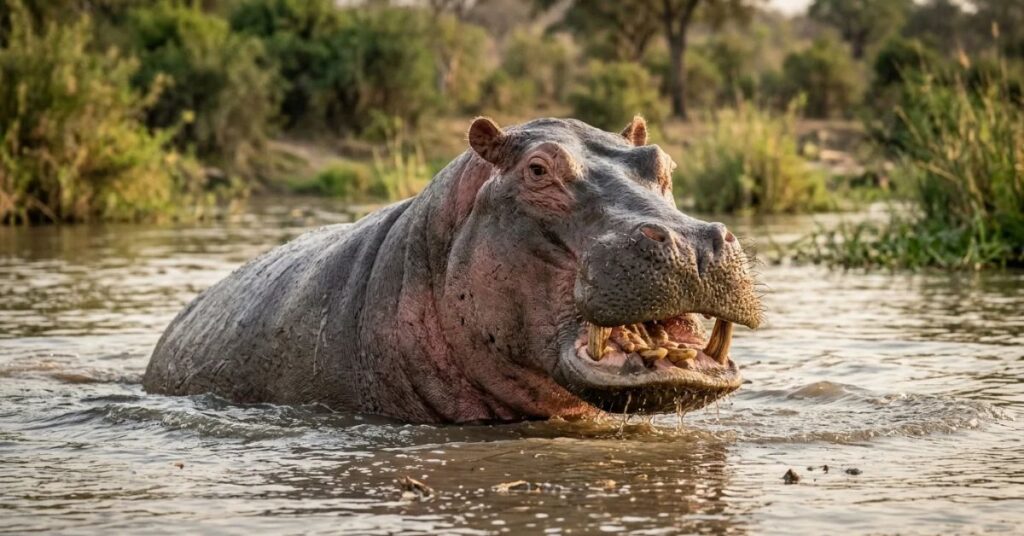
Hippopotamus amphibius looks calm but carries a fierce mouth. This giant mostly grazes on grass at night. Yet it ranks among the animals with large canine teeth. Its lower canines can reach about 20 inches. They never stop growing. Hippos don’t use them for eating. They use them to fight rivals and warn intruders. A wide yawn shows off the incisors and canines as a threat. People often call the hippo one of Africa’s most dangerous large animals. Its animals with powerful jaws reputation is well earned. Fun fact: a hippo can open its mouth about 150 degrees.
4. Crocodile
Crocodylus niloticus is a living relic from the age of dinosaurs. The Nile crocodile owns 64 to 68 cone-shaped teeth. These crocodile pointed teeth don’t slice. They grab and hold. Among reptiles with sharp teeth, crocs also show a strong bite force. Tests on Nile crocodiles have measured around 5,000 pounds per square inch. Once the jaws close, escape is nearly impossible. The animal then twists in a “death roll” to tear off pieces. Crocs replace worn teeth many times over. That keeps their bite sharp for life. Few animals with dangerous teeth are as patient. Fun fact: crocodiles can’t stick out their tongues.
5. Tiger
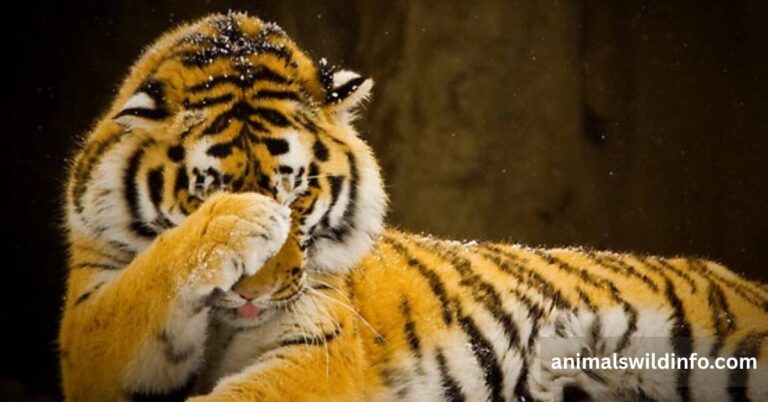
Panthera tigris stalks forests and grasslands across Asia. The tiger’s sharp fangs measure roughly 2.5 to 3 inches. These animals with piercing teeth aim for the neck or throat. The long canines slip between the neck bones. Behind them, sharp back teeth slice meat from bone. Tigers hunt alone and rely on ambush. They creep close and then charge in a burst. As animals with sharp canine teeth, they can drag large prey to cover. Young cubs practice biting during play. Strong jaw muscles let adults cut through thick hide. Fun fact: no two tigers carry the same stripe pattern.
6. Wolf
Canis lupus roams the northern world in tight family packs. A wolf has 42 teeth. The wolf canine teeth grip prey and hold on. The back carnassials shear meat and crack bone. As predatory mammals, wolves work as a team. They test herds and pick out the weak. Their bite helps them finish a kill fast. Pups learn to control their bites through rough play. Adults also carry food to the young using their mouths. A healthy set of teeth means a better chance of survival. Fun fact: a wolf can eat about 20 pounds of meat in one meal.
7. Jaguar
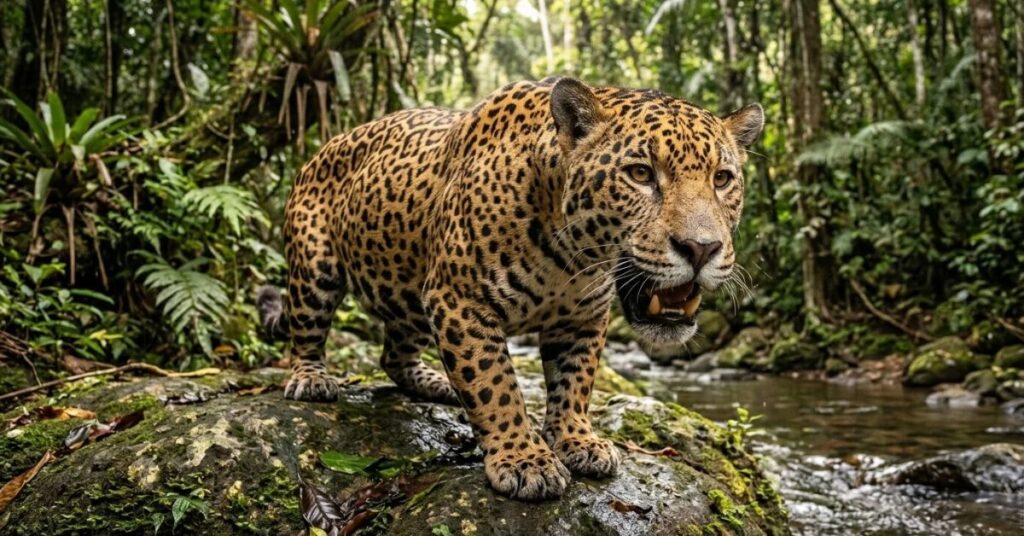
Panthera onca lives in the forests and swamps of the Americas. Its jaguar bite force ranks among the strongest of any big cat for its size. Powerful canines pierce skulls and crush turtle shells. Most cats bite the neck. Jaguars often bite straight through the head. That ends the hunt in seconds. They love water and hunt caimans and fish along riverbanks. Their thick, heavy jaws suit that tough menu. Few animals with powerful jaws match their punch. Fun fact: the name jaguar comes from an Indigenous word often translated as “he who kills with one leap.”
8. Leopard
Panthera pardus slips through Africa and Asia like a shadow. This cat has about 30 teeth. The leopard hunting teeth include long canines for a strangling bite. They hold the throat until the prey stops moving. Then the leopard hauls its kill up a tree. Strong jaws and neck muscles make that climb possible. Hanging meat stays safe from lions and hyenas. A leopard’s teeth also help it carry cubs. Few big cats adapt as well to forests, deserts and mountains. Fun fact: a leopard can lift prey heavier than itself into a tree.
See Also: Animals That Eat Seeds: 15 Seed-Eating Animals (Full List)
9. Hyena
Crocuta crocuta has a famous laugh and a fearsome mouth. The hyena crushing teeth include thick premolars made for splintering bone. These animals with powerful jaws can eat almost every part of a carcass. They even digest bone. Many people think hyenas only scavenge. In truth, spotted hyenas kill most of their own food. They hunt in clans and chase prey over long distances. At night, their strong teeth help them eat fast before lions arrive. Hyenas also clean up leftovers and slow the spread of disease. Fun fact: female spotted hyenas lead the clan.
10. Polar Bear
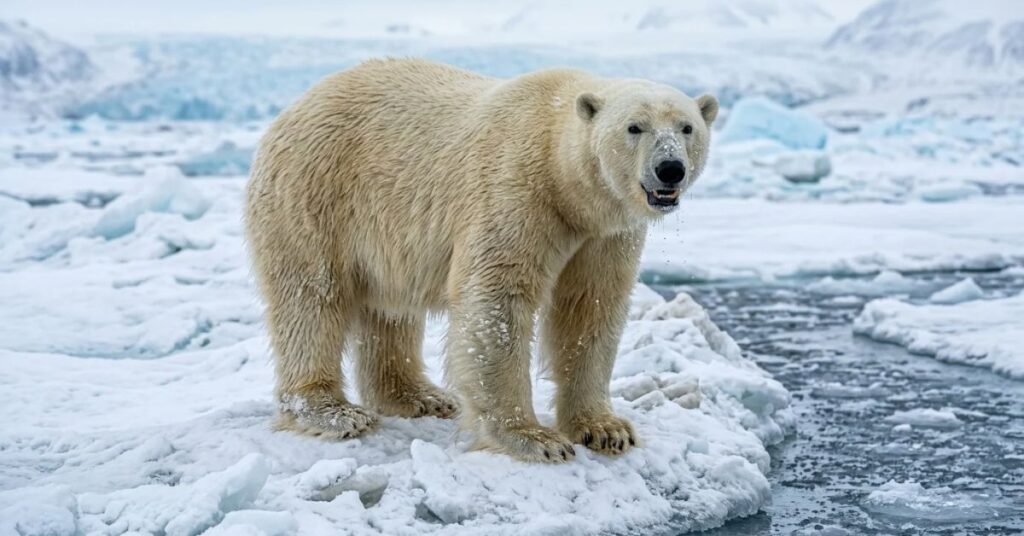
Ursus maritimus stands as the largest land carnivore. It has 42 teeth built for seals. Among meat-eating animals, the polar bear relies on fat for energy. Its long canines grip slippery prey at breathing holes in the ice. Broad molars tear through blubber and flesh. The polar bear canine teeth also help drag a seal onto the ice. Mothers teach cubs these skills over two years or more. Melting sea ice now threatens their hunting grounds. Even the sharpest teeth can’t help a bear without ice. Fun fact: a polar bear can smell a seal from miles away.
11. Orca (Killer Whale)
Orcinus orca is the ocean’s top predator. The orca conical teeth number 40 to 56 and reach about four inches. They interlock like a trap. Orcas hunt in family pods. They coordinate to trap fish, seals and even whales. Different groups follow different feeding habits. Some eat only fish. Others only hunt marine mammals. Their teeth wear down with age and may change what an old orca can eat. Despite its nickname, the orca is the largest member of the dolphin family. Fun fact: pods pass hunting skills down through generations.
12. Komodo Dragon
Varanus komodoensis is the heaviest lizard on Earth. It lives on a few Indonesian islands. The Komodo dragon serrated teeth look like tiny steak knives. A mouth holds about 60 of them. The animal replaces them every few months. These animals with serrated teeth also carry venom glands in the lower jaw. Together, the cuts and venom weaken big prey like deer and pigs. Komodos ambush from cover and bite hard. Then they follow the wounded animal until it drops. They swallow huge chunks with help from their flexible jaws. Fun fact: adults can grow up to about ten feet long.
13. Alligator
Alligator mississippiensis thrives in swamps across the southern United States. It has 74 to 80 teeth. The alligator sharp teeth are cone-shaped and built to grip. They don’t cut. Gators grab fish, birds and mammals and then spin in a death roll. The bite measures over 2,000 pounds per square inch in tests. An alligator can replace each tooth dozens of times. That keeps the bite fresh through life. Gators also dig “gator holes” that save water for other wildlife in dry spells. Fun fact: you can see only the upper teeth when an alligator closes its mouth.
14. Wolverine
Gulo gulo looks like a small bear but fights like a giant. It lives in cold northern forests and tundra. The wolverine powerful jaws carry special rotated molars. Those molars shear off frozen meat and crack bone for marrow. A wolverine rarely tops 40 pounds yet will steal food from bigger predators. It hunts small animals and scavenges old carcasses. Then it hoards extra food for later. In deep winter, its teeth turn frozen leftovers into a meal. Few predatory animals show such toughness in such a small frame. Fun fact: wolverines can cover huge distances in a single day.
15. Tasmanian Devil
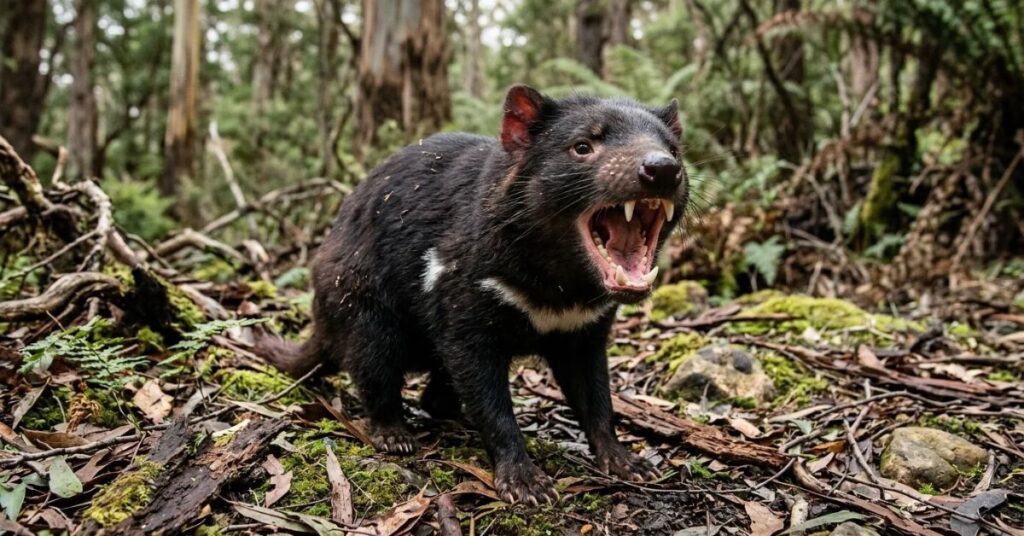
Sarcophilus harrisii lives only on the island of Tasmania. The Tasmanian devil teeth and jaws deliver one of the strongest bites for body size among living mammals. They crunch bone and fur. Little goes to waste. Case study: since the 1990s, devil facial tumour disease has spread through wild populations. It passes through biting during fights. Numbers have dropped by more than 80 percent in some areas. Conservation teams now run insurance populations and health checks. Researchers watch the species closely on the IUCN Red List. Fun fact: the devil’s loud screech gave it its name.
16. Barracuda
Sphyraena barracuda cruises tropical reefs like a silver torpedo. The barracuda pointed teeth look like daggers set in a long jaw. As fish with sharp teeth, barracudas belong to the class Actinopterygii. They stalk smaller fish and then dash in at about 27 miles per hour. One snap grabs and pins the prey. They swallow smaller fish whole. Barracudas also chase shiny objects and sometimes mistake them for food. Attacks on people are rare. Still, divers keep their jewelry off in barracuda waters. Fun fact: great barracudas can grow longer than six feet.
See Also: 30 Energy Animals in the World (With Pictures & Interesting Facts)
17. Piranha
Pygocentrus nattereri swims in the rivers of South America. The piranha razor-sharp teeth form a tight row of interlocking triangles. These animals with razor-sharp teeth bite like tiny scissors. They slice flesh from fish and other prey. Piranhas often feed in shoals. Yet movies exaggerate the danger. Most piranhas eat fish and insects. Some even eat seeds and plants. They also clean rivers by removing weak or dead animals. When a tooth breaks, a new one replaces it. Fun fact: piranhas shed teeth in sections, one side of the jaw at a time.
18. Moray Eel
Muraenidae is a family of reef hunters that hide in rocky cracks. The moray eel teeth are thin, curved and backward-pointing. These animals with needle-like teeth hold slippery fish and shrimp with ease. Case study: in 2007, researchers Rita Mehta and Peter Wainwright reported that morays use a second set of throat jaws. When the main jaws bite, the hidden jaws shoot forward and drag the prey down. Few fish feed this way. The open-mouth pose you see isn’t a threat. It’s how morays pump water over their gills. Fun fact: some morays hunt side by side with groupers.
19. King Cobra
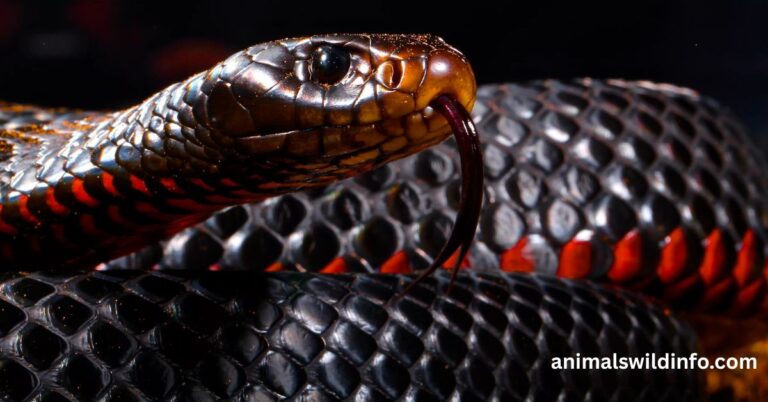
Ophiophagus hannah is the longest venomous snake on Earth. It can reach about 18 feet. Its name means “snake-eater.” The king cobra fangs sit at the front of the mouth and stay fixed in place. They’re short at roughly half an inch. As animals with curved fangs, king cobras use these venom-injecting fangs to deliver a strong nerve toxin. Teeth behind the fangs help push prey down the throat. The snake swallows meals whole without chewing. A king cobra feeds mostly on other snakes. It also rears up and spreads its hood to scare rivals. Fun fact: it’s the only snake that builds a nest.
20. Gaboon Viper
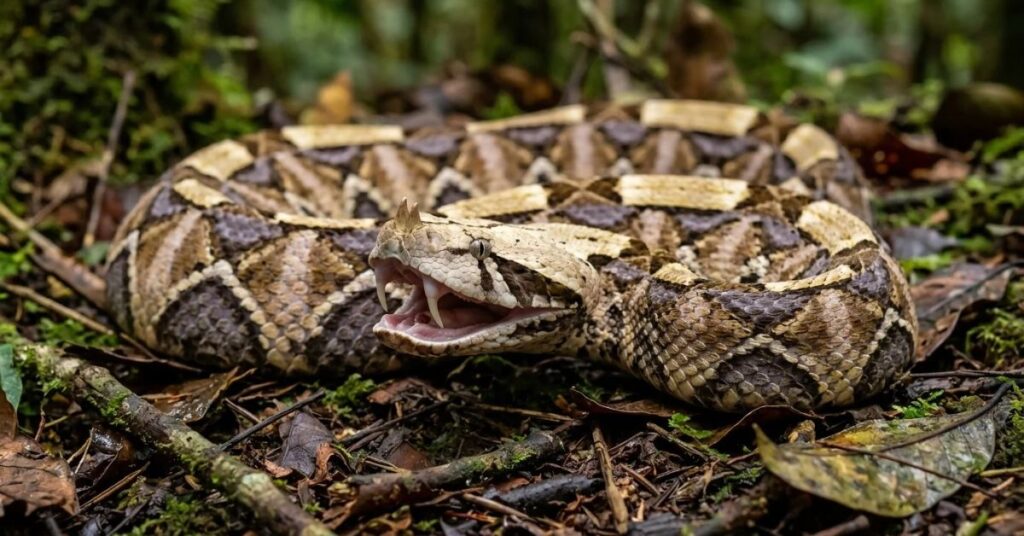
Bitis gabonica hides in the leaf litter of African forests. Its camouflage is superb. The Gaboon viper long fangs can reach about two inches. These are the longest fangs of any snake. They fold back against the roof of the mouth when closed. As animals with long fangs, vipers swing them forward during a strike. The long animal fangs then inject venom deep into the prey. The snake waits motionless for hours. A mouse or small antelope walks by and the trap snaps shut. Despite the scary fangs, this viper rarely strikes unless disturbed. Fun fact: its patterns blend with dead leaves almost perfectly.
21. Black Mamba
Dendroaspis polylepis slides across African savannas and rocky hills. The black mamba venomous fangs are fixed at the front of the mouth. They measure about a quarter inch. The venom acts fast on the nervous system. Mambas strike several times in a row. They can reach about 12 miles per hour in short bursts. That makes them among the fastest snakes on land. A mamba usually flees if it has a chance. It bites mainly when cornered. Adults can grow up to 14 feet long. Fun fact: the name comes from the inky black inside of its mouth.
22. African Wild Dog
Lycaon pictus means “painted wolf.” These animal predators hunt across African savannas in tight packs. Their teeth include blade-like carnassial teeth that slice meat fast. The canines grip while the pack pulls prey down. Hunting success often runs between 60 and 80 percent. That tops most lions. Pack members share food and feed the sick or old first. Sadly, wild dogs now face habitat loss and disease. The IUCN lists them as endangered. Fun fact: every dog has a unique coat pattern.
23. Vampire Bat
Desmodus rotundus lives in Latin America and drinks blood. The vampire bat sharp incisors are razor-sharp and shaped like tiny blades. These animals with sharp incisors make a cut about the size of a pinhead. The bat laps the blood instead of sucking it. Its saliva keeps the blood flowing. Heat sensors on its nose find a good spot on the sleeping prey. A single meal can weigh as much as the bat. Colonies even share blood with hungry roostmates. Fun fact: vampire bats are among the few mammals known to share food with non-relatives.
24. Baboon
Papio is a group of large monkeys that live in Africa and Arabia. The baboon canine teeth in males can reach about two inches. They look like daggers. Baboons eat fruit, grass, insects and small animals. So they aren’t strict predators. Still, the canines matter for threats and defense. A male often yawns wide to show them. That display warns rivals and leopards to back off. Troops can top 100 members. Young baboons learn social rules by watching adults. Fun fact: a baboon’s teeth signal rank as much as danger.
See Also: Fluke vs. Flounder: 9 Key Differences You Need to Know in 2026
25. Saber-Toothed Cat
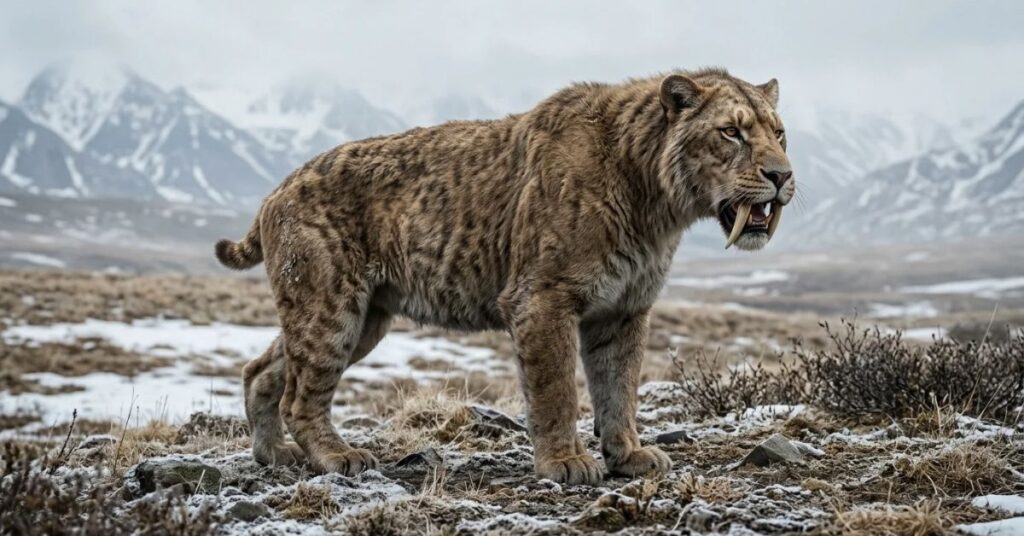
Smilodon fatalis vanished about 10,000 years ago. The saber-toothed cat elongated canines reached up to seven inches. They worked like blades to open the throat of big prey. The jaws were weaker than a lion’s bite. So the cat ambushed and pinned its victims first. Case study: the La Brea Tar Pits in Los Angeles have yielded thousands of Smilodon bones. Many show broken or worn teeth. That tells scientists how hard these hunters lived. Visit the La Brea Tar Pits site to learn more. Fun fact: the saber-toothed cat wasn’t a close cousin of the modern tiger.
How Do Sharp Teeth Help Animals Survive?
Sharp teeth drive hunting and survival in the wild. Hunters need to grab, kill and tear fast. Flesh-tearing teeth slice meat before rivals arrive. Long canines handle prey capture. They pin the animal and reduce its struggle. The best dental adaptations match each animal’s feeding habits. A snake needs a tight grip. A hyena needs a bone-cracker. A shark needs a blade.
Teeth also help with defense and status. Many animals flash their teeth to avoid a real fight. That saves energy and prevents injury. Teeth keep ecosystems in balance because animal predators limit prey numbers. Yet teeth don’t last forever. Wear, damage and age can end a hunter’s career.
A mouth tells the story of a life. Look at the teeth and you’ll know what’s for dinner.
| Survival Role | How Teeth Help | Example |
| Hunting | Grip and kill prey | Tiger |
| Feeding | Slice or crush food | Hyena |
| Defense | Warn or fight off rivals | Hippo |
| Display | Show rank and strength | Baboon |
| Balance | Control prey numbers | Wolf |
Different Types of Sharp Teeth in Animals
Different groups build teeth in different ways. Mammals with sharp teeth usually have a mix of tooth types. Reptiles and fish tend to have simple, repeated teeth. They also replace them often. Sharks and crocodiles grow new teeth all their lives. This tooth structure suits quick, rough feeding.
You can sort most sharp teeth into four main groups. Each group solves a different hunting problem. The table below gives a simple view. After it, you’ll find a closer look at each type.
| Tooth Type | Main Job | Examples |
| Canine teeth | Stab and hold | Lion, tiger, baboon |
| Incisors | Cut and scrape | Vampire bat, hippo |
| Carnassial teeth | Shear meat | Wolf, hyena, wild dog |
| Venom-injecting fangs | Inject toxin | King cobra, Gaboon viper |
Canine Teeth
Canines are the long, pointed spikes at the corners of the mouth. They stab deep and hold prey tight. Lions, tigers, wolves and baboons all rely on them. The saber-toothed cat took the idea to an extreme. Hippos use huge canines for fights rather than food. In most mammals with sharp teeth, the canines also grow thick roots. That helps them survive struggles without snapping.
Incisors
Incisors sit at the front of the mouth. They cut and scrape. The vampire bat has turned them into surgical blades. They slice skin with almost no pain. Hippos have large incisors as well. They use them in fights and for plucking grass. In many animals, these front teeth also help with grooming and carrying food. They look small next to canines but they do precise work.
Carnassial Teeth
Carnassials are special back teeth that slide past each other like scissors. They turn meat into manageable strips. Wolves, wild dogs, big cats and hyenas all have them. Hyenas also add heavy premolars for bone. Together, these form a complete carnivorous animals with sharp teeth toolkit. Without them, a predator would struggle to cut through tough hide.
Venom-Injecting Fangs
Some snakes use hollow or grooved fangs to inject venom. Cobras and mambas have fixed fangs at the front. Vipers like the Gaboon have long hinged fangs that fold flat. The Komodo dragon is a related case. Its teeth cut while venom glands in the jaw add to the damage. These venom-injecting fangs let small hunters take down large prey with little risk.
Frequently Asked Questions
What animals have very sharp teeth?
Lions, tigers, great white sharks, crocodiles, wolves, piranhas and venomous snakes all have very sharp teeth. Each one uses them in a different way. Some slice while others grip or inject venom. You can see all 25 in the list above.
What animal has the sharpest fangs?
It depends on how you measure sharpness. The Gaboon viper has the longest snake fangs at about two inches. The saber-toothed cat had the longest canines among cats. Great white sharks carry razor-edged serrated teeth. So there’s no single winner.
Which animal has 700000 teeth?
Trivia sites often point to snails and slugs. These animals have a ribbon-like tongue called a radula that carries thousands of microscopic teeth. Verified counts for common garden snails sit in the thousands. Some species reach tens of thousands. The 700,000 figure appears online but lacks a solid scientific source. Treat it with care.
What mythical creature has sharp teeth?
Vampires, dragons, werewolves and the chupacabra all feature sharp teeth. Storytellers often borrow from real predators. Bats, wolves and large reptiles inspired many of these legends. Fear of a toothy bite is a very old human instinct.
Final Thoughts
Animals with sharp teeth are some of the most gripping predators on Earth. Their teeth do far more than cut food. They help hunters survive and rivals back down. The great white shark, the tiger and the king cobra each solve the same problem in a different way. From animals with pointed teeth to animals with piercing teeth, nature offers endless designs.
These creatures also keep wild places healthy. They control prey numbers and clean up weak animals. Many now face habitat loss and climate change. Protecting them protects whole ecosystems. Next time you see a predator, look beyond the teeth. You’ll find a living tool kit shaped by millions of years of dental adaptations.