
Top 20 Scavenger Birds in the World (With Pictures, Names & Fascinating Facts)
Picture a quiet plain under a hot sky. A dark speck circles high above. Minutes later, dozens more join it. By evening, a carcass has turned into clean bones. That’s the work of scavenger birds.
In this guide, you’ll meet the top 20 scavenger birds in the world. You’ll learn how these scavenging birds find food and why they matter. You’ll also see which scavenger bird species need our help right now.
These birds that eat dead animals don’t get much love. Yet they keep wild places clean and healthy. Let’s give them the credit they deserve.
What Are Scavenger Birds?
Ever wondered who cleans up after nature’s feasts? Scavenger birds do. They are birds that feed on carrion, meaning the flesh of animals they didn’t kill. Experts call these carrion-eating birds or dead animal eaters. You’ll find them on every continent except Antarctica. Their scavenger birds habitat ranges from open grasslands and mountainous regions to tropical forests, wetlands, and coastal habitats. Some even thrive in busy urban environments.
Not every scavenger lives on carrion alone. Some are birds that survive by eating dead animals. Others scavenge only when live food runs short. Both groups clear decomposing animals and dead organic matter from the land. That’s why people call them nature’s cleanup crew. They also act as birds that clean the environment, one carcass at a time.
Quick Facts About Scavenger Birds
Let’s start with a fast snapshot. Vultures and condors are the stars of the group. They split into two camps. Old World vultures live in Europe, Asia, and Africa. New World vultures live in the Americas. Both camps use soaring ability to cover huge areas with little effort. The largest carrion-eating birds can have wingspans near 3 meters (about 10 feet).
Here’s a simple table to keep the groups straight. Sizes are “up to” figures. They vary by source.
| Group | Example | Main Region | Main Food |
| New World vultures | Turkey Vulture | The Americas | Fresh to rotting carcasses |
| Old World vultures | Griffon Vulture | Europe, Asia, Africa | Large animal remains |
| Condors | Andean Condor | South America | Livestock and wild carrion |
| Storks | Marabou Stork | Africa | Carrion and waste |
| Corvids | Common Raven | Northern Hemisphere | Almost anything |
| Gulls | Herring Gull | Coastal habitats | Fish, scraps, carrion |
Types of Scavenger Birds
Want the quick version of the types of scavenger birds? There are two main kinds. Obligate scavengers depend on carrion for nearly all their food. Vultures and condors fit here. Opportunistic scavengers eat carrion when they find it. Otherwise they hunt or forage. Ravens, crows, gulls, and eagles belong to this second group. Scientists often use the word “facultative” for these birds. It means the same thing in plain English.
Here’s a neat twist. Old World and New World vultures look alike. Both have bald heads and broad wings. Yet they aren’t close relatives. This is called convergent evolution. Similar lifestyles shaped similar bodies in unrelated birds. It shows how strongly biological adaptations follow the food. This idea also explains the differences between obligate and opportunistic scavengers. One group commits to carrion. The other keeps its options open.
Top 20 Scavenger Birds in the World
How did we pick these birds? We looked at diet, range, ecological role, and conservation status. Some are full-time carrion-feeding birds. Others scavenge when the chance comes. All of them show scavenging behavior in a big way. Together they cover six continents.
The table below gives you the full lineup at a glance. After it, you’ll find a closer look at each bird. Every profile covers its home range, habitat, and one standout trait.
| No. | Bird | Scientific Name | Family | Region | Status | Standout Trait |
| 1 | Turkey Vulture | Cathartes aura | Cathartidae | Americas | Least Concern | Sniffs out decay |
| 2 | Black Vulture | Coragyps atratus | Cathartidae | Americas | Least Concern | Follows other vultures |
| 3 | Andean Condor | Vultur gryphus | Cathartidae | Andes | Vulnerable | Huge wingspan |
| 4 | California Condor | Gymnogyps californianus | Cathartidae | Western US, Baja | Critically Endangered | Comeback story |
| 5 | King Vulture | Sarcoramphus papa | Cathartidae | Central and South America | Least Concern | Opens tough hides |
| 6 | Egyptian Vulture | Neophron percnopterus | Accipitridae | Europe, Africa, Asia | Endangered | Uses stones as tools |
| 7 | Griffon Vulture | Gyps fulvus | Accipitridae | S. Europe, N. Africa, Asia | Least Concern | Feeds in big flocks |
| 8 | Himalayan Griffon | Gyps himalayensis | Accipitridae | Himalayas, Tibet | Near Threatened | High-altitude flier |
| 9 | Lappet-Faced Vulture | Torgos tracheliotos | Accipitridae | Africa, Arabia | Endangered | Tears tough hide |
| 10 | White-Backed Vulture | Gyps africanus | Accipitridae | Sub-Saharan Africa | Critically Endangered | Savanna cleaner |
| 11 | Bearded Vulture | Gypaetus barbatus | Accipitridae | Mountains of Europe, Africa, Asia | Near Threatened | Eats bones |
| 12 | Cinereous Vulture | Aegypius monachus | Accipitridae | Spain to East Asia | Near Threatened | Heavyweight raptor |
| 13 | Marabou Stork | Leptoptilos crumenifer | Ciconiidae | Sub-Saharan Africa | Least Concern | Dump regular |
| 14 | Common Raven | Corvus corax | Corvidae | Northern Hemisphere | Least Concern | Brilliant problem-solver |
| 15 | Carrion Crow | Corvus corone | Corvidae | Europe, Asia | Least Concern | Drops food to crack it |
| 16 | Crested Caracara | Caracara cheriway | Falconidae | Americas | Least Concern | Walks the ground |
| 17 | Bald Eagle | Haliaeetus leucocephalus | Accipitridae | North America | Least Concern | Steals and scavenges |
| 18 | Golden Eagle | Aquila chrysaetos | Accipitridae | Northern Hemisphere | Least Concern | Hunter and scavenger |
| 19 | Black Kite | Milvus migrans | Accipitridae | Europe, Asia, Africa, Australasia | Least Concern | City scavenger |
| 20 | Herring Gull | Larus argentatus | Laridae | Northern Hemisphere | Least Concern | Coastal thief |
Turkey Vulture
Turkey Vulture soaring over open land, a carrion-eating bird of the Americas
Few birds smell as well as the Turkey Vulture (Cathartes aura). It detects gases that rising decomposing animals give off. That sense of smell lets it find food under thick forest cover. You’ll spot it from Canada to southern South America. It rocks side to side as it glides on warm air. Its wingspan reaches about 1.8 meters (6 feet). Because of this skill, other vultures often follow it to a meal. It’s one of the best examples of birds with a powerful sense of smell. It also shows how birds locate dead animals without wasting energy.
See Also: Fluke vs. Flounder: 9 Key Differences You Need to Know in 2026
Black Vulture
Black Vulture perched near a carcass, one of the black scavenger birds

The Black Vulture (Coragyps atratus) takes a different route. It leans on keen eyesight and on teamwork. It watches Turkey Vultures and then joins them at the food. You’ll find it from the southeastern United States down to South America. This bird has a short tail and a gray, wrinkled head. Its wingspan runs about 1.5 meters (5 feet). Social behavior matters a lot to it. Family groups roost together and defend food as a team. That’s why a lone Turkey Vulture often loses its meal to a crowd of Black Vultures.
Andean Condor
Andean Condor with open wings over the Andes mountains
Meet one of the large scavenging birds that rule the sky. The Andean Condor (Vultur gryphus) has a wingspan of up to about 3.3 meters (10.8 feet). It can weigh around 15 kilograms (33 pounds). It lives in the Andes and along nearby coasts. It rides air currents for hours with barely a flap. Its diet includes llama, cattle, and marine mammals that wash ashore. Many people see it as a national symbol in several South American countries. We’d call it “among the largest flying birds” since several species compete for that title. The IUCN lists it as Vulnerable.
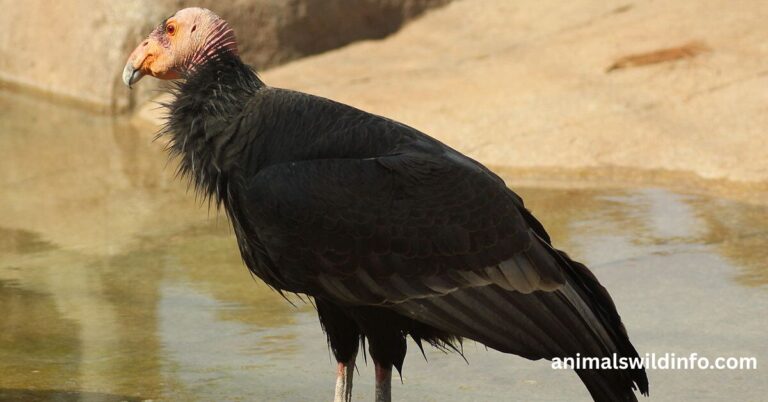
California Condor
California Condor in flight over rocky western cliffs
The California Condor (Gymnogyps californianus) is a true comeback story. By 1987, only 27 wild birds remained. Biologists captured every one of them for breeding. Conservation efforts then began to pay off. Today the species numbers several hundred birds in the western United States and Baja California. Check the latest count before you quote a figure. Its wingspan reaches about 3 meters (9.8 feet). It uses its soaring ability to cover vast mountainous regions in search of carcasses. Lead poisoning from ammunition remains its biggest threat.
King Vulture
Colorful King Vulture perched in a tropical forest
Few vultures look as flashy as the King Vulture (Sarcoramphus papa). Its head blends orange, yellow, purple, and red. It lives in tropical forests from southern Mexico to northern Argentina. Its powerful beak can tear through tough hides. Smaller vultures can’t do that. So they often wait for the King Vulture to open the carcass first. This creates a handy feeding order in the forest. The King Vulture is one of the clearest examples of how scavenger bird adaptations match local food availability.
Egyptian Vulture
Egyptian Vulture with yellow face standing on rocky ground

Here’s a small bird with a big brain. The Egyptian Vulture (Neophron percnopterus) wears white feathers and a yellow face. Observers have watched it drop stones onto ostrich eggs to crack them. That’s tool use. It ranges across southern Europe, Africa, and Asia. Many birds migrate between Europe and Africa each year. Sadly, it’s now Endangered. Poisoned baits and power lines take a heavy toll. Many people call it one of the smallest scavenger birds among true vultures. Still, it does a giant’s share of cleanup work.
Griffon Vulture
Griffon Vulture flock feeding on a carcass
Watch a Griffon Vulture flock and you’ll see communal feeding at its best. The Griffon Vulture (Gyps fulvus) has a wingspan of about 2.3 to 2.8 meters (7.5 to 9 feet). It nests in cliff colonies across southern Europe, North Africa, the Middle East, and Central Asia. Spain hosts a large share of the world population. These birds are birds that feed in groups. A herd animal can vanish in under an hour once the flock arrives. Their digestive system handles the leftovers with ease. Conservation groups count this species as a recovery success in parts of Europe.
Himalayan Griffon
Himalayan Griffon soaring above snowy peaks
Few birds fly higher than the Himalayan Griffon (Gyps himalayensis). It lives across the Himalayas and the Tibetan Plateau. Its wingspan can reach about 3 meters (10 feet). It patrols mountainous regions where oxygen runs thin. In Tibet, local tradition includes “sky burial.” Vultures consume the dead as part of the ritual. This ties the bird to human culture in a rare way. The species is listed as Near Threatened. Changing livestock practices and poisoning pose real risks.
Lappet-Faced Vulture
Lappet-faced Vulture with pink face folds on an African savanna
Fold-like skin flaps give the Lappet-faced Vulture (Torgos tracheliotos) its name. It lives across Africa and parts of Arabia. You’ll find it in dry savannas and open grasslands. It stands out as the boss of the carcass. Its powerful beak slices through tough skin and sinew. Other vultures wait until it opens the meal. Its wingspan can reach about 2.9 meters (9.5 feet). Poisoning and habitat loss have pushed it to Endangered status. It’s a clear case of endangered vulture species that need quick action.
White-Backed Vulture
White-backed Vulture perched on an acacia tree in Africa

Once, the White-backed Vulture (Gyps africanus) ranked among Africa’s most common vultures. Now it’s Critically Endangered. It lives across sub-Saharan Africa on savannas and open grasslands. It has a pale lower back and a long, thin neck. It forms flocks and feeds on large animal remains. Poisoning drives its decline. Farmers sometimes lace carcasses to kill predators and vultures die too. Some birds also get caught in the trade for traditional medicine. If this species disappears, Africa loses a key member of its ecosystem health team.
Bearded Vulture
Bearded Vulture also called lammergeier soaring near cliffs
Bones make up most of a Bearded Vulture’s diet. This bird (Gypaetus barbatus) is also called the lammergeier. Its bone-cracking behavior is the stuff of legend. It lifts bones high into the air and drops them onto rocks. The bones shatter and the marrow spills out. It lives in mountainous regions across Europe, Africa, and Asia. Its wingspan can hit about 2.8 meters (9 feet). Reintroduction projects in the Alps began in the 1980s. They give conservationists real hope for this Near Threatened bird.
See Also: 25 Animals With Sharp Teeth (With Pictures & Fascinating Facts)
Cinereous Vulture
Cinereous Vulture with dark brown feathers perched on a branch
Bulk defines the Cinereous Vulture (Aegypius monachus). It ranks among the heaviest flying birds of prey. Some individuals weigh up to 14 kilograms (31 pounds). Its range stretches from Spain across Central Asia to East Asia. It prefers forested hills and mountainous regions. Its thick bill handles tough hides with ease. In winter, some birds travel long distances for food. The IUCN lists it as Near Threatened. Poisoning, habitat loss, and disturbance at nest sites keep its numbers under pressure.
Marabou Stork
Marabou Stork with bare head and neck near water
Don’t let looks fool you. The Marabou Stork (Leptoptilos crumenifer) is a stork that acts like a vulture. It has a bald head and a long, heavy bill. It lives in wetlands, savannas, and towns across sub-Saharan Africa. It eats carrion, fish, scraps, and waste. Garbage dumps near cities draw big groups. Its wingspan reaches about 3 meters (10 feet). Storks have a quirky cooling trick. They let droppings run down their legs to lower body heat. That’s one more example of scavenger bird adaptations in action.
Common Raven
Common Raven standing on rocky ground in the Northern Hemisphere
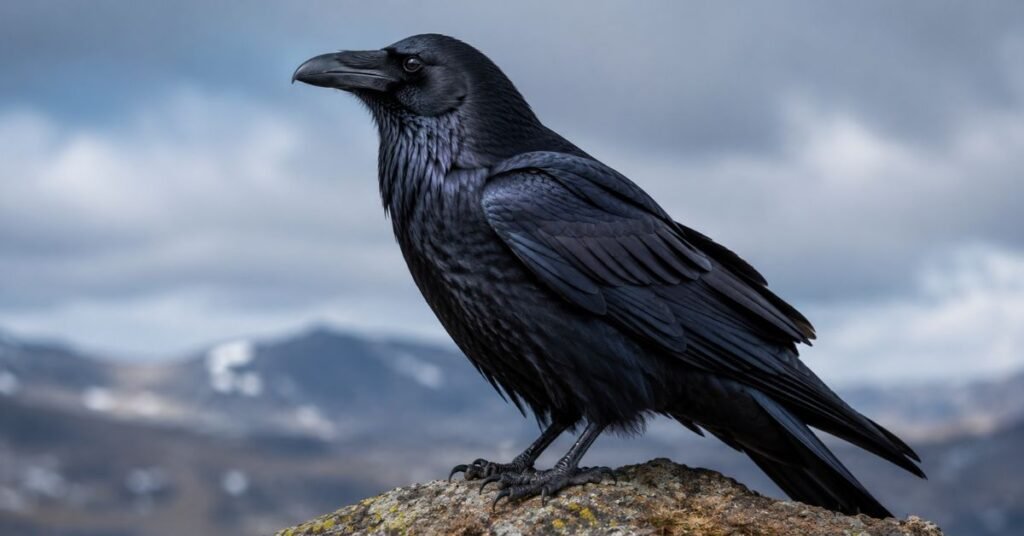
Think of the Common Raven (Corvus corax) as the puzzle master of the bird world. It’s an opportunistic scavenger with a sharp mind. It lives across the Northern Hemisphere in tundra, forests, deserts, and cities. Ravens follow wolves and hunters to find fresh carcasses. They also solve tricky problems to reach food. It’s a corvid and not a raptor. Many people mix this up. Its opportunistic feeding helps it survive almost anywhere. That’s why ravens count among the most adaptable scavenger birds in North America and beyond.
Carrion Crow
Carrion Crow walking across a field in Europe
You’ll know the Carrion Crow (Corvus corone) by its glossy black plumage. It lives across Europe and parts of Asia. It thrives in farmland, parks, and city streets. This bird shows clever opportunistic feeding. It drops nuts and shellfish onto roads and rocks to crack them. Then it grabs the meal. It eats carrion such as roadkill when it can. Its habits show how birds that feed on roadkill help tidy roadsides. It’s also one of the many black scavenger birds you might spot on a walk.
Crested Caracara
Crested Caracara walking on the ground near a roadside
Most raptors perch and soar. The Crested Caracara walks. This falcon relative (Caracara cheriway in North America) strolls across open grasslands looking for roadkill. In South America, a close cousin, Caracara plancus, fills a similar role. You’ll find the northern bird in Texas, Florida, and Mexico. It also hunts small animals and steals food from vultures. It has a bold crest and a bare, orange face. It’s a perfect pick for scavenging birds of prey because it hunts and scavenges with equal skill.
Bald Eagle
Bald Eagle perched near a river scanning for food
The Bald Eagle (Haliaeetus leucocephalus) hunts fish but doesn’t turn down a free meal. In winter, it scavenges dead fish, waterfowl, and deer carcasses. It lives near lakes, rivers, and coasts across North America. It also steals food from other birds, including ospreys. Its keen eyesight spots prey from far away. Wingspans reach about 2.3 meters (7.5 feet). It’s a strong example of a bird of prey scavenger. Conservation efforts helped it recover after pesticide damage nearly wiped it out last century.
See Also: Top 20 Animals Without Tail (With Pictures & Fascinating Facts)
Golden Eagle
Golden Eagle in flight over open mountain terrain
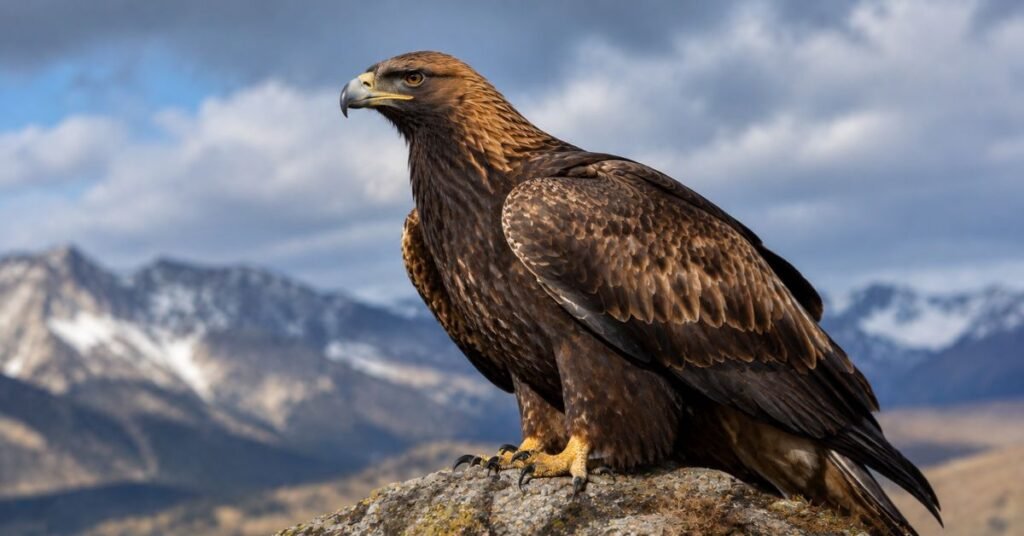
Power and speed define the Golden Eagle (Aquila chrysaetos). It hunts hares, marmots, and other mammals. Yet it scavenges when prey runs low. Winter often pushes it toward carrion. It lives across the Northern Hemisphere in mountainous regions, tundra, and open grasslands. Its sharp talons grip prey with huge force. Its wingspan can top 2.2 meters (7.2 feet). Because it’s both hunter and cleaner, it shows the line between scavenging and hunting behavior in birds is rather thin.
Black Kite
Black Kite gliding over a busy city market
Cities suit the Black Kite (Milvus migrans) just fine. It’s one of the world’s most widespread raptors. It lives across Europe, Asia, Africa, and Australasia. In South Asia, you’ll see them swooping over markets and rubbish heaps. This agile flyer snatches scraps and carrion in midair. It’s among the black scavenger birds that cope well in urban environments. It also hunts small animals and fish. Its forked tail helps it steer. Huge flocks gather during migration, and some roosts hold thousands of birds.
Herring Gull
Herring Gull on a beach scavenging near the shoreline
Gulls get a bad rap, but the Herring Gull (Larus argentatus) earns respect for its flexibility. It lives along coastal habitats across the Northern Hemisphere. It eats fish, crabs, eggs, scraps, and dead animals. It drops shellfish on hard ground to crack them open. Many people know it as the chip thief at the beach. Its larger cousin, the Great Black-backed Gull, takes this boldness even further. It’s the biggest gull in the world and often bullies smaller birds off a meal. Both species show true opportunistic feeding.
How Do Scavenger Birds Find and Eat Dead Animals?
Wondering how scavenger birds find food? They fly high and scan wide. Warm air currents lift them without effort. From above, they can cover hundreds of square kilometers in a day. They watch the ground and each other. When one bird dives, others follow. At the carcass, a clear order takes shape. Large, strong species open the hide first. Smaller birds eat once the way is clear. This food chain teamwork wastes almost nothing.
Eating carrion needs special tools. These birds use sharp senses, tough beaks, and strong guts. Each tool solves a different problem. Together they let birds that consume carrion eat what would sicken most animals. Next, you’ll see how each trait works.
Excellent Sense of Smell and Sight
Sharp senses make the search possible. Turkey Vultures smell gases from decomposing animals and Black Vultures watch their neighbors. Condors use keen eyesight to spot food from great heights. These birds with exceptional eyesight can see a carcass from kilometers away. Each method suits a different habitat. Smell works in thick forest. Sight works on open grasslands.
Powerful Beaks and Sharp Talons
Beak shape tells you how a bird eats. A powerful beak with a hooked tip tears hide and muscle. The Lappet-faced Vulture and the King Vulture are masters of this. The Bearded Vulture has a different tool kit built for bones. Crows and ravens have strong all-purpose bills. Vultures have weak feet compared with eagles. Their sharp talons are less deadly because they rarely kill. Eagles and caracaras, however, grip prey with real force.
Strong Stomach Acids and Digestive Systems
Vultures have birds with strong digestive systems that few animals can match. Their stomach acid is extremely strong. It helps destroy bacteria that cause anthrax, botulism, and other dangers. Researchers have also found special gut microbes in vultures. This explains how vultures digest decaying meat with little harm. In short, their digestive system works like a built-in disinfectant plant. That’s why vultures are such powerful birds that clean the environment.
How Scavenger Birds Adapt to Their Environment
Scavenging is hard work. Food is unpredictable and often far away. So scavenger bird adaptations have evolved to save energy and boost safety. These changes appear in body shape, behavior, and inner biology. Each one helps the bird win more meals at lower cost. Together they explain why scavenger birds in different habitats still share many traits.
Scientists group these changes into three kinds. Physical traits shape the body. Behavioral traits shape actions. Physiological traits shape body chemistry. Let’s look at each one.
Physical Adaptations
Look at a vulture’s head and you’ll notice no feathers. This helps keep it clean when it feeds inside a carcass. Broad wings give excellent soaring ability. Hooked bills tear flesh. Strong eyes spot food from far away. These biological adaptations fit the vulture’s job like a glove.
Behavioral Adaptations
Smart behavior saves energy. Many vultures roost together and leave at the same time. They watch each other for clues about food. This communal feeding gives them a big advantage. Ravens go further. They follow wolves and other hunters to find kills. Such social behavior helps birds find more food with less effort.
Physiological Adaptations
Inside the body, vultures carry real defenses. Their digestive system resists deadly germs. Their immune systems handle toxins well. Storks use leg cooling to manage heat. Many scavengers can also go days without a meal. That’s vital when food availability shifts with the seasons.
Scavenger Birds of Prey
Some scavenging birds of prey hunt and scavenge. Eagles, kites, and caracaras do both. A Golden Eagle kills a hare one day and eats a carcass the next. A Crested Caracara walks the road for roadkill. This flexibility keeps them alive when prey runs short. These birds of prey scavengers also use sharp talons and keen eyesight to hunt live food.
Not every scavenger is a raptor. Ravens, crows, and rooks are corvids. Gulls belong to a separate group. Old World vultures belong to the hawk family, so they count as true raptors. New World vultures are only distant relatives. So the label “bird of prey” only partly fits vultures and condors. This small fact clears up a very common mix-up.
Black Scavenger Birds
Dark feathers help many scavengers blend into ruins, roads, and roosts. Black scavenger birds include the Black Vulture, Common Raven, Carrion Crow, American Crow, Rook, and Black Kite. They live in fields, cities, and farmland. Many are opportunistic scavengers. They eat carrion, scraps, insects, and seeds. The Rook is a social bird of Europe and Asia. It forms big colonies and feeds in flocks. All of them thrive in urban environments.
Telling them apart takes a little practice. Check the tail, the wings, and the flight style. A short list helps. Vultures have bare heads and soar with wings held flat. Ravens have a wedge-shaped tail and a deep voice. Crows have a rounder tail and a higher call. Kites have a forked tail and fly with twisting turns. Size matters too. Ravens look much bigger than crows.
Scavenger Birds in North America
Scavenger birds in North America make up a lively crew. The Turkey Vulture and Black Vulture lead the pack. The California Condor adds a rare, high-flying touch. Ravens, the American Crow, gulls, and eagles round out the list. These scavenger bird species live in forests, deserts, farmland, and cities. Each one fills a role. Together they clean up roadkill, dead fish, and carcasses across the continent.
City life suits many of them. Crows rummage through parks and parking lots. Gulls feed near docks and landfills. Bald Eagles gather near rivers in winter. Meanwhile, the condor’s recovery shows what conservation efforts can achieve. Breeding programs, lead-free ammunition, and careful monitoring all play a part. The condor’s story gives hope to the whole North American scavenging bird community.
Scavenger Birds in Texas
Scavenger birds in Texas are easy to spot if you know where to look. Turkey Vultures and Black Vultures soar over ranches and highways. The Crested Caracara walks the open grasslands in the south. Bald Eagles gather near lakes and rivers in cooler months. These birds eat roadkill, dead livestock, and fish. They fit easily into both rural and urban environments.
West Texas has its own cast. The Chihuahuan Raven and the Common Raven live in drier country. Golden Eagles hunt across the western part of the state. The American Crow is common in farmland and suburbs. Together, they form a complete scavenger birds ecosystem role from the Gulf coast to the desert.
Scavenger Birds in Florida
Scavenger birds in Florida enjoy warm weather and rich habitats. The Black Vulture and Turkey Vulture are year-round residents. They clean up carcasses in wetlands and fields. The Crested Caracara lives on the central prairies. It’s a rare sight and a treat for birders. Bald Eagles nest near lakes and rivers.
Cities and coasts add more variety. Fish Crows scavenge in parks and parking lots. Herring Gulls and other gulls patrol beaches and piers in winter. The Great Black-backed Gull also visits the coast in colder months. Remember, the Marabou Stork is an African bird. It doesn’t belong on a Florida list. If you’re curious about how vultures spread into colder regions, you can read the Cornell Lab’s All About Birds profiles for range maps.
Why Are Scavenger Birds Important to the Ecosystem?
The scavenger birds ecosystem role is huge. Think of them as nature’s cleanup crew. They remove dead animals before decay spreads. That keeps water, soil, and food safer for all living things. The role of vultures in nature is a perfect example. One flock can clear a large carcass in hours.
Their work delivers four clear benefits. They support disease prevention, tidy up the land, power nutrient cycling, and protect environmental balance. Each benefit links to the next. Take them away and the whole system suffers. That’s the heart of the ecological benefits of scavenging birds.
Preventing the Spread of Diseases
Vultures remove carcasses fast. That limits the time germs can grow and spread. Anthrax, botulism, and rabies all thrive in dead flesh. Vultures eat the remains and their stomach acid kills many germs. That’s how scavenger birds prevent disease. It’s also disease prevention at no cost to people.
Cleaning Up Dead Animals
Dead animals pile up quickly in wild places. Birds that feed on animal carcasses clear them away. This keeps roadsides and pastures cleaner. It also keeps other scavengers, like feral dogs and rats, from growing in number. In farm country, birds that eat roadkill save people time and trouble.
Recycling Nutrients in Nature
Every carcass holds nutrients. When scavengers eat and spread waste, those nutrients return to the soil. Plants use them to grow. Herbivores eat the plants. This loop shows the importance of carrion in the food chain. It also proves scavenger birds and nutrient recycling go hand in hand.
Maintaining Ecological Balance
Here’s a powerful case study. In the 1990s, vultures across India and nearby countries crashed by more than 90 percent. The cause was diclofenac, a livestock drug that poisoned birds feeding on treated cattle. Feral dog numbers grew as carcasses went uneaten. Researchers linked this to more dog bites and rabies risk. India banned veterinary diclofenac in 2006. This story shows how scavenger birds maintain ecological balance in ways people rarely notice.
Common Misconceptions About Scavenger Birds
People often get these birds wrong. Some think they’re dirty or dangerous. Others think all scavengers are vultures. These ideas simply aren’t true. Scavenger bird facts show a far richer story. Knowing the truth helps us protect them.
Here’s a quick myth-versus-fact table to set things straight.
| Myth | Fact |
| All scavengers eat only dead animals | Many also hunt, forage, or steal food |
| All scavengers are vultures | Crows, gulls, storks, eagles, and kites scavenge too |
| Scavengers spread disease | They mostly stop disease by removing carcasses |
| Scavengers can’t hunt | Eagles, kites, and caracaras hunt live prey |
Do All Scavenger Birds Eat Only Dead Animals?
No, they don’t. Only obligate scavengers like vultures rely mostly on carrion. Many others mix their diets. Ravens eat insects, fruit, and scraps. Gulls eat fish and eggs. Birds that feed on animal waste and garbage also fall into this group. Flexible eating helps these birds adapt to changing scavenger birds food sources.
Are All Scavenger Birds Vultures?
Not at all. Vultures and condors are only one part of the story. The Marabou Stork, Common Raven, Herring Gull, Bald Eagle, and Black Kite all scavenge. Each belongs to a different family. This diversity proves scavenging has evolved many times. It’s a great example of natural scavengers in the animal kingdom.
Do Scavenger Birds Spread Diseases?
Mostly, they stop disease rather than spread it. Vultures destroy many germs in their stomachs. They can carry some germs on their feet or in droppings. But this risk is small next to the benefit. Their cleanup work protects both wildlife and people.
Can Scavenger Birds Also Hunt Live Prey?
Yes, many can. Eagles, kites, caracaras, and gulls all hunt. They simply scavenge when food is easy to find. This flexible approach explains the opportunistic feeding seen in so many species. It also shows why we can’t draw a hard line between hunters and scavengers.
Interesting Facts About Scavenger Birds
Get ready for some surprises. Scavenger bird facts often sound like fiction. The Egyptian Vulture uses stones as tools. The Bearded Vulture drops bones from the sky to break them. Himalayan Griffons fly over peaks higher than most birds dare. Ravens follow wolves to share a kill. The Andean Condor can glide for hours without flapping. Tibetan sky burial links vultures to old cultural rites. Crows and ravens recognize faces and remember them. Herring Gulls drop shellfish onto hard ground. Bald Eagles steal fish from ospreys. Each fact shows how smart and flexible these birds can be.
Here’s one more twist. Vultures rarely kill anything. Yet their work protects millions of people from disease. No other group does so much quiet good with so little credit. Next time you spot a vulture overhead, give it a nod. It’s working hard for you.
Conservation Challenges Facing Scavenger Birds
Endangered vulture species face many threats. Diclofenac poisoned millions of vultures in South Asia. In Africa, poisoned baits meant for predators kill vultures by the hundreds. Lead from ammunition sickens condors and eagles. Wind turbines strike large soaring birds. These problems are severe because vultures breed slowly. A pair may raise just one chick a year.
Conservation of scavenger birds needs help from all of us. Habitat loss also limits food and nest sites. You can help by supporting vulture-safe laws and lead-free ammunition. You can also back groups like BirdLife International and follow status updates on the IUCN Red List. Even small actions matter. Sharing this guide helps raise awareness too.
Conclusion
You’ve now met the top 20 scavenger birds in the world. From the Turkey Vulture to the Herring Gull, each one plays a key part. Some are obligate scavengers. Others are opportunistic scavengers. All of them help ecosystem health by clearing carcasses, supporting nutrient cycling, and limiting disease. Their biological adaptations make them true survivors.
These birds deserve our respect. Many face serious threats from poison, lead, and habitat loss. Next time you look up, watch for a dark shape riding the wind. It may be nature’s cleanup crew at work. Share this guide with a friend who loves wildlife. Together, we can help these remarkable birds thrive.
Frequently Asked Questions
Which Bird Is Best Known as a Scavenger?
The vulture holds that title. Among vultures and condors, the Turkey Vulture is the most familiar in the Americas. People see it soaring over highways and fields. In the Old World, the Griffon Vulture takes a similar spot.
What Is the Largest Scavenger Bird in the World?
The Andean Condor is widely seen as the largest scavenger by wingspan and weight combined. Its wingspan reaches about 3.3 meters (10.8 feet). The Cinereous Vulture and Marabou Stork are also among the largest carrion-eating birds.
What Is the Smallest Scavenger Bird?
The Egyptian Vulture is among the smallest scavenger birds of the vulture group. Many small birds scavenge now and then, so no single bird holds the title. Crows and gulls often rank smaller than vultures.
What Are Scavenger Birds Called?
People call them carrion birds, carrion-feeding birds, or dead animal eaters. Scientists use the term scavengers. Vultures, condors, ravens, and crows are the best-known examples.
Which Scavenger Bird Has the Largest Wingspan?
The Andean Condor leads with a wingspan up to about 3.3 meters. The Himalayan Griffon and Cinereous Vulture follow close behind. Both can reach roughly 3 meters (10 feet).
Why Don’t Scavenger Birds Get Sick From Eating Dead Animals?
Their stomachs are very acidic. That acid kills many dangerous germs. Special gut microbes and strong immune systems add more protection. This is how vultures digest decaying meat without harm.
Are Scavenger Birds Predators?
Some are. Vultures rarely kill. Eagles and caracaras hunt live prey often. Ravens and gulls do both. So the answer depends on the species.
Are Humans Also Considered Scavengers?
Humans are omnivores today. Early humans probably scavenged animal remains before they hunted well. So scavenging is part of our deep history. We’re not classed as scavengers now.