Can Turtles Climb? 7 Surprising Facts About Turtle Climbing
Picture this. You walk into your backyard and spot a turtle halfway up your fence. It’s wedged between the wires, legs stretched wide, shell tilted at an odd angle. Your first thought is probably, “Wait, can turtles even do that?”
The answer might shock you. Turtle climbing is real, and it happens more often than most people think. This guide digs into the how, the why, and the which species behind this quirky bit of turtle behavior. By the end, you’ll know exactly what drives a turtle to scale a fence, a rock, or even a low tree branch, and what you should do if you catch one in the act.
Can Turtles Climb?
Yes, turtles can climb. That surprises a lot of people, since turtles look slow and clumsy on land. But their bodies come built with tools for the job. Strong claws grip uneven surfaces. Powerful legs push their weight upward. And a curved shell actually helps them wedge into gaps and keep balance as they go.
Not every turtle climbs the same way, though. Some species barely bother with it. Others treat a chain-link fence like a jungle gym. Turtle climbing skills vary a lot depending on the species, its shell shape, and where it lives. A desert tortoise built for rocky hills will out-climb a soft-shelled river turtle every time. So the short answer is yes. The longer answer depends on which turtle you’re watching.
Why Do Turtles Climb?
Turtles don’t climb for fun, at least not the way a kid climbs a jungle gym. Climbing serves a purpose. Many species climb onto rocks or logs to bask in sunlight, which helps regulate their body temperature. Cold-blooded animals rely on external heat, so a good basking spot isn’t a luxury. It’s survival. Climbing also gives turtles a better vantage point, letting them spot predators before those predators spot them.
There’s more to it, too. Some turtles climb while hunting for food sources, since fruit, insects, or plants sometimes sit just out of reach on a low branch or embankment. Others climb during nesting season, when females travel far from water to find soft, safe soil to lay eggs. This kind of survival behavior shows up across dozens of species, and it’s a reminder that climbing isn’t random. It’s baked into their natural behavior as a tool for staying alive.
Do Turtles Climb Trees, Fences, and Rocks?
Let’s break this down by surface, since each one tells a different story. Turtles climb trees far less often than people assume, and when they do, it’s usually just a low branch or a fallen log, not a full trunk. Turtles climb rocks much more naturally, since rocky terrain mimics the riverbanks and hillsides many species already call home. Rocks give turtles rough surfaces to grip, and that texture matters more than most people realize.
Fences are a different beast entirely. Turtles climb fences because chain-link and wire mesh act like a built-in ladder. Each gap becomes a foothold, and a determined turtle can work its way up surprisingly fast. Turtles climb walls too, though only when the surface offers enough grip, like rough brick or stacked stone. Smooth concrete rarely gives them anything to hold onto. So while trees stay mostly out of reach, fences and rocks turn into regular climbing terrain for plenty of species.
Read More: Top 18 Animals That Eat Corn (With Pictures & Feeding Facts)
Which Turtles Are Most Likely to Climb?
Not all turtle species share the same climbing ability. Some are natural-born climbers, built with the right legs, claws, and shell shape for the job. Others barely attempt it, sticking closer to flat ground or open water instead. Below is a rundown of eight species known for standout climbing turtles and climbing tortoises behavior, followed by a table comparing how each one stacks up.
Box Turtles and Wood Turtles
Scientific Name: Terrapene carolina (box turtle) / Glyptemys insculpta (wood turtle) Class: Reptilia Diet: Omnivore (insects, fruit, fungi, worms)
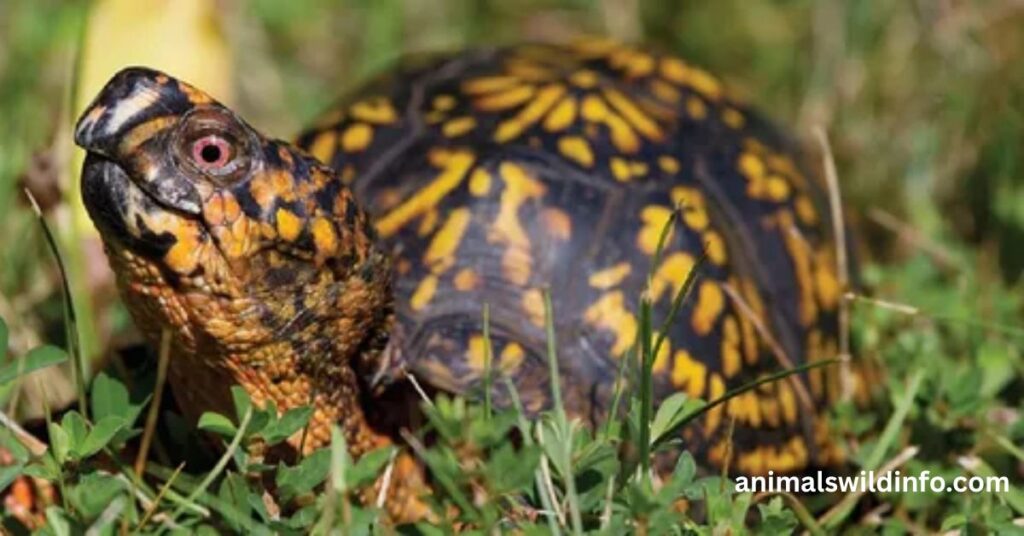
Box turtles and wood turtles rank among the best climbers in the turtle species world. Their domed shells and sturdy limbs give them real leverage on uneven ground. Wood turtles especially show off strong turtle agility, scrambling over logs and low rocks with confidence most turtles never manage. Both species treat climbing as part of everyday foraging, not some rare event.
Musk Turtles
Scientific Name: Sternotherus odoratus Class: Reptilia Diet: Omnivore (insects, mollusks, algae)
Musk turtles are tiny, but don’t let their size fool you. Their small frame actually helps them squeeze into gaps larger turtles can’t reach. Sharp claws and a low center of gravity give them excellent turtle balance, letting them scale rocks and logs most people wouldn’t expect a mostly aquatic species to attempt.
Map Turtles
Scientific Name: Graptemys geographica Class: Reptilia Diet: Omnivore (mollusks, insects, aquatic plants)
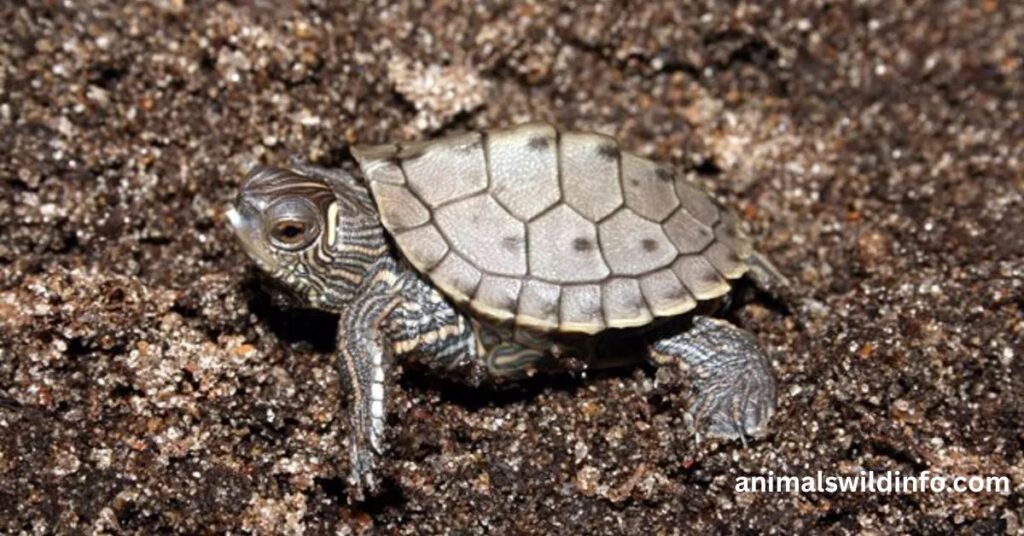
Map turtles split their time between water and land, and their turtle feet reflect that dual life. Webbed toes handle swimming just fine, but they also grip riverbanks and rocky slopes well enough for regular basking climbs. Groups of map turtles often pile onto the same log, using their climbing skills to claim the best sunny spot.
Red-Eared Slider Turtles
Scientific Name: Trachemys scripta elegans Class: Reptilia Diet: Omnivore (aquatic plants, insects, small fish)
Red-eared sliders are one of the most common pet turtles in the USA, and owners often catch them attempting to scale enclosure walls. Their turtle strength surprises people who assume a semi-aquatic turtle should stay put in water. Basking instinct drives most of this behavior, since sliders need dry, sunlit spots to stay healthy.
Read More: Dangerous Animals in Puerto Rico: 14 Wildlife Species to Watch For
Snapping Turtles
Scientific Name: Chelydra serpentina Class: Reptilia Diet: Omnivore (fish, plants, small animals)
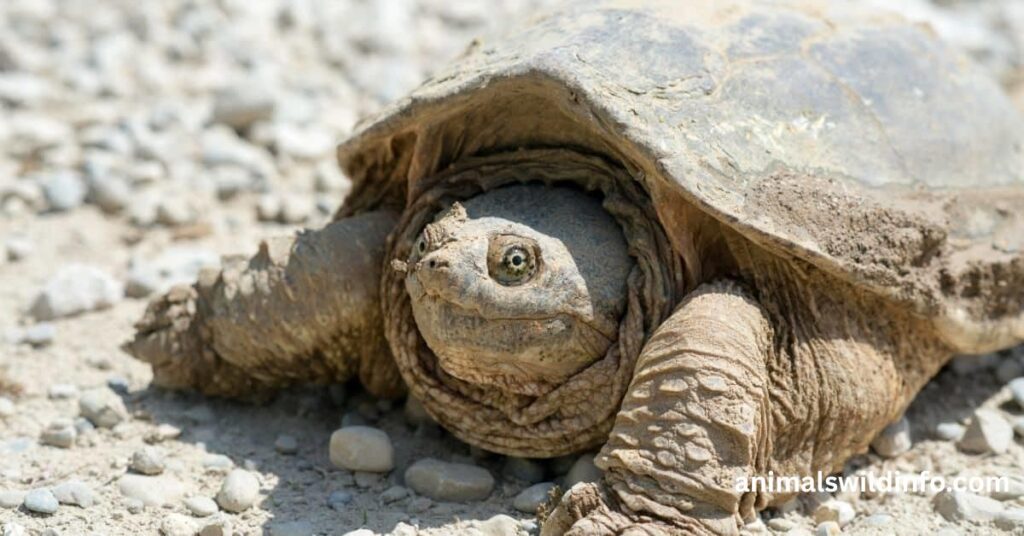
Snapping turtles look bulky, but their powerful legs and sharply curved claws handle steep embankments better than you’d guess. Climbing peaks during nesting season, when females travel overland searching for soft soil. This burst of habitat exploration shows just how motivated a snapping turtle gets once instinct kicks in.
Russian Tortoises
Scientific Name: Agrionemys horsfieldii Class: Reptilia Diet: Herbivore (grasses, weeds, leafy greens)
Russian tortoises evolved for rocky, dry terrain, and it shows in how they move. Short, sturdy limbs push them up steep surfaces that would stop other tortoises cold. Their turtle locomotion style favors persistence over speed, and a determined Russian tortoise will keep trying a slope until it finds a way up.
Indochinese Box Turtles
Scientific Name: Cuora galbinifrons Class: Reptilia Diet: Omnivore (fruit, insects, small invertebrates)
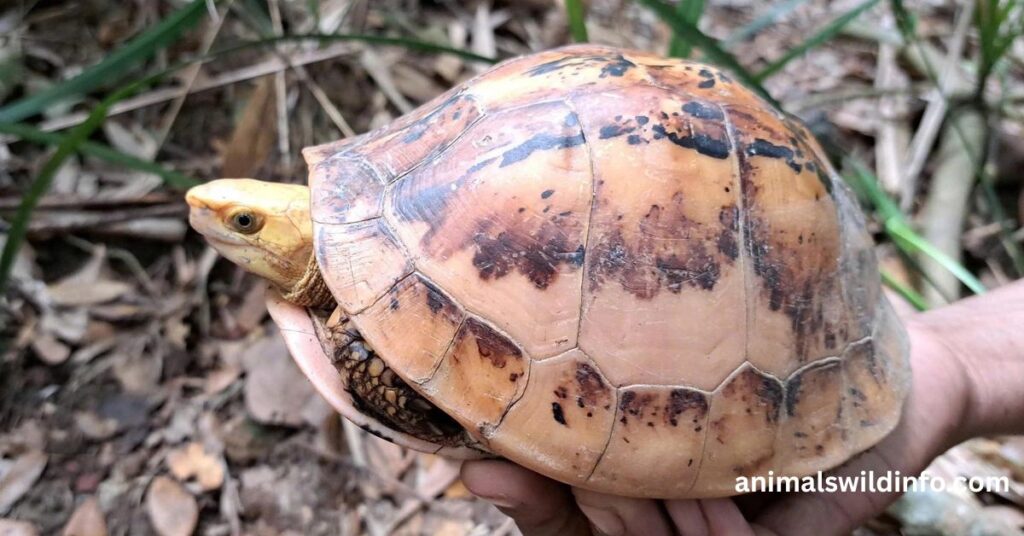
Indochinese box turtles live on forest floors, but they climb more than most people expect. Low branches and rocky ledges sit within reach of their strong claws, and camouflage helps them blend in while they work their way upward. This combination of stealth and climbing makes them tricky to spot in the wild.
Sulcata Tortoises
Scientific Name: Centrochelys sulcata Class: Reptilia Diet: Herbivore (grasses, hay, leafy vegetables)
Sulcata tortoises are massive, some growing over 100 pounds, yet they still manage to scale low barriers. Their sheer size and strength let them push through environmental obstacles other tortoises would avoid. This is exactly why sulcata owners need serious turtle-proof fencing, since a determined sulcata can turn a flimsy barrier into a stepping stone.
| Species | Climbing Ability | Preferred Surface | Habitat Type |
| Box Turtles / Wood Turtles | High | Logs, low rocks | Terrestrial |
| Musk Turtles | Moderate | Rocks, logs | Aquatic |
| Map Turtles | Moderate | Riverbanks, rocks | Semi-aquatic |
| Red-Eared Slider | Moderate | Enclosure walls, rocks | Semi-aquatic |
| Snapping Turtles | Moderate-High | Embankments | Aquatic |
| Russian Tortoises | High | Steep, rocky terrain | Terrestrial |
| Indochinese Box Turtles | High | Branches, ledges | Terrestrial |
| Sulcata Tortoises | High | Low barriers, fences | Terrestrial |
Turtle Climbing a Fence: Why Does It Happen?
Turtle climbing a fence puzzles a lot of homeowners, but the mechanics make sense once you look closer. Chain-link and wire mesh create a natural ladder effect. Each small gap gives a turtle’s claws something to hook onto, and one successful foothold leads straight to the next. What looks impossible from a distance turns out to be pretty manageable up close, at least for a motivated turtle.
Motivation matters here. Turtles often attempt fence climbs while exploring new territory, searching for a mate, or reacting to changes after heavy rain. This kind of turtle escape behavior shows up most in backyard enclosures that weren’t built with climbing in mind. Owners across the USA report the same pattern again and again: a turtle that seemed perfectly content suddenly develops a serious interest in scaling the nearest fence line.
Terrestrial vs. Aquatic Turtles: Which Can Climb Better?
Terrestrial turtles generally out-climb their aquatic cousins, and their anatomy explains why. Domed shells, thick limbs, and rounded claws give land-dwelling species better traction on dry ground. Land turtles like tortoises evolved for exactly this kind of movement, since their ancestors lived in rocky, dry regions where climbing over obstacles was part of daily survival. Their diet also leans herbivorous, which fits a lifestyle built around foraging on solid ground rather than swimming after prey.
Aquatic turtles face a tougher challenge. Streamlined shells and webbed feet work great for swimming but offer less grip on land. Still, don’t count them out entirely. Species like the red-eared slider or the musk turtle prove that even water-loving turtles can manage a decent climb when basking instinct or curiosity takes over. The differences between aquatic and terrestrial turtles come down to a trade-off. Aquatic species sacrifice some turtle mobility on land in exchange for speed and grace in the water.
Read More: Why Do Foxes Laugh? 7 Surprising Facts Behind Their Sounds
What Do Turtles Like to Climb On?
Turtles gravitate toward specific textures and shapes, and it’s not random. Rocks, logs, and riverbanks top the list of natural favorites, since these surfaces offer rough grip points that match a turtle’s claw structure. Turtle climbing on logs happens constantly in the wild, especially among species that bask in groups. Fallen branches near water make perfect multi-turtle sunning spots.
Manmade structures attract turtles too, sometimes more than owners would like. Enclosure walls, garden furniture, and even turtle climbing plants like thick vines can become unexpected climbing routes. The common thread across all these surfaces is texture. Smooth plastic or polished glass rarely tempts a turtle, but anything rough, angled, or stacked invites a closer look.
What Are the Risks If a Turtle Falls While Climbing?
Falling is dangerous business for a turtle, despite that tough-looking shell. A hard landing can crack or fracture the shell, and that kind of damage compromises the turtle’s main defense against predators and the elements. Worse, a turtle falling while climbing often lands on its back. Turtles struggle badly to right themselves from this position, and if they can’t flip back over in time, the situation turns life-threatening fast.
The damage doesn’t always show up right away, either. Internal injuries and hidden fractures sometimes go unnoticed for days or weeks. A stressed, injured turtle also becomes more vulnerable to infection, since its immune system takes a hit alongside the physical trauma. As one veterinary rescue worker put it, “A fall that looks minor to us can be a turtle’s worst day.” This is exactly why turtle climbing safety matters so much, especially for pet owners who unknowingly place climbing hazards inside an enclosure.
How to Keep Turtles From Getting Stuck While Climbing
A safe turtle enclosure starts with the right barrier design. Solid walls work far better than mesh or chain-link, since they don’t offer the foothold pattern turtles rely on to climb. Rounded corners help too, cutting down on spots where a determined turtle might wedge itself in and get stuck. Height alone won’t stop a motivated climber, so smooth, solid turtle enclosure walls matter more than sheer size.
Preventing turtle escapes also means thinking about what’s inside the enclosure, not just the perimeter. Stack rocks and logs away from fence lines, since a turtle can use them as a launchpad to reach higher ground. Supervised outdoor time on safe, turtle-proof surfaces gives them room to explore their natural behavior without the risk. A little planning goes a long way toward keeping a curious turtle safely contained.
What to Do If You See a Turtle Climbing a Fence
Stay calm first. A turtle stuck on a fence isn’t usually in immediate danger unless it’s clearly stressed, tangled, or at risk of a bad fall. Approach slowly, and avoid grabbing at the shell suddenly, since sudden movement can startle the turtle into an even riskier scramble. Gently support the underside of the shell with both hands, then lift it free and set it down on solid, level ground.
If the turtle seems injured, or if it’s a wild species crossing into unfamiliar territory, contact a local wildlife rescue for guidance rather than relocating it yourself. Moving a turtle too far from its home range can actually harm its chances of survival, since turtles often know their territory better than we give them credit for. Most of the time, though, a simple lift-and-place is all it takes to solve a turtle attempting to climb a fence it can’t quite handle alone.
Final Thoughts
So, can turtles climb? Absolutely, and often better than people expect. From tiny musk turtles squeezing through rock crevices to massive sulcata tortoises pushing through backyard fences, turtle climbing behavior shows up across nearly every species in some form. It’s not a party trick. It’s survival, hardwired into their turtle physical adaptations over millions of years.
Understanding this side of turtle life changes how you look at these animals. They’re not just slow-moving swimmers or lawn ornaments basking in the sun. They’re capable, determined, and surprisingly resourceful when a rock, log, or fence stands between them and what they need. Next time you spot a turtle eyeing a steep surface, you’ll know exactly what’s going through its mind.
Readmore: Explore Top 18 Most Patient Animals.
Frequently Asked Questions
Can turtles climb up?
Yes, many turtles can climb up rocks, logs, and even fences. Their claws and strong legs give them enough grip to scale surfaces with the right texture, though smooth or very steep terrain still stops most species.
What is a turtle’s biggest enemy?
Predators vary by species and region, but raccoons, birds of prey, and large fish rank among the most common threats. Habitat loss also poses a serious long-term danger to many wild turtle populations across the USA.
Are turtles good climbers?
Some are, and some aren’t. Terrestrial species like box turtles and Russian tortoises tend to be strong climbers, while more water-adapted species manage shorter, less frequent climbs driven mostly by basking needs.
Can turtles go on a walk?
Yes, turtles can walk short distances on land, especially terrestrial species built for it. Their pace is slow and steady, but they’re capable of covering surprising ground when searching for food, mates, or nesting sites.
Does a turtle’s bite hurt?
It can, especially from larger species like snapping turtles, which have strong jaws built for gripping prey. Most pet turtle bites cause only minor discomfort, but larger wild species should always be handled with caution.