9 Woodpeckers in Wisconsin (Pictures, Identification & Where to Find Them)
Grab your binoculars. Wisconsin hides nine different woodpecker species inside its forests, backyards, and bogs, and once you know what to look for, you’ll spot them everywhere. This guide walks you through every one of them: how to identify each bird, where it lives, what it eats, and the best spots across the state to see one for yourself.
Whether you’re new to Wisconsin birdwatching or you’ve been chasing birds of Wisconsin for years, this article gives you the full picture. You’ll learn the calls, the drumming patterns, the field marks that separate look-alikes, and a few surprising facts about how these birds shape forest health across the state.
List of Woodpeckers in Wisconsin
Here’s the full lineup of Wisconsin bird species you’ll meet in this guide:
- Red-headed Woodpecker
- Red-bellied Woodpecker
- Yellow-bellied Sapsucker
- Downy Woodpecker
- Hairy Woodpecker
- American Three-toed Woodpecker
- Black-backed Woodpecker
- Northern Flicker
- Pileated Woodpecker
Each one has its own look, its own habitat, and its own personality. Some drum on trees. Some forage on the ground. One even taps holes for sap instead of bugs. Let’s dig in.
What Woodpeckers Live in Wisconsin?
Wisconsin sits at a lucky crossroads. The state’s northern half holds thick coniferous forests and boreal bog country, while the south spreads out into deciduous forests, oak savanna, and farmland edges. That mix gives native birds of Wisconsin a huge range of homes to choose from, and it’s exactly why nine woodpecker species manage to share the same state without stepping on each other’s toes.
Each species carves out its own niche. The Pileated Woodpecker needs big, old trees. The Northern Flicker prefers open ground. The American Three-toed Woodpecker sticks to remote spruce bogs near the Canadian border. Together, they form one of the most diverse woodpecker range maps in the Midwest, and that diversity says a lot about how healthy Wisconsin’s forest ecosystems really are.
Woodpecker Habitat in Wisconsin
Woodpecker habitat in Wisconsin isn’t one single thing. It’s a patchwork. You’ll find these birds in mature forests with towering hardwoods, in oak savannas dotted with dead trees, and in mixed woodlands where conifers and deciduous trees grow side by side. Up north, the Northwoods region offers dense boreal forests that support species you won’t see anywhere else in the state.
But you don’t need a wilderness permit to see one. Plenty of woodpeckers thrive in urban parks, suburban backyards, and nature reserves close to home. Dead trees and tree cavities matter most here they’re not just eyesores in your yard, they’re prime real estate. A single dying oak can house a nesting pair, feed a family of insects, and support the whole food chain around it.
When Is the Best Time to See Woodpeckers in Wisconsin?
Spring wins, hands down. From April through June, woodpecker drumming fills the forest as males stake out territory and call for mates. This is breeding season, and it’s the loudest, easiest time to track a bird down by sound alone. Leaves haven’t fully filled in yet either, so spotting movement in the canopy gets a lot easier.
Winter has its own charm, though. Bare trees mean nothing to hide behind, and several species show up at backyard suet feeders when natural food runs low. If you’re patient and you keep your feeder stocked, winter mornings can bring surprisingly close views of birds that stay hidden the rest of the year.
1. Red-headed Woodpecker
Scientific Name: Melanerpes erythrocephalus
Identification
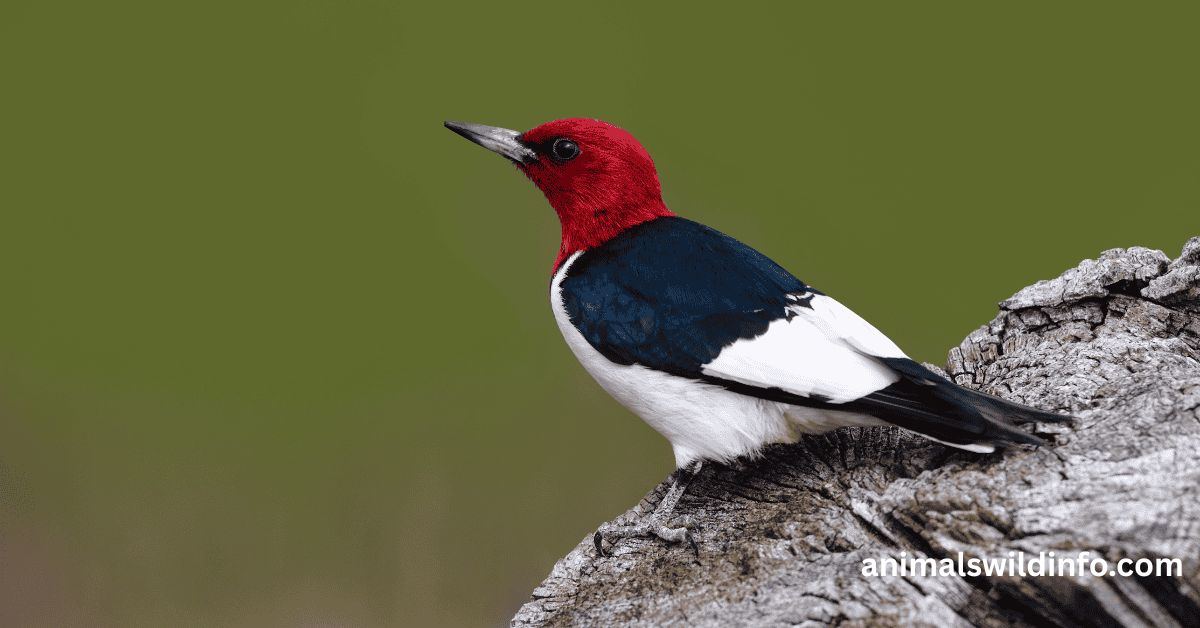
The Red-headed Woodpecker is impossible to miss once you see one. Its entire head glows a solid crimson red, sitting on top of a crisp white belly and jet-black wings. Large white patches flash across the wings in flight, which makes this bird easy to spot even from a distance. Unlike most woodpeckers, it doesn’t just cling to bark. You’ll often catch it sallying out from a perch to snatch a flying insect mid-air, then swooping back a hunting style that sets it apart from nearly every other North American woodpecker.
Range and Habitat
This bird favors oak savannas and open woodlands, especially in southwestern Wisconsin, though scattered populations show up statewide. It needs dead trees for nesting cavities and open space underneath for hunting, so areas with a good mix of old snags and clearings work best. Populations have declined over recent decades as dead trees get cleared from managed land, which makes protecting deadwood habitat a real conservation priority for this species.
Diet and Foraging Behavior
Red-headed Woodpeckers eat a wider menu than you’d expect. Beetles, ants, and caterpillars make up the bulk of their diet, but they’ll also snack on fruit, nuts, and even small vertebrates when the opportunity comes up. One of their most interesting habits is food caching they wedge extra food into bark crevices and fence posts to eat later, a behavior that hints at real problem-solving skill for a bird this size.
Where to Find Red-headed Woodpeckers in Wisconsin
Head to Kettle Moraine State Forest or the oak savanna remnants scattered through southwestern Wisconsin. Look for stands with plenty of standing dead trees. Marshy edges along the Wisconsin River also draw them in during late spring, alongside a solid mix of other migratory species.
2. Red-bellied Woodpecker
Scientific Name: Melanerpes carolinus
Identification
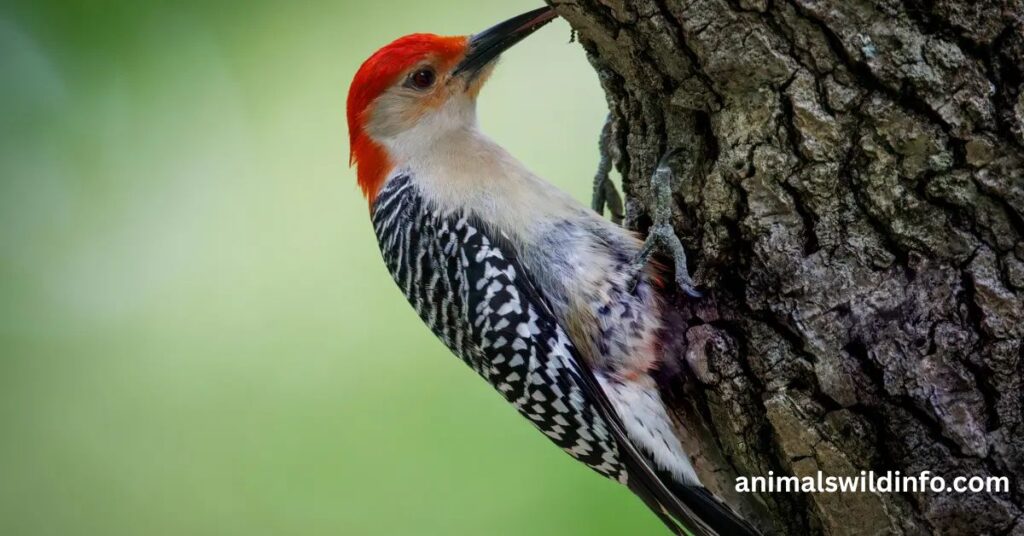
Don’t let the name fool you. The Red-bellied Woodpecker‘s belly barely shows any red at all just a faint blush that’s easy to miss. What actually stands out is the bold red cap running across the male’s head, paired with a black-and-white striped back that looks almost like a checkerboard. Females share the striped back but show less red on the head, which makes male and female plumage a useful clue when you’re trying to tell them apart in the field.
Range and Habitat
This species does well almost anywhere with mature trees. Deciduous forests and mixed woodlands across Wisconsin all host healthy populations, and it’s one of the few woodpeckers that has fully adapted to suburban life. You’ll spot it in backyard trees just as often as deep forest, which says a lot about how flexible this bird really is.
Diet and Foraging Behavior
Insects make up most of the diet ants, beetles, and larvae pulled from beneath tree bark using a sharp, chisel-like beak. But when insects get scarce, Red-bellied Woodpeckers switch gears fast and start eating seeds and fruit instead. That kind of dietary flexibility is a big reason they’ve spread into so many different habitats without missing a beat.
Where to Find Red-bellied Woodpeckers in Wisconsin
Check your own backyard first, especially if you run a suet feeder. Beyond that, mature hardwood stands in parks and nature reserves statewide give you solid odds. Early morning and late afternoon tend to be the most active windows.
Read More: Why Do Foxes Laugh? 7 Surprising Facts Behind Their Sounds
3. Yellow-bellied Sapsucker
Scientific Name: Sphyrapicus varius
Identification
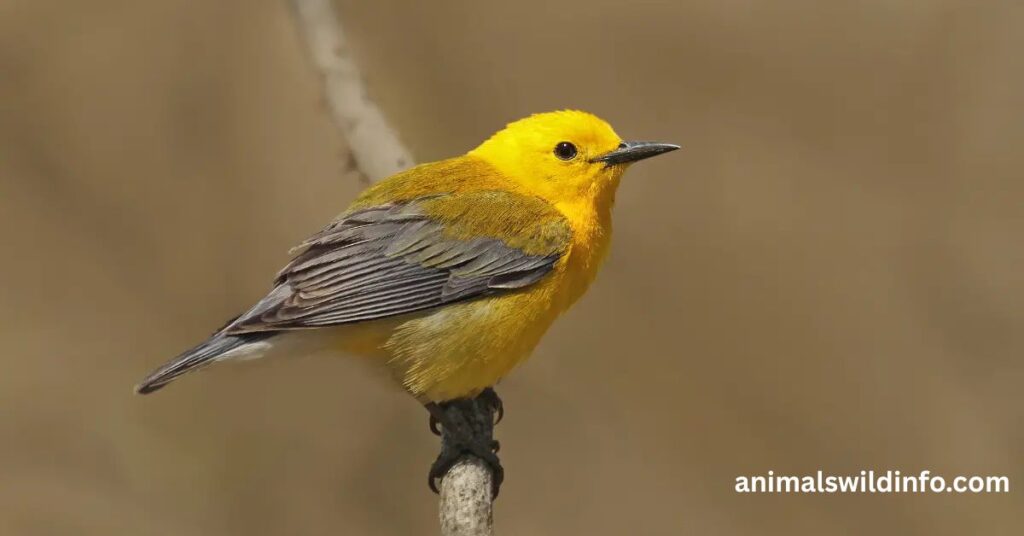
The Yellow-bellied Sapsucker carries a pale yellow belly, though it’s often faint and easy to overlook. What gives this bird away is the solid white stripe running down each folded wing, plus a red forecrown on both sexes. Males add a red throat patch too, while females keep a plain white one. Compared to the Downy Woodpecker or Hairy Woodpecker, this species looks a bit more disheveled overall, especially heading into fall and winter.
Range and Habitat
Sapsuckers breed mostly across northern Wisconsin, favoring mature forests of aspen and birch mixed with conifers. As true migratory birds, they head south for the winter and return each spring to reclaim the same territory. This is actually the only regularly migratory woodpecker in the eastern United States, which makes its woodpecker migration pattern genuinely unusual among its relatives.
Diet and Feeding Habits
Here’s what makes this bird stand out: it drills neat rows of shallow holes called sap wells into tree bark, then returns again and again to drink the sap that flows out. Insects get trapped in that sticky sap too, adding a protein boost to the sapsucker’s diet. Other wildlife benefits from this habit as well hummingbirds and warblers often visit the same sap wells for an easy meal, which gives this woodpecker a surprisingly big ecological role in its forest ecosystem.
Where to Find Yellow-bellied Sapsuckers in Wisconsin
Look through the Chequamegon-Nicolet National Forest, especially around aspen and birch stands. The telltale sign isn’t the bird itself it’s the neat rings of small holes wrapped around tree trunks. Find the sap wells, and the sapsucker usually isn’t far behind.
4. Downy Woodpecker
Scientific Name: Dryobates pubescens
Identification
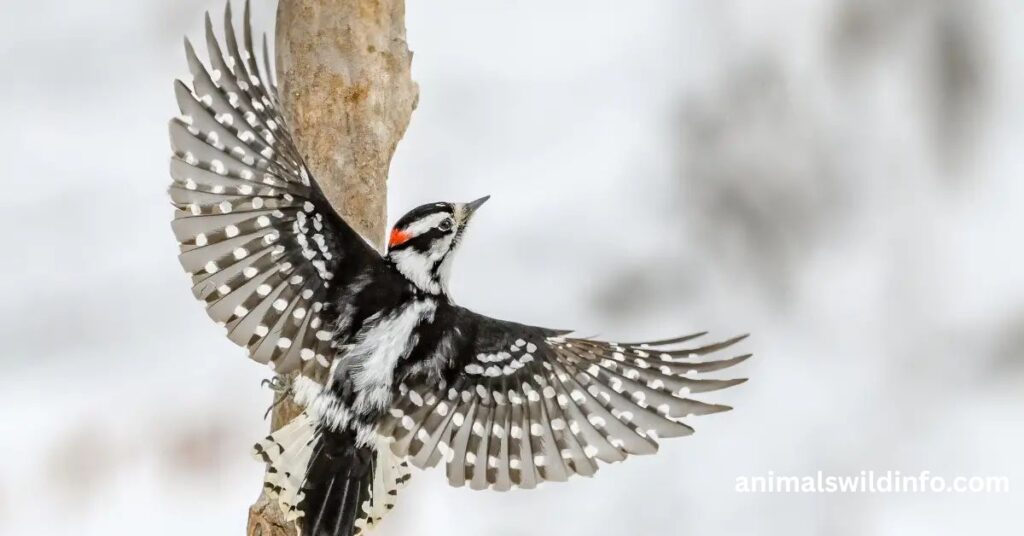
At six to seven inches long, the Downy Woodpecker earns its title as the small woodpecker of Wisconsin’s lineup. Its black and white plumage looks almost identical to the larger Hairy Woodpecker, but the Downy’s bill is noticeably shorter and stubbier. Males show a small red patch on the back of the head, a detail worth checking closely since it’s one of the clearest identification NLP terms birders rely on to separate this species from its bigger cousin.
Range and Habitat
You’ll find Downy Woodpeckers pretty much everywhere in the state. Suburban backyards, urban parks, dense woodland birds habitat, it doesn’t matter this species adapts to nearly any wooded setting with ease. That flexibility is exactly why it’s considered the most common woodpecker across Wisconsin.
Diet and Foraging Behavior
Insects and larvae hiding under bark make up the core diet, dug out using that small but efficient bill. Seeds and berries round things out seasonally, and this bird shows up at backyard feeders more reliably than any other woodpecker on this list. Downys often forage in loose pairs or small groups too, sharing information about food sources as they move through the trees.
Where to Find Downy Woodpeckers in Wisconsin
Honestly, just look outside. Any yard with mature deciduous trees, especially maple, oak, or birch, stands a good chance of hosting one. Early morning tends to bring the most activity, so grab your coffee and watch the trunk lines near your feeder.
5. Hairy Woodpecker
Scientific Name: Dryobates villosus
Identification
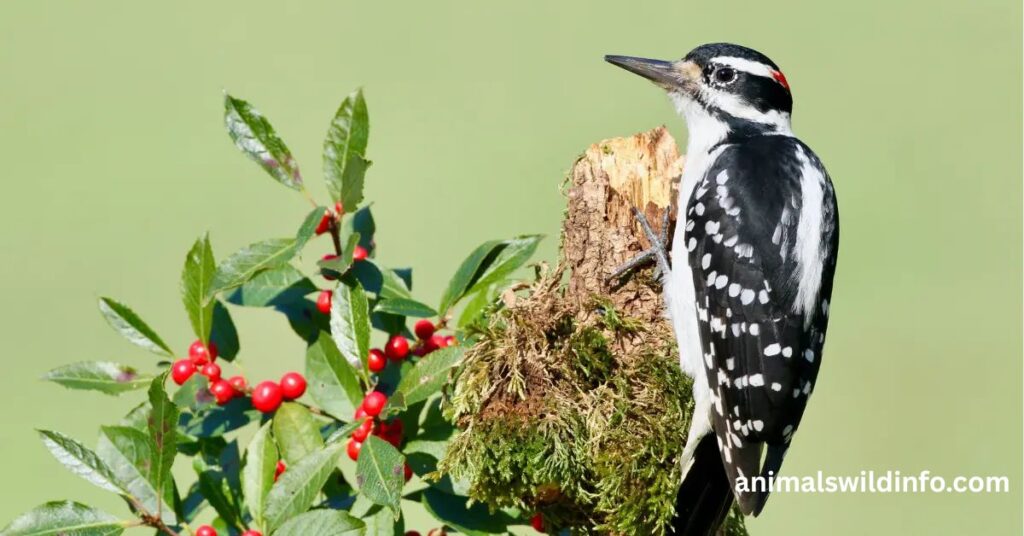
The Hairy Woodpecker gets mistaken for a Downy constantly, and it’s easy to see why. Both share the same black and white plumage and red nape patch on males. The giveaway is size and proportion: Hairy Woodpeckers run noticeably larger, and their bill stretches almost as long as their head, while the Downy’s bill looks short and stubby by comparison. Once you train your eye on that bill length, telling the two apart gets a lot easier.
Range and Habitat
This species spreads across the whole state, but it leans toward mature forests and old-growth trees more than the Downy does. Mixed stands of hardwoods and conifers offer the food supply and nesting sites this bird prefers, particularly in regions with larger, well-established trees.
Diet and Foraging Behavior
Wood-boring beetles and their larvae form the bulk of the Hairy Woodpecker’s diet, and this bird digs deeper into bark than most of its relatives to reach them. Winter brings a shift toward seeds and fruit when insect activity slows down. Compared to the Downy, Hairy Woodpeckers tend to forage higher up the trunk and dig into thicker bark, going after prey that smaller species simply can’t reach.
Where to Find Hairy Woodpeckers in Wisconsin
Chequamegon-Nicolet National Forest and Kettle Moraine State Forest both hold healthy populations. Listen for a sharp, loud drumming pattern on dead or dying trees, and check the ground below for fresh wood shavings, a sure sign one has been working nearby.
6. American Three-toed Woodpecker
Scientific Name: Picoides dorsalis
Identification
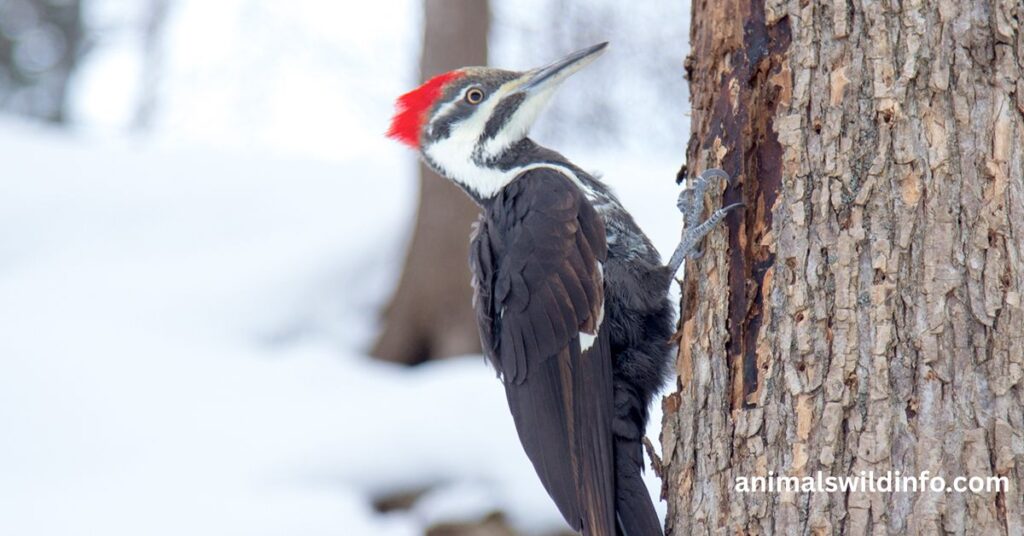
True to its name, the American Three-toed Woodpecker has just three toes instead of the four found on most woodpecker species. Males carry a yellow crown patch, while females show plain black-and-white streaking on the head with no yellow at all. The barred flanks and overall distinctive markings make this one of the more subtle-looking birds on this list, built for blending into bark rather than standing out.
Range and Habitat
Here’s the honest truth: this is Wisconsin’s rarest woodpecker by a wide margin. It’s a bird of the far north, tied closely to spruce bogs and old boreal forests near the Canadian border. Confirmed breeding records in Wisconsin are almost nonexistent, with only scattered, unconfirmed sightings over the decades. If you go looking for this species, treat it as a long shot rather than a guaranteed find.
Diet and Foraging Behavior
This bird specializes in bark-boring beetle larvae, particularly after wildfires or beetle outbreaks leave dead conifers standing. It scales bark away in flakes rather than drilling deep holes, a foraging style that reveals fresh feeding sign even when the bird itself stays hidden.
Where to Find American Three-toed Woodpeckers in Wisconsin
Far northern bog country near the Michigan and Minnesota borders offers the best (though still slim) chance. Extreme patience helps here. Most birders who do connect with this species spend years searching remote spruce-tamarack bogs before their first confirmed sighting.
7. Black-backed Woodpecker
Scientific Name: Picoides arcticus
Identification
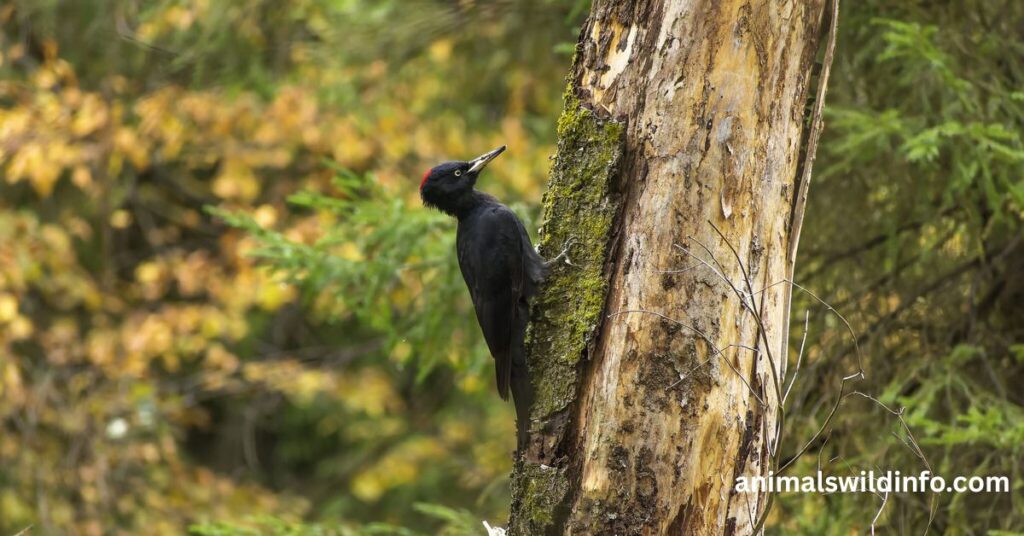
The Black-backed Woodpecker looks similar to the Three-toed at first glance, but its back stays solid black instead of barred. Males show the same yellow crown patch, and both sexes carry crisp white patches on the face and flanks that stand out against the dark body.
Read More: Can Turtles Climb? 7 Surprising Facts About Turtle Climbing
Range and Habitat
This species favors recently burned or storm-damaged coniferous forests, where dead and dying trees create a beetle buffet. Northern Wisconsin holds the state’s small, scattered population, and while it’s uncommon, sightings happen more regularly here than with the Three-toed Woodpecker.
Diet and Foraging Behavior
Wood-boring beetle larvae hiding in fire-killed trees make up almost the entire diet. This bird’s foraging directly supports forest health, since removing beetle populations from dying trees helps slow the spread of infestations to healthy ones nearby, tying it directly into the broader nutrient cycling and decomposition process of the forest.
Where to Find Black-backed Woodpeckers in Wisconsin
Look for recently burned patches of jack pine and spruce in the northwestern part of the state. Chequamegon-Nicolet National Forest offers some of the better odds. Early mornings during breeding season give you the best chance of catching the male’s territorial drumming.
8. Northern Flicker
Scientific Name: Colaptes auratus
Identification
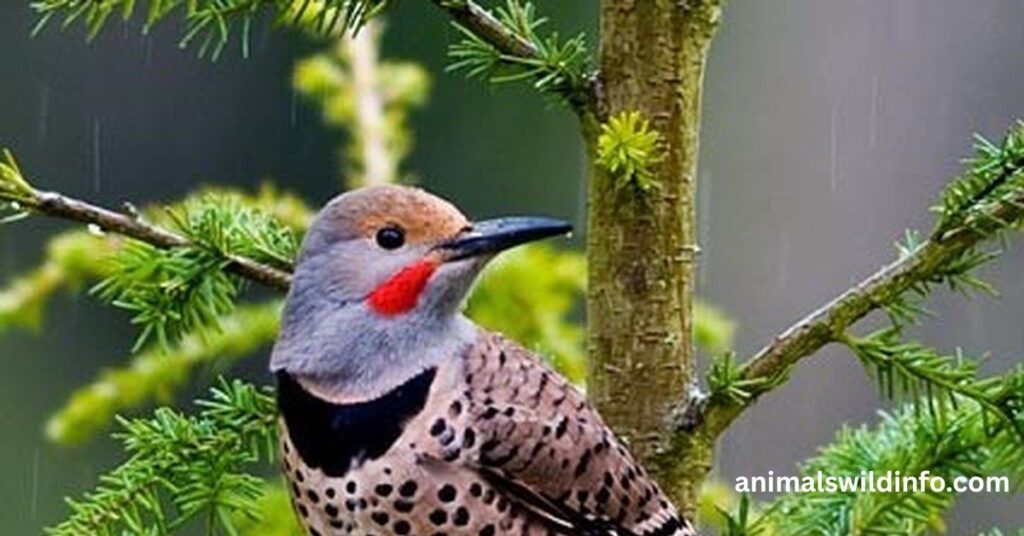
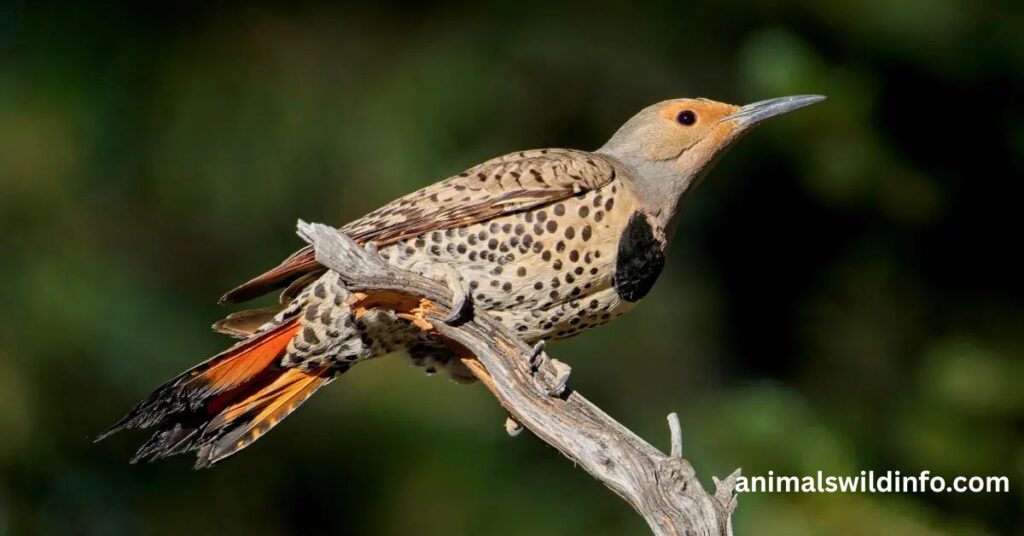
The Northern Flicker breaks nearly every woodpecker stereotype. Its body shows brown, spotted plumage instead of the usual black and white plumage, topped with a bold black crescent across the chest that looks almost like a necklace. In flight, look for a bright flash of yellow under the wings and tail a dead giveaway even from a distance.
Range and Habitat
Flickers favor open woodlands, parks, and suburban edges over dense forest, and they show up statewide during the warmer months. As true migratory birds, most Wisconsin flickers head south for winter and return each spring to breed, filling the air with loud, ringing calls as they reclaim territory.
Diet and Foraging Behavior
Here’s the twist: Northern Flickers spend more time on the ground than in trees. Ground foraging for ants and beetles is their signature move, something almost no other woodpecker species bothers with. Fall brings a shift toward seeds and berries, particularly acorns, as insect activity drops off.
Where to Find Northern Flickers in Wisconsin
Check open fields, lawns, and forest edges rather than deep woods. Watch the ground near tree lines, especially in spring when males are actively calling and drumming to mark territory. Nature reserves near lakes and rivers offer good odds during migration too.
9. Pileated Woodpecker
Scientific Name: Dryocopus pileatus
Identification
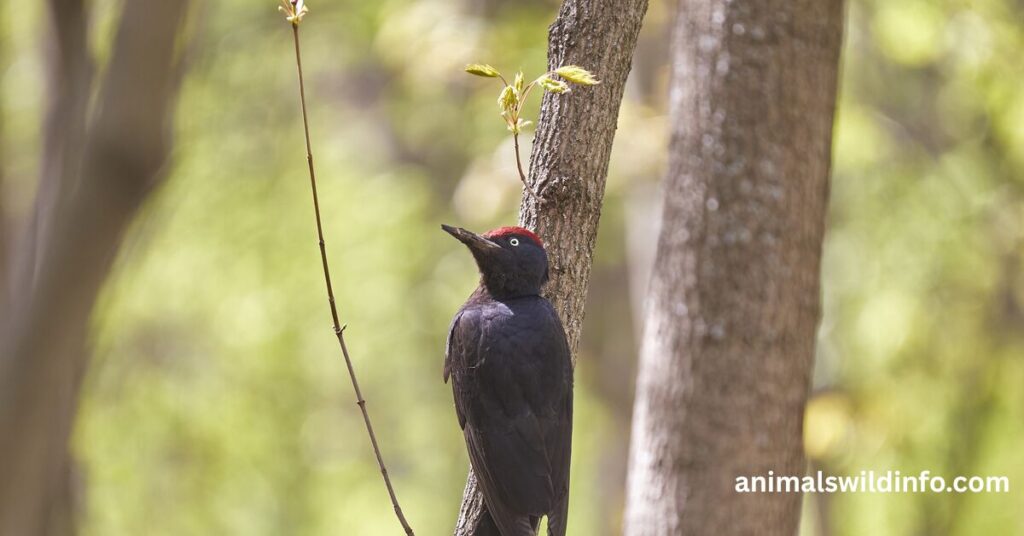
Nothing else in Wisconsin comes close to the size of the Pileated Woodpecker. This is the large woodpecker of the group, roughly crow-sized, with a flaming red crest and a bold white stripe running from the bill down the neck. Its square tail props the bird up against tree trunks while it works, and the sheer scale of this bird makes it unmistakable once you’ve seen one.
Range and Habitat
Pileated Woodpeckers need mature forests with large dead trees, mostly across northern and central Wisconsin. Interestingly, this species has been expanding its range southward in recent years, likely due to improving forest management and more standing deadwood available across the landscape.
Diet and Foraging Behavior
Carpenter ants top the menu, along with wood-boring beetles and their larvae. Instead of small pecking holes, this bird excavates large, rectangular cavities that can run several inches deep. Those abandoned cavities often become homes for owls, ducks, and other wildlife later on, making this species a genuine ecosystem engineer.
Where to Find Pileated Woodpeckers in Wisconsin
Head into the Northwoods, especially Chequamegon-Nicolet National Forest or Kettle Moraine State Forest. Listen first. The deep, resonant drumming of a Pileated Woodpecker carries much farther through the trees than any other species on this list.
Read More: Top 17 Strongest Animals in the World (With Pictures)
How to Identify Woodpeckers in Wisconsin
Bird identification gets a lot easier once you know which features actually matter. Size, head pattern, back pattern, and behavior all give you fast clues, often before you even get a clean look at the bird. The three comparisons below cover the trickiest mix-ups birders run into across the state.
Here’s a quick reference table to keep handy in the field:
| Species | Size | Key Field Mark | Typical Habitat |
| Red-headed Woodpecker | Medium | Solid crimson head | Oak savanna |
| Red-bellied Woodpecker | Medium | Red cap, striped back | Mixed woodland, backyards |
| Yellow-bellied Sapsucker | Medium-small | White wing stripe, yellow belly | Aspen-birch forest |
| Downy Woodpecker | Small | Short bill | Any wooded habitat |
| Hairy Woodpecker | Medium | Long bill | Mature forest |
| American Three-toed Woodpecker | Small-medium | Yellow crown, barred back | Boreal bog (rare) |
| Black-backed Woodpecker | Medium | Yellow crown, solid black back | Burned conifer forest |
| Northern Flicker | Medium-large | Yellow underwing flash | Open woodland, ground |
| Pileated Woodpecker | Large | Red crest, huge size | Mature forest |
Red-headed vs. Red-bellied Woodpecker
The names cause more confusion than the birds themselves. A Red-headed Woodpecker has a fully crimson head with a stark white body, while a Red-bellied Woodpecker shows only a red cap on top of a striped black-and-white back. If the whole head glows red, you’re looking at the Red-headed. If the back looks striped, it’s the Red-bellied.
Downy vs. Hairy Woodpecker
Bill length settles this one almost every time. A Downy Woodpecker’s bill looks short and stubby next to its head, while a Hairy Woodpecker’s bill stretches nearly as long as its whole head. Size helps too, since Hairy Woodpeckers run noticeably bigger overall, but the bill comparison stays the most reliable trick in the field.
Northern Flicker Identification Tips
Forget the tree trunk entirely and check the ground instead. Flickers spend far more time hopping across lawns and open fields hunting ants than clinging to bark. Combine that ground-foraging habit with the flash of yellow under the wings in flight, and identifying this species becomes almost effortless.
Tips for Watching Woodpeckers in Wisconsin
Wildlife observation rewards patience more than gear. You don’t need expensive equipment to start spotting woodpeckers, just a decent pair of binoculars and a willingness to stand still and listen. Woodpecker calls and drumming patterns often reveal a bird’s location long before your eyes do, so train your ears as much as your eyes.
Timing matters just as much as location. Early morning hours bring the most activity across nearly every species on this list, and spring’s breeding season adds loud, easy-to-follow drumming into the mix. Combine good timing with the right birdwatching locations, and your odds of a solid sighting go way up.
Best Habitats to Search
State forests with a healthy mix of mature forests and standing dead trees consistently produce the best results. Chequamegon-Nicolet National Forest and Kettle Moraine State Forest both rank among the top Wisconsin nature reserves for woodpecker diversity, hosting most of the nine species covered in this guide within a single visit if you’re lucky.
How to Attract Woodpeckers to Your Yard
Suet feeders draw in Downy and Red-bellied Woodpeckers reliably, especially through winter months when natural food runs thin. Leaving a dead or dying tree standing, if it’s safe to do so, gives woodpeckers a natural food source and potential nesting site right in your own yard. Native trees also help, since they support the insect populations these birds depend on for feeding behavior throughout the year.
What to Look for When Identifying a Woodpecker
Start with size, then move to head pattern, back pattern, and finally behavior. A bird that forages on the ground is almost certainly a Northern Flicker. A bird drilling neat rows of holes is a Yellow-bellied Sapsucker. Building this mental checklist speeds up identification dramatically, even with a quick, fleeting look.
Final Thoughts
Wisconsin’s woodpecker species do a lot more than peck at trees. They control insects and larvae populations, carve out cavities that other forest wildlife depend on, and act as an early signal of overall forest biodiversity. Understanding their habits gives you a deeper appreciation for the role every single one plays in keeping the state’s woodlands healthy.
Next time you head outside, take a minute to listen for drumming or a sharp call overhead. With nine distinct species calling Wisconsin home, from the tiny Downy to the massive Pileated, there’s always a good chance one is closer than you think.
FAQ’s
What is the most common woodpecker in Wisconsin?
The Downy Woodpecker holds that title, thanks to its ability to thrive in nearly any wooded habitat, from deep forest to backyard trees.
How many species of woodpeckers are found in Wisconsin?
Nine species live in Wisconsin, though one, the American Three-toed Woodpecker, is extremely rare and rarely confirmed.
What is the rarest woodpecker in Wisconsin?
The American Three-toed Woodpecker. Confirmed sightings in the state remain scarce, and breeding has never been formally documented here.
What woodpecker has a red head in Wisconsin?
The Red-headed Woodpecker, easily identified by its fully crimson head and stark white-and-black body.
Where is the best place to see woodpeckers in Wisconsin?
Chequamegon-Nicolet National Forest offers the widest variety, hosting most of the nine species within its mixed forest habitat.
What is the largest woodpecker in Wisconsin?
The Pileated Woodpecker, a crow-sized bird with a bright red crest that towers over every other species on this list.