7 Interesting Facts About Porcupines in Georgia You Should Know
Picture this. You’re hiking a quiet trail in north Georgia, and something rustles in the brush. You freeze. Could that really be a porcupine? It sounds unlikely, but it’s true. Are there porcupines in Georgia? Yes, and their story is more interesting than most people realize.
This article walks you through everything you need to know. You’ll learn where these animals live, what they eat, and why one might show up in your own backyard. You’ll also learn what to do if you ever cross paths with one. Let’s dig in.
Are There Porcupines in Georgia?
So, do porcupines live in Georgia? The short answer is yes. The Georgia porcupine population isn’t huge, but it’s real. You’ll mostly find them tucked into the northern mountains, far from the coastal lowlands most people picture when they think of the state. These animals favor quiet, wooded corners where nobody bothers them.
The North American porcupine, known scientifically as Erethizon dorsatum, is the species that calls Georgia home. It’s a rodent species, and a big one at that. Spotting a Georgia porcupine takes patience, since these creatures are shy by nature. Still, wildlife trackers confirm steady, if scattered, porcupine sightings Georgia wide over the past several decades.
What States Do Porcupines Live In?
Before we zoom into Georgia, it helps to see the bigger picture. Porcupines roam across a wide stretch of North America. States like Washington, Oregon, and Idaho host thriving populations. Thick forests, cold winters, and plenty of bark to chew make the Pacific Northwest a porcupine paradise. Maine, New York, and other northeastern states share similar conditions, which explains why sightings there are common.
Georgia sits at the edge of this range, which is part of why finding one here feels special. The porcupine range in Georgia represents one of the southernmost pockets where this animal still survives. It’s not a coincidence, either. Cooler mountain elevations mimic the conditions these animals need, even this far south. That overlap is exactly why wild porcupines in Georgia manage to hang on.
Read More: Top 13 Animals That Eat Oranges (With Pictures & Fun Facts)
Habitat and Range of Porcupines in Georgia
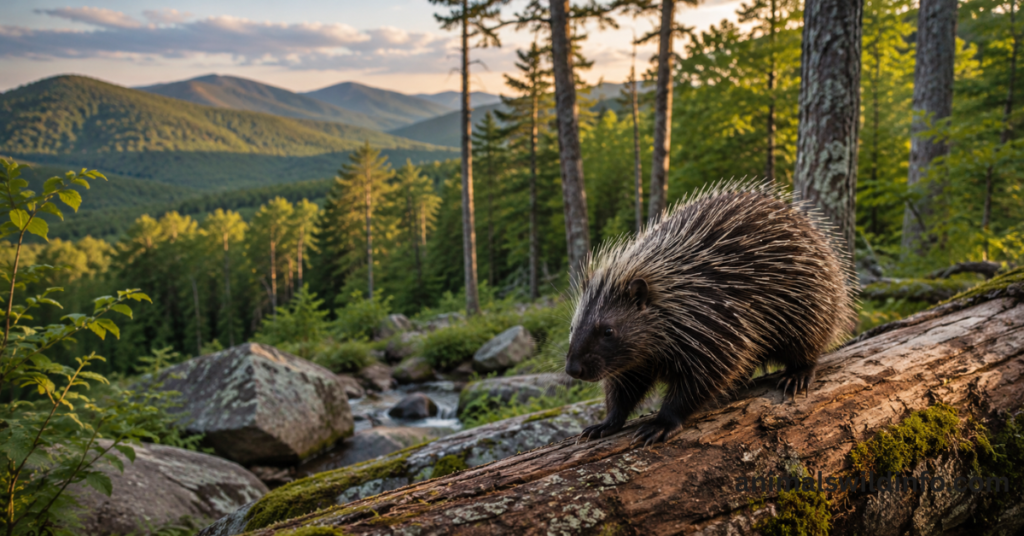
The porcupine habitat in Georgia centers almost entirely on the northern mountains. Cooler temperatures, dense tree cover, and steady food sources make this region ideal. You won’t find these animals near the coast or in the state’s flatter central areas. They need elevation, and they need trees. Lots of them.
Hardwood forests dominate their preferred terrain, though mixed forests and pockets of pine forests also support them. The North Georgia Mountains offer exactly this mix. Streams and rivers cut through these areas too, adding moisture that keeps vegetation lush year-round. That combination of water, elevation, and tree cover forms the backbone of true wildlife habitat for this species.
| Region | Forest Type | Sighting Likelihood |
| Chattahoochee National Forest | Mixed hardwood | Moderate |
| Appalachian foothills | Deciduous, dense | Moderate to low |
| Amicalola Falls area | Hardwood, riverine | Low |
| Coastal Georgia | Not applicable | None |
Where Can You Find Porcupines in Georgia?
If you’re hoping to see one yourself, start with Chattahoochee National Forest wildlife hotspots. This forest stretches across much of north Georgia and offers the food, shelter, and quiet that porcupines crave. Trails near rivers tend to work best, since these animals gravitate toward moisture-rich spots. Dawn and dusk are your best windows, given how strictly nocturnal these creatures are.
The Appalachian Mountains cut through this same region, and porcupines in the Appalachian Mountains often wander across state lines without much notice. State parks like Amicalola Falls sometimes yield sightings too, especially along less-traveled paths. Look up as much as you look around. These animals climb trees to strip bark, so a rustle overhead might be your best clue. Patience pays off here more than anywhere else.
Physical Characteristics of Porcupines
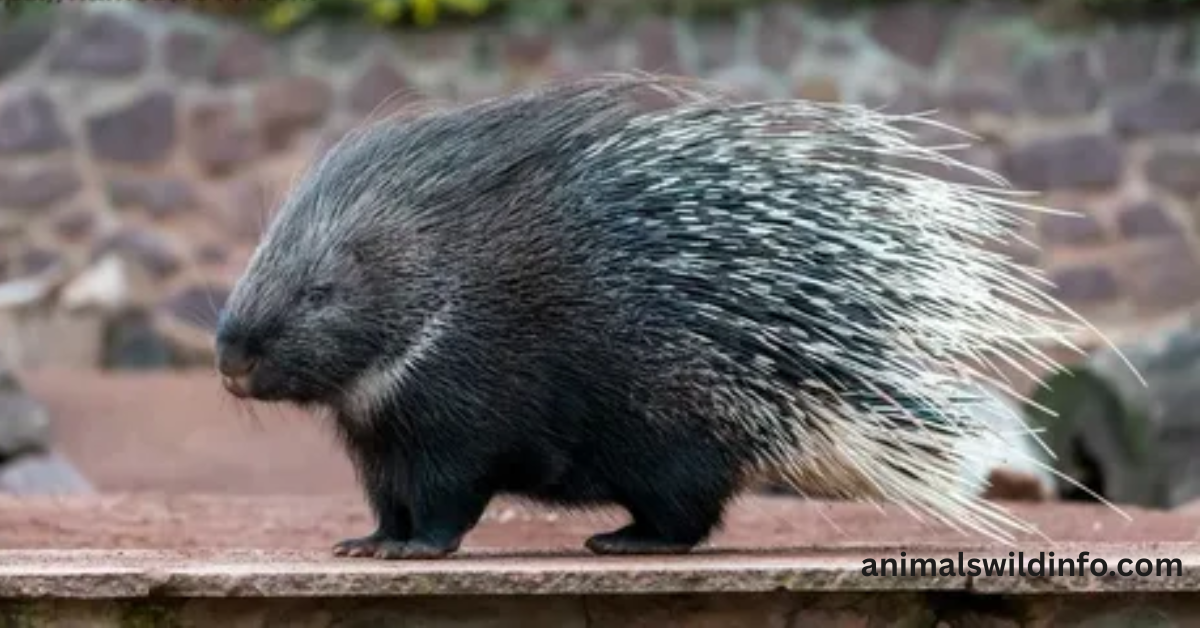
A porcupine’s body tells you everything about how it survives. It’s stocky, slow-moving, and covered in roughly 30,000 defensive quills. Those quills aren’t just for show. Each one carries tiny barbs that make removal painful once they’re lodged in skin. This quill-covered mammal relies on that built-in armor instead of speed or aggression.
Beyond the quills, porcupines have curved claws built for gripping bark, which makes them surprisingly good tree-climbing mammal specimens despite their bulky frame. Short legs, thick fur, and long front incisors round out the look. Those incisors never stop growing, so constant gnawing keeps them worn down.
Scientific Name: Erethizon dorsatum Class: Mammalia Diet: Herbivore
Diet and Feeding Habits of Porcupines
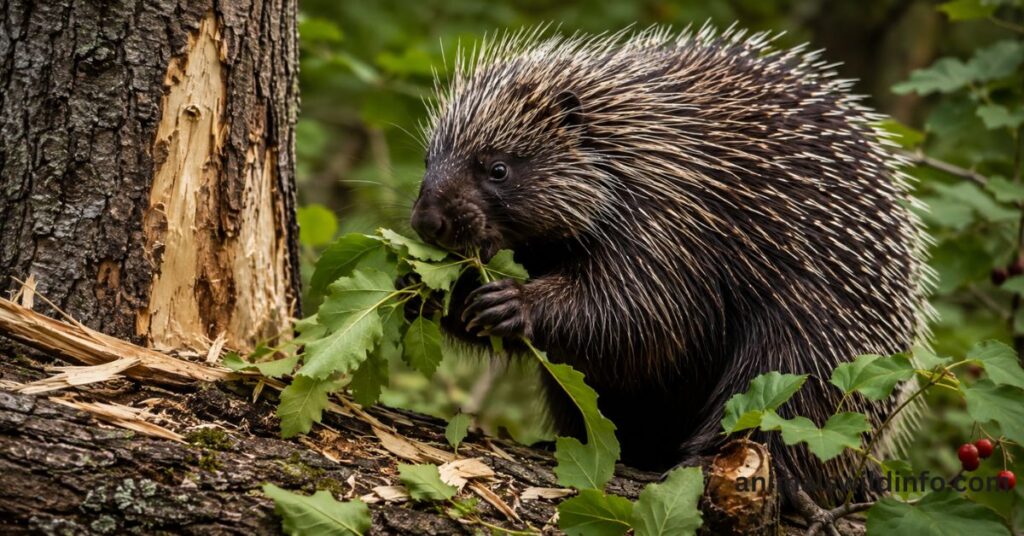
Porcupines are strict herbivores, and tree bark sits at the top of their menu. As a true herbivorous mammal, this species also eats leaves, twigs, buds, and seasonal fruit when available. In winter, when other food dries up, bark becomes the main course. You’ll often spot gnaw marks on tree trunks as proof a porcupine has been feeding nearby.
Bark feeding isn’t random, either. These animals show preferences, often favoring certain trees over others depending on the season. Leaves and twigs round out warmer-month diets, while tree branches provide both food and climbing routes at once. This feeding pattern actually benefits the forest ecosystem by thinning overcrowded growth and encouraging healthier tree stands over time.
Porcupine Behavior and Lifestyle
Porcupines live quiet, mostly solitary lives. As a classic nocturnal animal, they sleep through daylight hours tucked into dens, rock crevices, or hollow trees. Once night falls, they climb, forage, and wander with surprising confidence for such a slow-moving creature. This solitary mammal rarely interacts with others of its kind outside of mating season.
Their defense mechanism kicks in only when necessary. Rather than attack, a porcupine backs toward a threat, quills raised, hoping the mere sight is enough to send predators running. This behavior reflects a broader pattern of mammal adaptation, where survival depends on deterrence rather than confrontation. It’s a strategy that’s worked for millions of years, and it still does.
Read More: Top 13 Animals That Eat Oranges (With Pictures & Fun Facts)
Why Do I Have a Porcupine in My Yard?
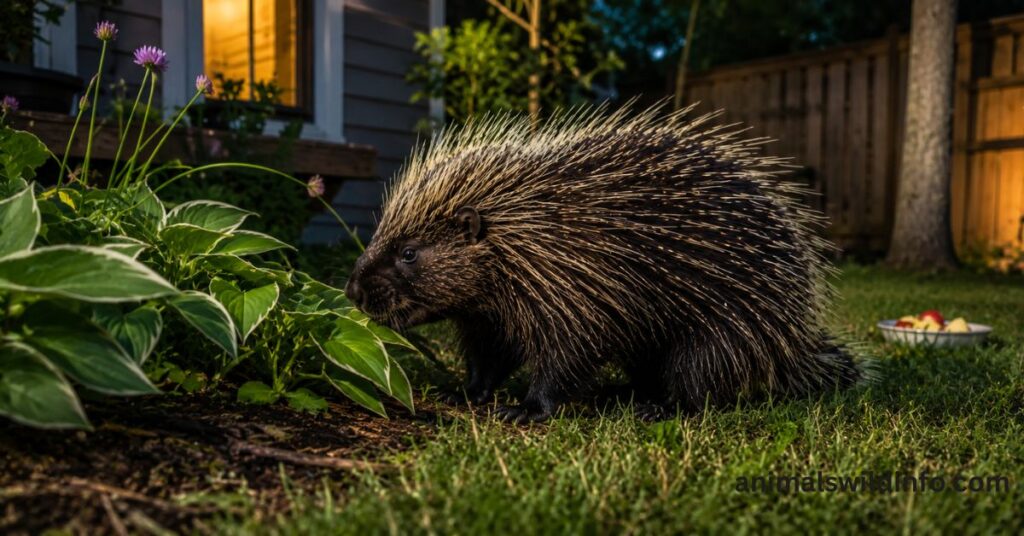
If a porcupine has shown up on your property, something in your yard is drawing it in. Fruit trees, dense shrubs, and woodpiles all look like paradise to a hungry, shelter-seeking porcupine. These animals aren’t picky. A yard with mature trees and quiet corners checks every box they need.
It helps to remember these visitors aren’t pests in the traditional sense. Their feeding habits support seed dispersal, and their presence often signals a healthy patch of native wildlife Georgia residents rarely notice. If you’d rather they moved along, try natural repellents like cayenne pepper or vinegar near vulnerable plants. It won’t harm the animal, but it will make your yard less appealing.
What Should You Do If a Porcupine Is in Your Yard?
First, stay calm and keep your distance. Porcupines aren’t aggressive, and most will wander off on their own if left alone. Keep dogs and small children away from the area, since curiosity is usually what leads to painful encounters. A leashed dog investigating a porcupine rarely ends well for the dog.
If the visits become frequent, focus on humane deterrents rather than harmful ones. Secure compost bins, trim overhanging branches, and remove easy food sources like fallen fruit. Coexistence works better than confrontation in almost every case. These animals aren’t looking for trouble. They’re just looking for dinner.
Can a Porcupine Hurt You?
Here’s a myth worth busting right away. Porcupines cannot shoot their quills, no matter what old cartoons suggest. Instead, contact triggers release, meaning barbed quills only end up in skin if you or your pet gets too close. Once embedded, these quills work their way deeper with movement, which is why quick removal matters.
Left untreated, embedded quills can lead to infection, so a vet or doctor visit is often necessary. Thankfully, porcupines almost never initiate contact. Their entire defense mechanism exists to avoid physical conflict, not start it. Respect their space, and the risk of injury drops to nearly zero.
Conclusion
The presence of porcupines in Georgia says something bigger about the state’s ecosystem balance. These quiet, quill-covered animals hold their place at the edge of their range, thriving in mountain forests most visitors never fully explore. Their feeding habits, denning behavior, and even their prickly defense all play a role in maintaining a healthier woodland ecosystem.
Supporting wildlife conservation efforts in north Georgia helps ensure these animals stick around for future generations. Whether you spot one on a hiking trail or simply appreciate knowing they’re out there, porcupines remind us how much biodiversity exists just beyond the everyday view. Georgia’s forests are richer for having them.
Frequently Asked Questions
Do we have porcupines in Georgia?
Yes, Georgia has a small but confirmed population of North American porcupines, concentrated mainly in the northern mountains and forested regions near the Appalachian range.
Can Muslims eat porcupine meat?
Islamic dietary rulings on porcupine meat vary by scholarly interpretation, with some classifying it as permissible and others restricting it based on its classification as a rodent. Consulting a local religious authority is the best way to get a definitive answer.
What is the top predator in Georgia?
The American black bear and the coyote rank among Georgia’s top predators, though larger predators like mountain lions are considered extremely rare or extinct in the state today.
Which countries do porcupines live in?
Porcupines live across a wide range of countries, including the United States, Canada, and much of Central and South America, with additional species found throughout Africa, Asia, and parts of Europe.