Top 20 Animals With Spots (With Pictures & Amazing Facts)
Nature loves a good pattern. Walk through a forest, dive into a coral reef, or just look at your neighbor’s dog, and you’ll spot spotted animals everywhere. These animals with distinctive markings aren’t just pretty to look at. Their spots do real work. They hide, they warn, they attract, and sometimes they even help scientists tell one animal from another.
In this guide, you’ll meet twenty of the most famous spotted species on Earth. You’ll also learn why spots exist at all, and what they do for the animals that wear them. Let’s jump in.
Why Do Animals Have Spots?
Spots aren’t random. They show up again and again across totally different animal groups because they solve real problems. A spot can break up an animal’s outline, making it harder for a predator to spot in the first place. That’s natural camouflage at work, and it’s one of the biggest reasons spotted wildlife exists at all. Other spots act the opposite way. They shout “stay back,” warning predators that the animal underneath might be toxic or dangerous. This is called warning coloration, and you’ll see it later with animals like the harlequin toad.
Spots also do more than protect. They help animals find mates, since a bold pattern can signal health and strong genes to a potential partner. Scientists call this visual signaling, and it plays a big role in mating signals across the animal kingdom. On top of that, spots often work like a fingerprint. No two cheetahs, whale sharks, or giraffes wear the exact same individual spot pattern, so researchers use these unique markings for individual identification in the wild. Add in thermoregulation, since darker spots can absorb or release heat, and you start to see how much one small pattern can do for survival adaptation.
List of Animals With Spots
Below is a quick list of the animals with body spots you’ll learn about in this guide. Each one earned its spot on this list for a different reason, whether it’s speed, size, color, or sheer rarity.
| Number | Animal |
| 1 | Cheetah |
| 2 | Leopard |
| 3 | Jaguar |
| 4 | Giraffe |
| 5 | Spotted Hyena |
| 6 | Snow Leopard |
| 7 | Fallow Deer |
| 8 | Whale Shark |
| 9 | Atlantic Spotted Dolphin |
| 10 | Spotted Salamander |
| 11 | Spotted Turtle |
| 12 | Ocelot |
| 13 | Burmese Python |
| 14 | Spotted Moray Eel |
| 15 | Spotted Eagle Ray |
| 16 | Dalmatian |
| 17 | Appaloosa Horse |
| 18 | African Wild Dog |
| 19 | Ladybug |
| 20 | Leopard Gecko |
Cheetah
Scientific name: Acinonyx jubatus Class: Mammalia Diet: Carnivore
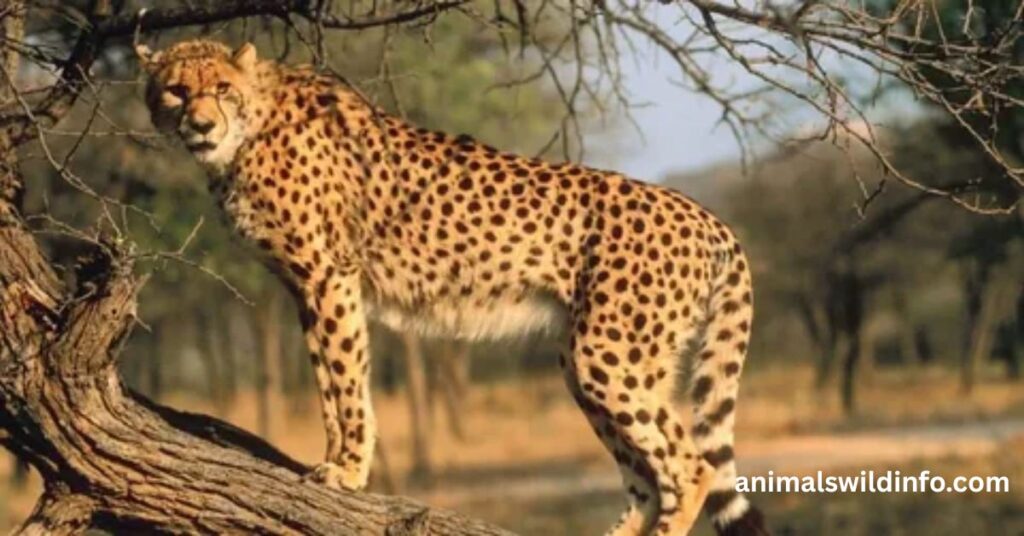
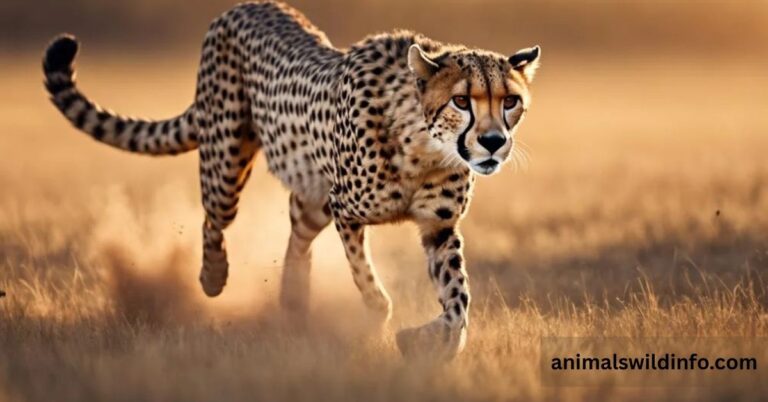
The cheetah is built for speed, but its spotted coat deserves just as much credit. Each black spot sits on a tan background, and no two cheetahs share the same layout. That pattern breaks up the cat’s shape in tall grass, giving it natural camouflage while it creeps close to prey. Cheetah cubs start life even darker, with a smoky gray mane that helps them hide from lions and hyenas during their most vulnerable weeks.
Out on the open savanna, this coat pattern isn’t just about hiding. It also helps the cheetah manage heat while sprinting at top speed, since the spots and surrounding fur handle sunlight differently across the body. Researchers studying spotted mammals have found that spot density can shift slightly based on region, hinting at a deeper link between the cheetah and its changing habitat.
Leopard
Scientific name: Panthera pardus Class: Mammalia Diet: Carnivore
Few cats wear their rosette patterns better than the leopard. Unlike a plain spot, a leopard’s rosette looks like a broken ring, often with a darker center that isn’t quite filled in. This design works beautifully in dense foliage, where dappled sunlight falls unevenly through leaves and branches. A resting leopard can vanish completely against a tree trunk, and that’s exactly the point.
Leopards live across a huge range, from African grasslands to Asian rainforests, and their pattern shifts slightly depending on where they call home. Forest leopards tend to carry darker, tighter rosettes, while savanna leopards often show lighter, more spread-out ones. This flexibility is a strong example of evolutionary adaptation, letting the same basic cat thrive in wildly different environments.
Jaguar
Scientific name: Panthera onca Class: Mammalia Diet: Carnivore
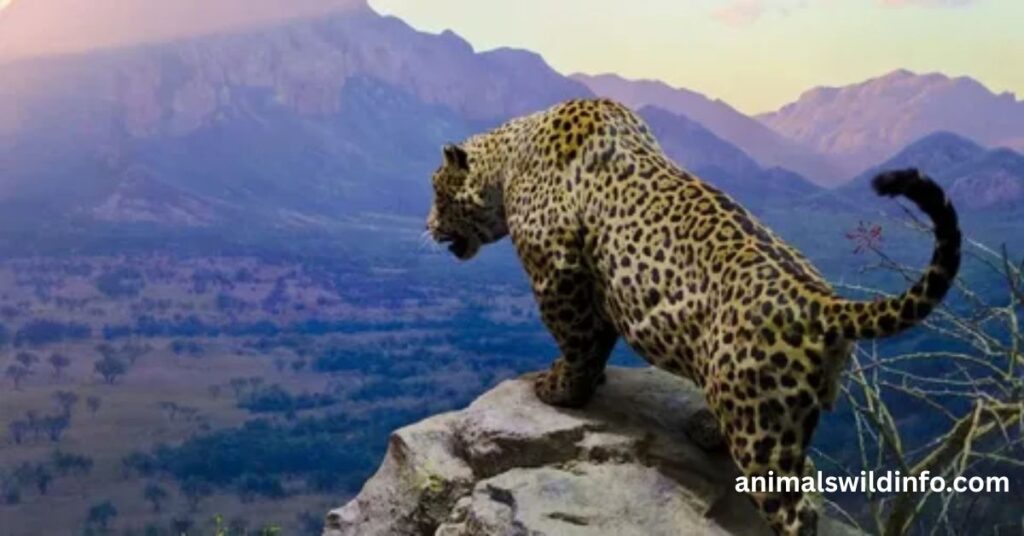
At first glance, the jaguar looks a lot like its cousin the leopard. Look closer, though, and you’ll notice the jaguar’s rosettes are bigger, and many contain a small dot right in the middle. This extra detail sets jaguars apart from every other big cat on the list, and it helps this ambush predator stay hidden in the tropical forest it calls home.
Jaguars are strong swimmers, and they often hunt near rivers and wetlands across Central and South America. Their bold spotted fur blends into shifting light near the water’s edge, letting them creep close before striking. As an apex predator, the jaguar also plays a key role in keeping prey populations balanced, which matters for the whole rainforest food web.
Giraffe
Scientific name: Giraffa camelopardalis Class: Mammalia Diet: Herbivore
The giraffe‘s blotchy coat pattern is one of the most recognizable in the animal kingdom, and it does far more than help this towering herbivore blend into acacia trees. Each patch acts like a built-in radiator. Blood vessels sit close to the skin under each patch, helping the giraffe release heat and manage its body temperature in the blazing African sun. That’s thermoregulation in action, right there on the skin.
Beyond biology, these patches also carry social weight. Researchers have noticed that giraffes seem to recognize each other partly by pattern, using subtle differences the way you might recognize a friend’s face in a crowd. This kind of social signaling helps giraffes keep track of family members and rivals within a herd, adding a surprisingly social layer to what looks like a simple body marking.
Read More: Top 13 Animals That Eat Oranges (With Pictures & Fun Facts)
Spotted Hyena
Scientific name: Crocuta crocuta Class: Mammalia Diet: Carnivore/Scavenger
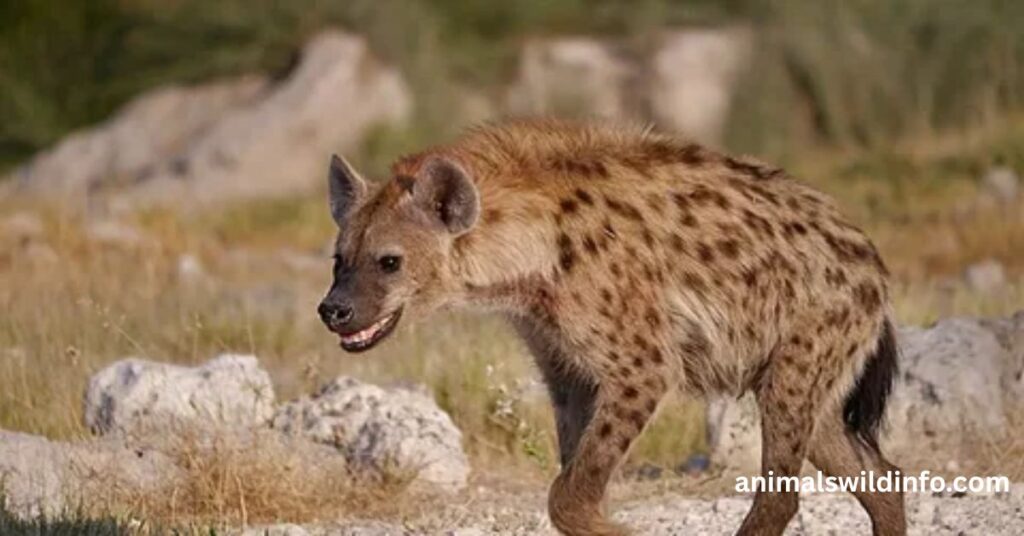
The spotted hyena gets a bad reputation, but its dark spots on a sandy coat serve a real purpose. Out on open grassland, the pattern helps young hyenas stay hidden near the den while adults hunt or scavenge nearby. As hyenas age, their spots can fade slightly, giving researchers another handy way to estimate age in the wild.
Hyenas live in tight clan structures, and their social behavior is far more complex than most people assume. Clan members use scent, sound, and even posture to communicate, and some scientists believe individual spot patterns help clan mates recognize one another at a distance. Add in their surprising intelligence and strong bite force, and it’s clear the spotted hyena deserves more respect than pop culture usually gives it.
Snow Leopard
Scientific name: Panthera uncia Class: Mammalia Diet: Carnivore
High in the mountains of Central Asia, the snow leopard relies on smoky gray fur covered in dark rosette patterns. Against gray rock and patchy snow, this coat works like a perfect disguise. It’s one of the best examples of natural camouflage in any cold-weather predator, letting the cat stalk wild sheep and goats across steep, rocky terrain.
Because snow leopards are so elusive, researchers often rely on camera traps and individual spot patterns to track specific animals over time. This method supports individual identification without ever needing to catch or tag the cat directly. It’s a quiet, patient way to study one of the most private big cats on the planet.
Fallow Deer
Scientific name: Dama dama Class: Mammalia Diet: Herbivore
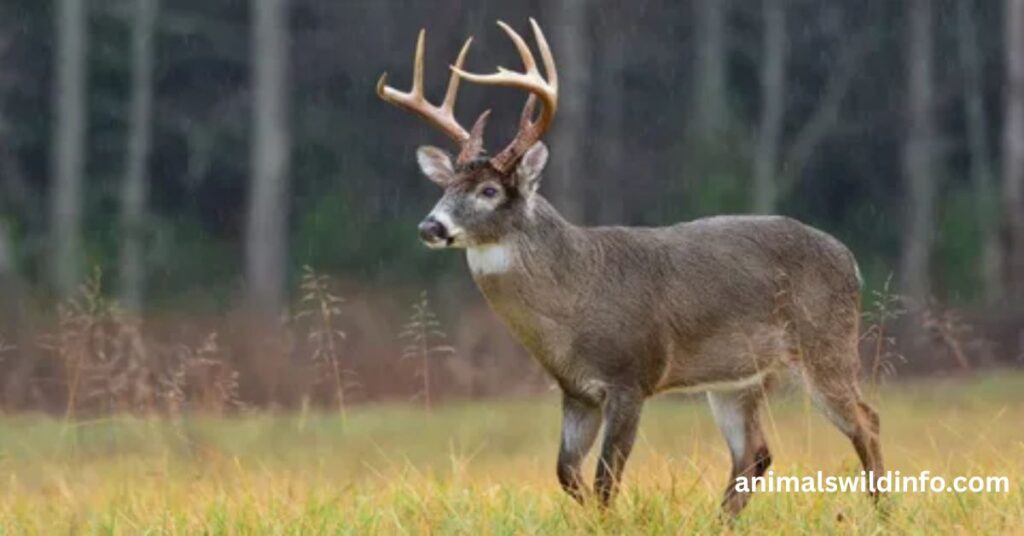
The fallow deer wears a coat that changes with the seasons. In summer, you’ll see rows of white spots scattered across a reddish-brown back, giving this deer a striking, almost painted look. Come winter, the coat often turns darker and the spots fade, offering better cover against bare trees and gray skies.
This seasonal shift is a smart survival strategy, letting the fallow deer match its forest habitat no matter the time of year. Herds tend to stick together for safety, and fawns use their spotted backs to stay hidden in tall grass while their mothers graze nearby. It’s a simple system, but it works well enough that fallow deer have thrived across Europe for thousands of years.
Whale Shark
Scientific name: Rhincodon typus Class: Chondrichthyes Diet: Filter feeder
As the largest fish in the ocean, the whale shark carries a pattern of pale white spots across its broad, gray-blue back. No two sharks share the same layout, so marine biologists use these patterns almost like a barcode. This method of individual identification lets researchers track specific sharks across thousands of miles without ever tagging them.
Despite its massive size, the whale shark is gentle by nature. As a filter feeder, it glides through the marine ecosystem with its mouth open, straining plankton and small fish from the water. Divers often describe swimming near one as humbling, since something so enormous moves with such quiet, unhurried grace.
Atlantic Spotted Dolphin
Scientific name: Stenella frontalis Class: Mammalia Diet: Carnivore

Young Atlantic spotted dolphins are born a plain gray, but they gain their signature dark spots as they mature. By adulthood, the whole body can be covered in a dense scatter of light and dark markings, making every dolphin’s pattern a little different. This gradual change makes it easy for researchers to estimate age just by looking at how spotted a dolphin has become.
These dolphins live in tight social pods across the warm coastal regions of the Atlantic, and their group behavior is genuinely fascinating to watch. They hunt cooperatively, often working together to herd fish into tight balls near the surface. Playful and curious, Atlantic spotted dolphins are known to approach boats and swimmers, making them a favorite among divers hoping for a close encounter.
Spotted Salamander
Scientific name: Ambystoma maculatum Class: Amphibia Diet: Carnivore
The spotted salamander carries bright yellow spots in two neat rows down its otherwise jet-black body. This bold contrast isn’t just for show. It works as warning coloration, hinting to predators that this amphibian’s skin carries mild toxins. In the animal kingdom, bright colors paired with dark backgrounds often mean the same thing: proceed with caution.
Every spring, spotted salamanders emerge from underground burrows during the first warm rains and migrate to shallow breeding ponds. This trip can involve crossing roads and open fields, which makes them one of the more visible amphibians during a short window each year. Once breeding wraps up, they disappear back underground, spending most of their lives hidden beneath logs and leaf litter in the forest habitat they call home.
Spotted Turtle
Scientific name: Clemmys guttata Class: Reptilia Diet: Omnivore
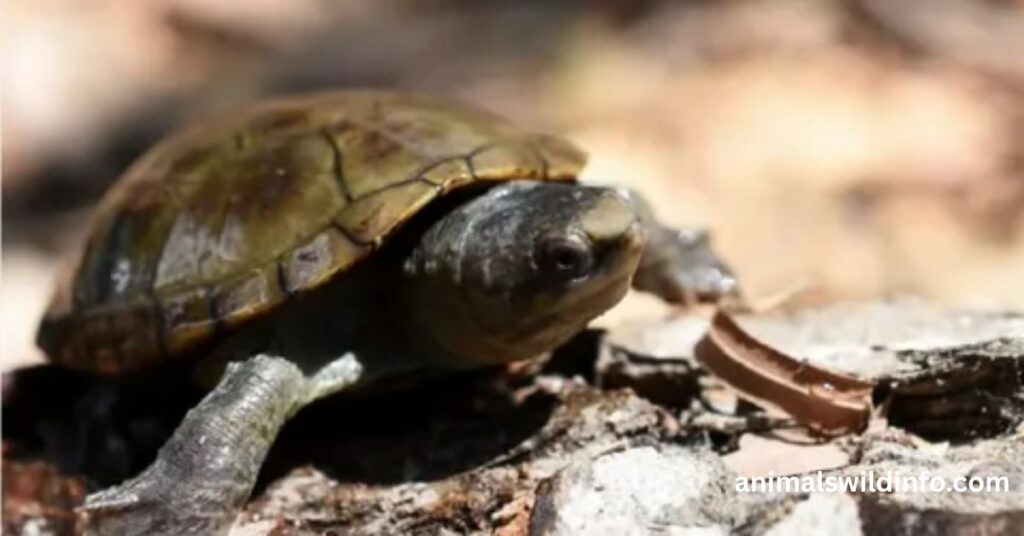
Small and shy, the spotted turtle carries scattered yellow spots across a smooth, dark shell. The number of spots can vary a lot from turtle to turtle, with some carrying just a handful and others covered edge to edge. This variation gives each turtle its own distinctive appearance, almost like a constellation on its back.
You’ll usually find spotted turtles in shallow wetlands, where they bask on logs and forage for insects, plants, and small invertebrates. They’re most active in cooler weather, often basking in early spring sunshine before retreating as summer heat sets in. Habitat loss has hit this species hard, making healthy wetlands more important than ever for its survival.
Ocelot
Scientific name: Leopardus pardalis Class: Mammalia Diet: Carnivore
The ocelot wears an elegant coat of open rosettes and elongated spots, arranged almost like brushstrokes across its body. This pattern gives the cat excellent cover in dense foliage, where shifting light and shadow constantly break up its outline. As a skilled ambush predator, the ocelot relies on that cover to get close to prey before making its move.
Unlike many solitary wild cats, ocelots show flashes of social behavior, especially during mating season when pairs may travel and rest together for a while. They’re mostly active at night, using sharp hearing and a strong sense of smell to hunt small mammals, birds, and reptiles across Central and South America. Their striking coat once made them a target for the fur trade, though most countries now protect this spotted mammal by law.
Read More: 7 Interesting Facts About Porcupines in Georgia You Should Know
Burmese Python
Scientific name: Python bivittatus Class: Reptilia Diet: Carnivore
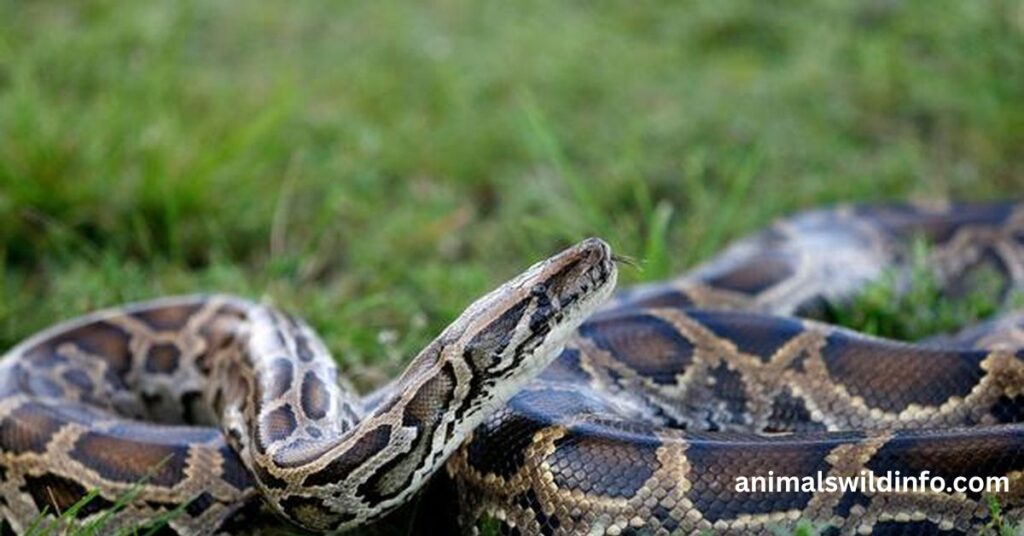
Thick, powerful, and patient, the Burmese python carries a chain of dark, irregular blotches down its back. This isn’t a simple row of dots. The pattern shifts and blends, giving the snake outstanding cover among leaf litter and dense foliage. As an ambush predator, it can wait motionless for hours, relying entirely on stripes and spots to stay invisible until prey wanders close.
Beyond camouflage, this pattern plays a quiet role in thermoregulation too, since darker sections absorb heat more efficiently during cool mornings. Native to Southeast Asia, Burmese pythons have also become a well-known invasive species in parts of Florida, where their size and appetite have reshaped local food webs in a way few reptiles ever manage.
Spotted Moray Eel
Scientific name: Gymnothorax moringa Class: Actinopterygii Diet: Carnivore
Tucked into cracks and crevices, the spotted moray eel wears a mottled skin pattern that blends seamlessly into coral reefs. This spotted skin helps the eel stay hidden while it waits for fish and crustaceans to swim within striking range. Few predators in the reef are quite this patient, and even fewer are this well disguised.
Despite a fearsome look, with a mouth full of sharp teeth and a habit of opening and closing it while breathing, the moray eel isn’t aggressive toward divers who leave it alone. It plays an important role in the aquatic ecosystem, helping control fish and crustacean populations around the reef. Its long, flexible body lets it slip through impossibly tight gaps that most other predators simply can’t reach.
Spotted Eagle Ray
Scientific name: Aetobatus narinari Class: Chondrichthyes Diet: Carnivore
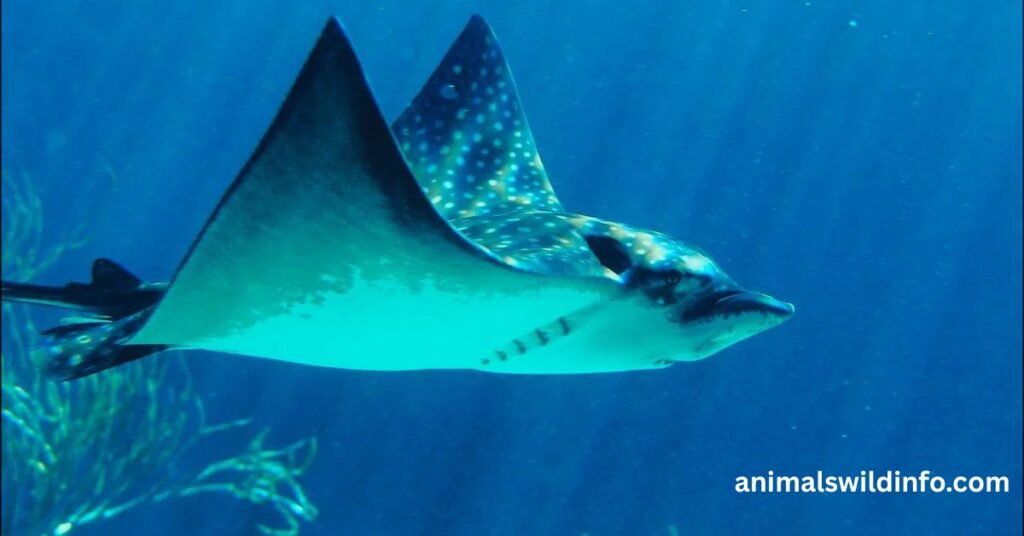
Gliding through warm coastal water, the spotted eagle ray flashes a dark back covered in bright white spots, set against pale underparts. This striking contrast works both ways. It offers some predator protection from above, and it may also help rays recognize each other while swimming in loose groups through the open ocean.
One of the most surprising things about this ray is its ability to leap clear out of the water, twisting through the air before splashing back down. Scientists think this behavior might help shake off parasites, though it’s just as likely part of some form of communication between rays. Their diet leans heavily on mollusks and crustaceans, which they dig up from the sandy sea floor using a flattened, shovel-like snout.
Dalmatian
Scientific name: Canis lupus familiaris Class: Mammalia Diet: Omnivore
Instantly recognizable, the Dalmatian wears bold black spots scattered across a white background. Interestingly, puppies are born completely white, with spots developing gradually over the following weeks. That means no Dalmatian shows its true coat pattern until it’s already a few weeks old, which makes early puppyhood a bit of a surprise every time.
Historically, Dalmatians ran alongside horse-drawn carriages, acting as guard dogs and companions during long journeys. That same energy later made them popular firehouse dogs in the 1800s, trotting ahead of fire engines to help clear the road. Today they’re mostly known as loyal family pets, though that same high energy and need for exercise hasn’t gone anywhere.
Appaloosa Horse
Class: Mammalia Diet: Herbivore
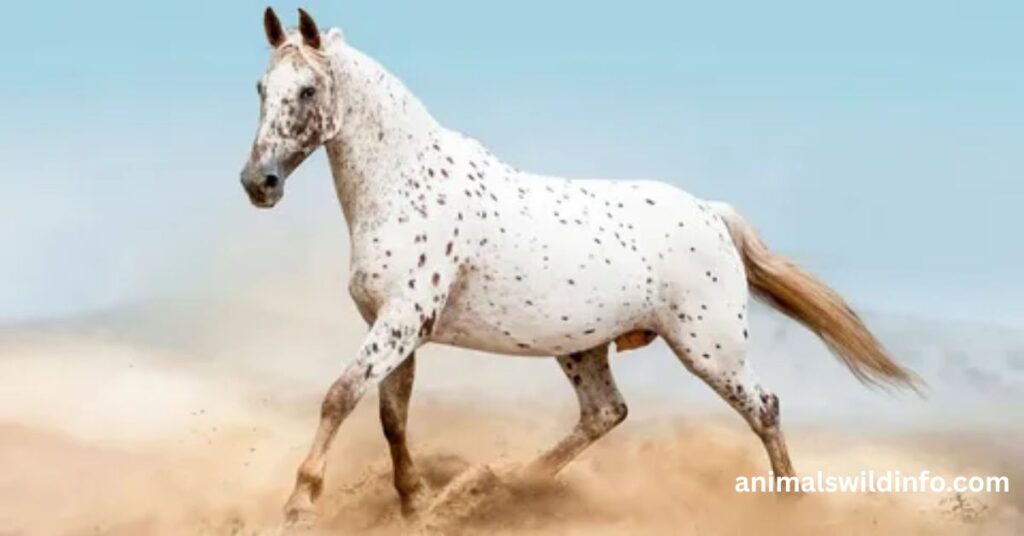
Bred by the Nez Perce people of the Pacific Northwest, the Appaloosa horse carries one of the most varied coat patterns in the entire equine world. Some Appaloosas show a leopard-style scatter of spots across the whole body, while others carry a “blanket” pattern, with white patches concentrated over the hips. No two horses ever look quite the same, which is part of the breed’s lasting appeal.
Beyond looks, Appaloosas built a reputation for strength, stamina, and a calm, trainable temperament. Native tribes relied on them for hunting and long-distance travel, and that versatility carried the breed into modern rodeo, trail riding, and show competitions. Their unique coat pattern is controlled by a specific set of genetic traits, which is why breeders still study Appaloosa genetics closely today.
African Wild Dog
Scientific name: Lycaon pictus Class: Mammalia Diet: Carnivore
Few spotted mammals look quite as chaotic, in a good way, as the African wild dog. Its coat mixes yellow, black, brown, and white in blotches so irregular that no two dogs in a pack look alike. This wild mix of dark spots and light patches actually helps individuals stand out to each other during high-speed hunts across open grassland.
African wild dogs live and hunt in close-knit packs, relying on teamwork far more than raw strength. Their hunting strategy involves long, coordinated chases that wear prey down over distance, rather than a single explosive ambush. This strong pack loyalty, paired with one of the highest hunting success rates of any African predator, makes the African wild dog one of the continent’s most efficient carnivores.
Ladybug
Class: Insecta Diet: Omnivore
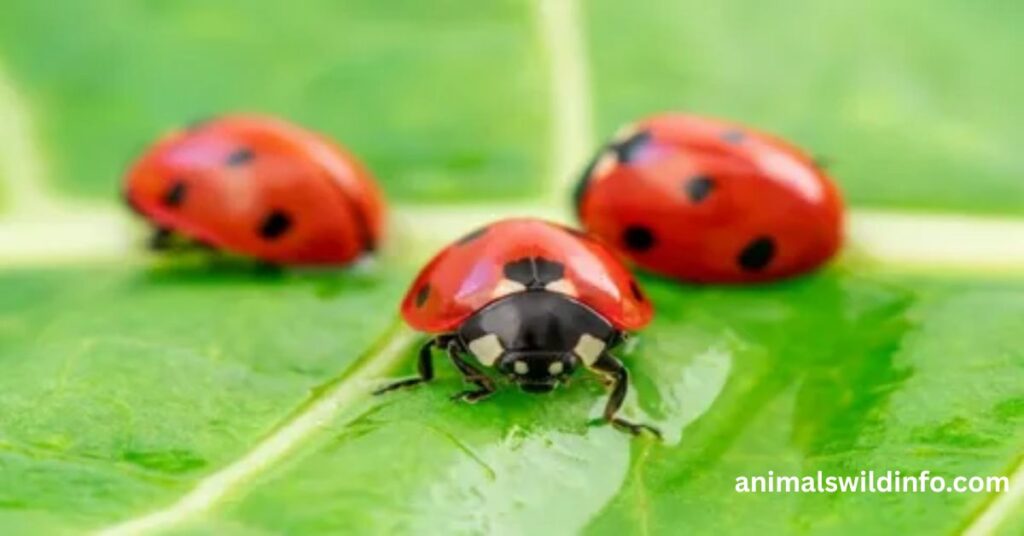
Small, round, and instantly charming, the ladybug uses black spots on a bright red or orange shell to send a clear warning. That combination of color and pattern tells predators this insect probably doesn’t taste good, and might even be mildly toxic. It’s a textbook case of warning coloration working at a tiny scale.
The number of spots varies quite a bit between species, which is part of what makes ladybugs so fun to spot in the garden. Some carry seven black spots, a classic look most people recognize instantly, while rarer species can carry over twenty. Beyond their good looks, ladybugs are hardworking predators in their own right, feasting on aphids and other pests that damage garden plants.
Read More: Top 10 Mammals That Cannot Jump (With Pictures & Amazing Facts)
Leopard Gecko
Scientific name: Eublepharis macularius Class: Reptilia Diet: Carnivore
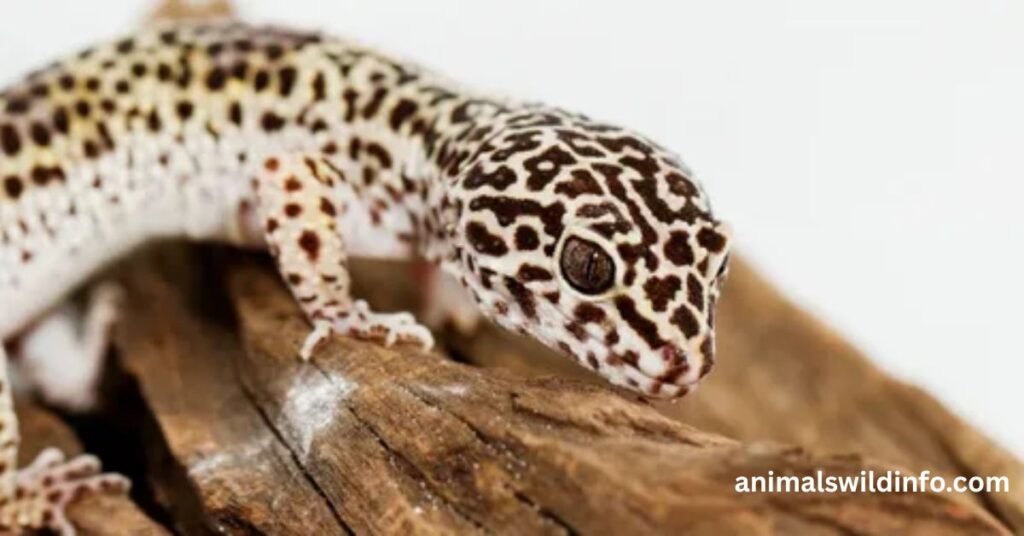
True to its name, the leopard gecko carries dark spots across a pale yellow body, giving it a look that’s earned it a permanent spot in the exotic pet world. Young geckos actually start out banded rather than spotted, with their signature pattern only developing as they grow into adults. That transformation is one of the more interesting quirks among spotted species.
In the wild, leopard geckos live across dry, rocky parts of Asia and the Middle East, relying on nocturnal behavior to avoid the harsh daytime heat. Their spotted skin blends nicely with sandy, rocky terrain, offering solid cover while they hunt insects after dark. Thanks to their calm nature and manageable size, they’ve become one of the most popular pet reptiles in the United States.
Other Animals With Spots
The list doesn’t stop at twenty. Plenty of other spotted creatures deserve a mention, from birds of the forest canopy to farmland favorites you’ve probably seen in person. These animals round out just how far spots reach across the animal kingdom.
Some of these species lean on their spotted coats for pure survival, while others use theirs mostly for warning or recognition. Either way, they prove that this pattern shows up in nearly every corner of the natural world, from grasslands to backyard gardens.
Spotted Owl
Scientific name: Strix occidentalis Class: Aves Diet: Carnivore
The spotted owl carries soft brown feathers dotted with pale spots, giving it near-perfect cover against tree bark in old-growth forests. This quiet bird relies almost entirely on nocturnal behavior, hunting small mammals under the cover of darkness while resting silently by day. Its muted, mottled pattern makes it almost invisible against rough bark, even to sharp-eyed hikers passing directly underneath.
Spotted owls need mature forest to thrive, since younger trees don’t offer the same nesting cavities or hunting cover. Because of this, the species has become closely tied to conservation debates over old-growth logging in the Pacific Northwest. Protecting their forest habitat doesn’t just help this one bird. It also protects countless other species that share the same aging woodland.
See Also: Top 15 Dangerous Animals in the Philippines (With Images)
Harlequin Toad
Class: Amphibia Diet: Carnivore
Bright, bold, and impossible to miss, the harlequin toad wears vivid yellow spots, oranges, and blacks in sharp, high-contrast patterns. Unlike animals hiding from predators, this toad wants to be seen. Its coloring is a classic case of warning coloration, telling predators loud and clear that its skin carries dangerous toxins.
Harlequin toads live in humid tropical forest habitats across Central and South America, often near fast-moving streams. Sadly, many species in this group have declined sharply due to habitat loss and a deadly fungal disease affecting amphibians worldwide. Their striking pattern makes them a favorite among wildlife photographers, even as conservationists race to protect the species that remain.
Spotted Deer
Scientific name: Axis axis Class: Mammalia Diet: Herbivore
Also called the chital, the spotted deer wears a reddish coat scattered with rows of crisp white spots. Unlike some deer species that lose their spots with age, spotted deer keep this pattern their entire lives, making it one of the most consistently marked large mammals in Asia. You’ll find large herds grazing across the forests and grasslands of India.
Living in herds offers real safety in numbers, and spotted deer take full advantage of that group behavior. Dominant females often lead the group, while sharp calls warn the herd of nearby predators like tigers or leopards. Fawns rely heavily on their spotted coats to stay hidden in tall grass, a strategy that buys precious time while their mothers stay alert nearby.
Serval
Scientific name: Leptailurus serval Class: Mammalia Diet: Carnivore
With long legs and oversized ears, the serval already stands out among African wild cats, and its bold black spots only add to the look. This pattern blends beautifully into tall grasslands, letting the serval creep through cover before pouncing on rodents and birds with startling accuracy. Few cats jump as high or as precisely as this one.
Servals are solitary hunters, relying on excellent hearing to detect prey rustling through grass long before they can see it. Once locked on, a serval can leap several feet straight up to snatch a bird out of the air, a hunting strategy almost unmatched among mid-sized cats. Their striking coat has also made them a popular, though controversial, choice among exotic pet owners in parts of the country.
Holstein Friesian Cow
Class: Mammalia Diet: Herbivore
You’ve almost certainly seen a Holstein Friesian cow, even if you didn’t know the name. Its classic black and white spots are one of the most recognizable coat patterns in all of farming, splashed across dairy cartons and farm logos everywhere. No two cows share the exact same pattern, giving each animal its own natural marking, almost like a built-in nametag.
Beyond their famous look, Holstein Friesians are prized for one thing above all: milk production. This breed produces more milk than any other dairy cow, which is exactly why it dominates dairy farms across the United States and much of the world. Their calm temperament and steady output have made them a cornerstone of modern dairy farming for well over a century.
Spotted Skunk
Class: Mammalia Diet: Omnivore
Smaller and more agile than its striped cousin, the spotted skunk carries broken white spots and swirling stripes across a dark coat. This messy, irregular pattern helps break up its outline in dappled light, offering a bit of extra cover on top of its already famous chemical defense. It’s a rare case of an animal layering two totally different survival tools.
What really sets this animal apart is its behavior. When threatened, a spotted skunk can perform a full handstand on its front paws before spraying, a bizarre and oddly impressive warning display. Combine that acrobatic threat with sharp climbing skills, and you get one of the more surprising spotted mammals in North America, full of personality despite its small size.
How Do Animal Spots Help Them Survive?
By now, you’ve seen the same few themes pop up again and again. Spots aren’t just decoration. They’re tools, shaped by millions of years of trial and error, and every animal with unique patterns on this list uses that tool a little differently.
Broadly speaking, spots serve three big jobs in the wild. They hide an animal from danger, they help it find a mate, or they help others recognize it as an individual. Let’s break each of these down.
Camouflage and Protection
This is the big one, and it’s the reason so many spotted animals exist in the first place. A broken pattern of spots disrupts an animal’s outline, making it far harder for predators to pick out a shape hiding in grass, leaves, or coral. The cheetah, ocelot, and moray eel all lean on this trick, using natural camouflage to either hide from threats or sneak closer to prey.
This kind of predator protection works both ways too. Prey animals like the fallow deer and spotted deer use spots to vanish into dappled light, while predators use the exact same trick in reverse for prey detection. It’s a quiet arms race that’s been running for millions of years, and spots remain one of nature’s most effective weapons in that fight.
Attracting Mates
Not every spot exists to hide. Some are built to be seen. A bold, healthy-looking coat pattern can act as a signal of strong genes and good health, which matters a lot when it comes to choosing a mate. The Appaloosa horse and giraffe both show variations in pattern that may play a role in this kind of social signaling.
Even the ladybug fits this idea in its own way, since a bright, clearly defined pattern can suggest a strong, well-fed insect to potential mates nearby. Across the animal kingdom, from mammal to insect, bold body markings often double as a kind of advertisement, broadcasting fitness long before any sound or scent gets involved.
See Also: Top 15 Most Humble Animals in the World (With Pictures)
Identifying Individuals
Spots can also work like a built-in ID card. Because every whale shark, giraffe, and snow leopard carries a completely individual spot pattern, researchers can track specific animals over years without tagging or capturing them. This method supports individual identification across huge, hard-to-reach populations in the wild.
This same idea likely helps animals recognize each other too, not just scientists. Giraffes and hyenas may use subtle pattern differences to tell family from strangers, adding a layer of communication most people never think about. It’s a small detail with a big payoff, quietly shaping how these animals interact within their own social groups.
Final Thoughts
From the blazing speed of the cheetah to the quiet patience of the spotted moray eel, this list proves just how much power a simple pattern can hold. Spotted wildlife spans nearly every class of animal on Earth, and in each case, that pattern earns its keep through camouflage, communication, or survival adaptation.
Next time you spot a Dalmatian in the park or a ladybug on a leaf, take a second look. That pattern isn’t random. It’s the product of millions of years of evolution, doing exactly the job nature designed it to do.
FAQ’s
What animal has spots?
Many animals have spots, including the cheetah, giraffe, jaguar, ladybug, and Dalmatian. Spots appear across mammals, reptiles, birds, fish, and insects, each using the pattern for camouflage, warning, or recognition depending on the species.
What animal has the most spots?
The whale shark carries some of the densest spot coverage of any animal, with hundreds of pale spots across its huge body. Some ladybug species also carry dozens of tiny spots, packed tightly onto a shell just a few millimeters wide.
What animals have spots?
Spotted animals include big cats like the leopard and snow leopard, marine species like the whale shark and spotted eagle ray, and everyday animals like the ladybug and Holstein Friesian cow. The pattern shows up across nearly every animal class.
Which animal is spotty?
The Dalmatian is one of the most famous spotty animals in the world, known for its bold black spots on white fur. The leopard and cheetah are also classic examples, each carrying a distinct spotted coat used for camouflage.
What wild animal has spots?
Wild spotted animals include the cheetah, leopard, snow leopard, spotted hyena, and African wild dog. Each of these species relies on its pattern for hunting, hiding from danger, or blending into its natural habitat.